


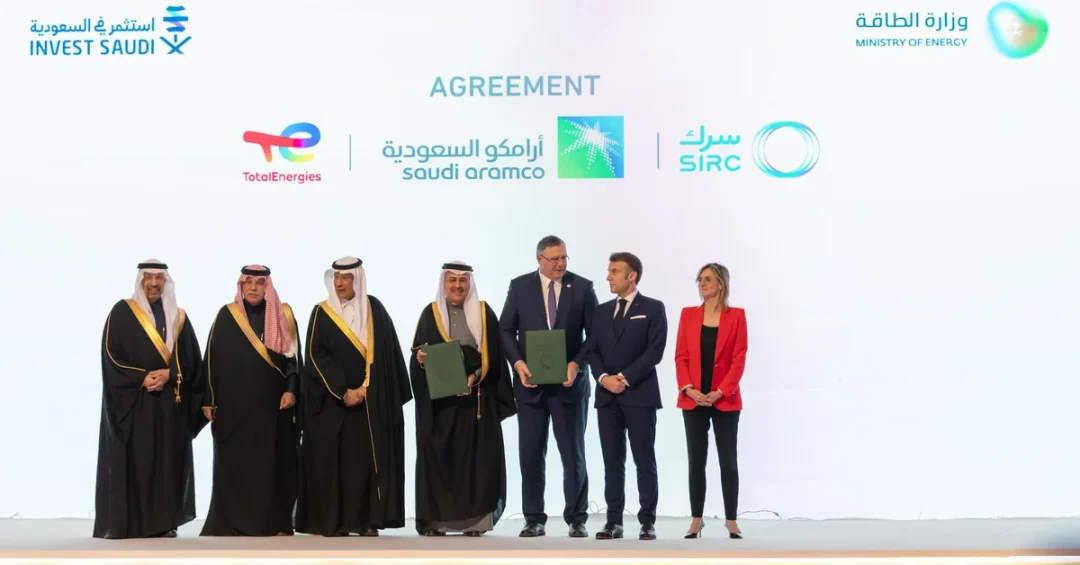
Saudi Aramco, TotalEnergies, and the Saudi Investment Recycling Company (SIRC) announced on December 3, 2024, the signing of a joint development and cost-sharing agreement to evaluate the potential development of a sustainable aviation fuel (SAF) plant in the Kingdom of Saudi Arabia. The announcement, made during French President Emmanuel Macron’s official visit to the Kingdom, marks a significant step in addressing aviation emissions through low-carbon alternatives. The proposed facility, to be located in the Eastern Province, aims to leverage innovative technologies to recycle local waste and circular economy by-products, including cooking oils and animal fats, into SAF.
Context and Background
The aviation sector faces mounting pressure to reduce its carbon footprint, with global air travel demand expected to rise significantly in the coming decades. Sustainable aviation fuel, derived from renewable feedstocks, is considered a key solution to decarbonizing air transport without requiring modifications to existing aircraft. The collaboration between Saudi Aramco, the world’s leading integrated energy and chemicals company; TotalEnergies, a European multinational energy firm; and SIRC, a key player in converting organic materials into sustainable products in Saudi Arabia, brings together global expertise and local resources. The agreement builds on a solid partnership between Aramco and TotalEnergies, with SIRC contributing its waste-to-resource expertise. The initiative aligns with the Kingdom’s broader efforts to diversify its economy and enhance sustainability under Vision 2030.
Key Details
The evaluation phase will focus on using innovative engineering and technological solutions to process local waste and circular economy by-products, such as used cooking oils and animal fats, to produce SAF. Amin Hassan Nasser, President and CEO of Saudi Aramco, emphasized the imperative of addressing aviation emissions, stating, “Addressing transportation emissions requires a wide range of approaches, and Aramco is committed to finding innovative solutions and contributing to global efforts to reduce emissions.” He added, “Our goal is to establish a sustainable aviation fuel plant in the Kingdom with SIRC, benefiting both domestic and international airlines, particularly as the tourism and aviation sectors expand.” Patrick Pouyanné, Chairman and CEO of TotalEnergies, expressed enthusiasm for the collaboration, stressing the importance of advancing efforts to decarbonize air transport. Ziyad Al-Shiha, CEO of SIRC, noted that the partnership aligns with the company’s commitment to supporting the ambitious sustainability goals of Saudi Vision 2030 and the Saudi Green Initiative. “We are focusing on increasing waste-to-resource conversion rates, and this new collaboration is a significant step toward advancing the circular economy in the Kingdom,” he said.
Implications and Impact
The proposed SAF plant is expected to benefit both domestic and international airlines as the tourism and aviation sectors expand in Saudi Arabia. By converting local waste into fuel, the facility would reduce reliance on imported feedstocks and contribute to waste management goals. The project also strengthens Saudi Arabia’s position as a hub for low-carbon energy innovation, fostering international partnerships and attracting investment. The involvement of TotalEnergies underscores the global interest in collaborating with Saudi entities on sustainable energy solutions. Cross-border synergy between Saudi and French energy leaders reflects growing cooperation on climate-focused initiatives.
Vision 2030 Alignment
This initiative directly supports Saudi Vision 2030 by promoting economic diversification, environmental sustainability, and technological innovation. The project aligns with the Saudi Green Initiative, which targets emission reductions and the expansion of the circular economy. By developing low-carbon fuel capacity, the Kingdom reinforces its commitment to being a global leader in energy transition while boosting the tourism and aviation sectors. The collaboration between Aramco, TotalEnergies, and SIRC exemplifies how strategic partnerships can advance national goals and contribute to a sustainable future for the aviation industry.
20 Questions
Q1. What is the main purpose of the joint development agreement signed by Aramco, TotalEnergies, and SIRC?
A1. The joint development and cost-sharing agreement aims to evaluate the potential development of a sustainable aviation fuel (SAF) plant in the Kingdom of Saudi Arabia.
Q2. When was the agreement announced?
A2. The agreement was announced on December 3, 2024, during French President Emmanuel Macron’s official visit to the Kingdom.
Q3. Where is the proposed SAF plant expected to be located?
A3. The proposed sustainable aviation fuel plant is expected to be located in the Eastern Province of Saudi Arabia.
Q4. What feedstocks will be used to produce SAF at the proposed plant?
A4. The plant will use innovative technologies to recycle local waste and circular economy by-products, including used cooking oils and animal fats.
Q5. Who are the three companies involved in this agreement?
A5. The three companies involved are Saudi Arabian Oil Company (Saudi Aramco), TotalEnergies, and the Saudi Investment Recycling Company (SIRC).
Q6. What role does SIRC play in this collaboration?
A6. SIRC is a key player in converting organic materials into sustainable products in the Kingdom, contributing its waste-to-resource expertise to the project.
Q7. What statement did Amin Hassan Nasser make about aviation emissions?
A7. Amin Hassan Nasser said that addressing aviation emissions through low-carbon alternatives is imperative due to expected growth in air travel demand.
Q8. What is TotalEnergies’ role in the agreement?
A8. TotalEnergies is a European multinational integrated energy company collaborating with Aramco and SIRC to assess SAF production in the Kingdom.
Q9. How does this project support Saudi Vision 2030?
A9. The project supports Vision 2030 by promoting economic diversification, environmental sustainability, and the circular economy, aligning with the Saudi Green Initiative.
Q10. Which Saudi official highlighted the alignment with the Saudi Green Initiative?
A10. Ziyad Al-Shiha, CEO of SIRC, highlighted that the partnership aligns with the Saudi Green Initiative and the sustainability goals of Vision 2030.
Q11. What is the expected benefit of the SAF plant for airlines?
A11. The SAF plant is expected to benefit both domestic and international airlines by providing a low-carbon fuel source, especially as the tourism and aviation sectors grow.
Q12. What does the evaluation phase of the agreement focus on?
A12. The evaluation phase focuses on using innovative engineering and technological solutions to recycle local waste and circular economy by-products into sustainable aviation fuel.
Q13. Why is sustainable aviation fuel considered important for the aviation sector?
A13. Sustainable aviation fuel is important because it helps reduce carbon emissions from air transport without requiring modifications to existing aircraft, addressing climate goals.
Q14. What global event coincided with the announcement of this agreement?
A14. The announcement coincided with French President Emmanuel Macron’s official visit to the Kingdom, highlighting international cooperation.
Q15. What is the Saudi Green Initiative?
A15. The Saudi Green Initiative is a national effort to reduce emissions, increase greenery, and protect the environment, supporting Vision 2030 sustainability goals.
Q16. How does the agreement strengthen Saudi Arabia’s global position?
A16. The agreement strengthens Saudi Arabia’s position as a hub for low-carbon energy innovation, fostering international partnerships and attracting investment in sustainable technologies.
Q17. What is the circular economy, as referenced in this project?
A17. The circular economy involves converting waste into valuable resources, reducing environmental impact, and promoting sustainable resource use, as seen in this SAF project.
Q18. What expertise does Saudi Aramco bring to this collaboration?
A18. Saudi Aramco brings global leadership in integrated energy and chemicals, along with a commitment to finding innovative solutions for reducing emissions.
Q19. How will the SAF plant contribute to waste management in Saudi Arabia?
A19. The plant will recycle local waste, such as used cooking oils and animal fats, converting them into fuel, which reduces landfill waste and supports waste-to-resource goals.
Q20. What future impact might this project have on the aviation industry globally?
A20. This project could set an example for large-scale SAF production using local waste, encouraging other nations to adopt similar low-carbon solutions for aviation.
Reader Feedback
We value your thoughts. Please share your feedback on this article.
Your feedback helps us improve our coverage.