
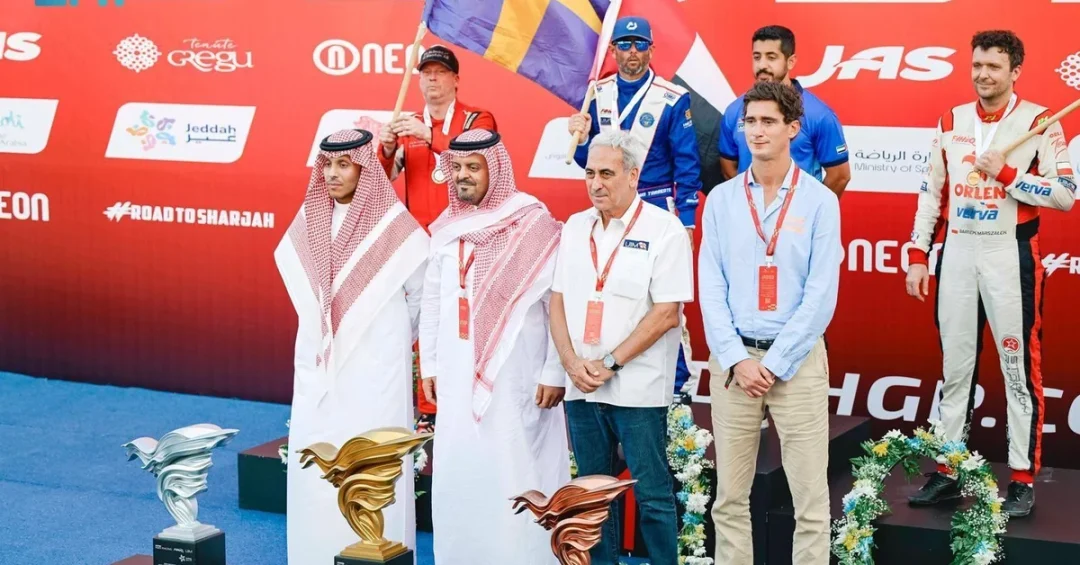
Jeddah concluded the fourth round of the F1H2O UIM World Championship on 30 November 2025, with Deputy Governor of Makkah Region Prince Saud bin Mishaal bin Abdulaziz presenting the trophy and gold medal to Shaun Torrente of the UAE’s Victory Team, according to the Saudi Press Agency.
Context and Background
As reported by SPA, the Jeddah Grand Prix 2025 marked the first F1H2O championship event of its kind to be staged on the Red Sea, underscoring Jeddah’s growing profile as a premier host city for international sport and tourism. The F1H2O series, sanctioned by the Union Internationale Motonautique (UIM), is considered one of the pinnacle global competitions for inshore powerboat racing, bringing elite teams and athletes to venues known for technical courses and strong spectator appeal.
The event drew twenty powerboats from ten teams, reinforcing Saudi Arabia’s capability to convene world-class participants and deliver complex, safety-critical marine competitions. With a coastal setting and modern hospitality infrastructure, Jeddah’s successful hosting further demonstrates the Kingdom’s developing ecosystem for international sports operations and visitor services.
Key Details
In a competitive finale, Shaun Torrente secured the top step of the podium for the UAE’s Victory Team, receiving the trophy and gold medal from Prince Saud bin Mishaal bin Abdulaziz. Jonas Andersson of Sweden clinched the silver medal after finishing second, while Bartek Marszalek of Stromoy Racing claimed bronze in third, SPA reported. The standings highlighted the high level of parity among the world’s leading F1H2O outfits, with tight margins separating the front-runners across the day’s decisive sessions.
Organizers emphasized the importance of precision course management, safety protocols, and broadcast delivery as integral components of the Jeddah round. The combination of coastal winds, sea-state dynamics, and variable light conditions tested teams’ strategy and engineering choices, creating a competitive environment that showcased both driver skill and technical preparation.
Beyond the podium, the event’s successful execution pointed to the operational readiness of local authorities and event partners. Logistics planning, marine security coordination, medical readiness, and race control technologies were deployed to international standards, reinforcing Saudi Arabia’s reputation for hosting complex sporting events with reliability and attention to detail.
Implications and Impact
The Red Sea debut of F1H2O carries several implications for the Kingdom’s expanding sports and tourism portfolio. By attracting elite international teams and global media coverage, the Jeddah Grand Prix strengthens destination visibility, supports the visitor economy, and deepens professional exchange between Saudi organizers and leading international federations. The experience gained in staging top-tier marine competitions also contributes to the growth of the Kingdom’s water sports ecosystem, including training pathways, safety expertise, and event services.
Regionally, the event reinforces Jeddah’s status as a gateway for marquee competitions that leverage the Red Sea’s natural assets and the city’s modern urban infrastructure. Internationally, it signals the continuing diversification of the global motorsport calendar, with Saudi Arabia offering a unique coastal setting and a dependable operational environment. For teams, the Red Sea conditions introduce strategic variety that can influence season outcomes, while for fans, the setting provides distinctive visuals and a compelling live experience.
Vision 2030 Alignment
SPA noted that the Jeddah Grand Prix 2025 adds a significant milestone to the city’s record of hosting international sporting competitions, reaffirming its role as a leading destination for global sports and tourism. This progress directly supports Saudi Arabia’s Vision 2030 objectives to diversify the economy, enhance quality of life, and foster a vibrant society. By expanding the sports calendar to include elite marine events, the Kingdom is accelerating investment in skills, facilities, and hospitality services that generate long-term value. The successful conclusion of the F1H2O round in Jeddah therefore not only celebrates athletic excellence but also advances the Kingdom’s long-term goal of positioning Saudi Arabia as a dynamic, welcoming hub for international competition on land and sea.