


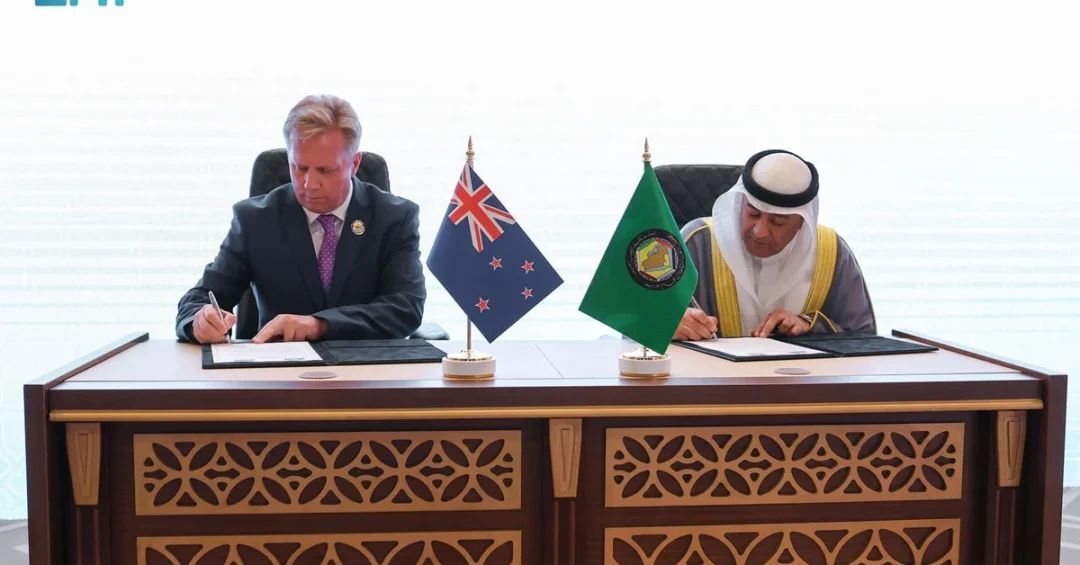
Minister of Commerce and Chairman of the Board of Directors of the General Authority for Foreign Trade (GAFT) Dr. Majid Al-Kassabi confirmed that the signing of the joint statement on the conclusion of the free-trade agreement (FTA) between the Gulf Cooperation Council (GCC) countries and New Zealand marks a significant step in enhancing bilateral trade and economic cooperation by removing obstacles. The announcement was made during the signing ceremony in Doha, Qatar, on the sidelines of the 67th meeting of the GCC Cooperation Committee, underscoring the Gulf bloc’s commitment to expanding its global trade partnerships.
Context and Background
The GCC-New Zealand FTA negotiations represent years of diplomatic and technical efforts aimed at creating a comprehensive economic partnership. The agreement is designed to facilitate the entry of goods and services between the six GCC member states and New Zealand by eliminating and reducing customs duties on a wide range of products. For Saudi Arabia, which holds the current presidency of the GCC, this deal aligns with the Kingdom’s broader strategy under Vision 2030 to diversify trade routes and strengthen economic ties with non-traditional partners.
Key Details of the Agreement
According to official statements from the Saudi Press Agency, the FTA consists of 19 chapters covering critical areas including goods, sanitary and phytosanitary measures, rules of origin, customs procedures, services, investment, and e-commerce. The agreement also addresses transparency, dispute settlement, competition policy, intellectual property rights, and technical and economic cooperation. Dr. Al-Kassabi emphasized that the agreement reflects the GCC countries’ commitment to strengthening economic relations with New Zealand, describing it as a promising market for Gulf products.
Implications for Trade and Investment
The FTA is expected to open new opportunities for Saudi exporters and investors by providing preferential access to the New Zealand market. The elimination of tariffs on key goods will lower costs for businesses on both sides, while provisions on services and investment will encourage cross-border capital flows. Saudi Arabia’s negotiating team, led by the General Authority of Foreign Trade, worked to ensure the agreement aligns with the Kingdom’s trade goals and policies, including the protection of intellectual property and the promotion of e-commerce.
Vision 2030 Alignment
The signing of the GCC-New Zealand FTA directly supports Saudi Arabia’s Vision 2030 ambitions by fostering an open, diversified economy integrated into global value chains. By reducing trade barriers and enhancing investment protections, the agreement creates a stable framework for Saudi businesses to expand internationally. As the Kingdom continues to implement economic reforms, such partnerships demonstrate its leadership in regional trade diplomacy and its commitment to sustainable, long-term growth that benefits both Gulf citizens and international partners.
20 Questions
Q1. What is the GCC-New Zealand Free Trade Agreement?
A1. The GCC-New Zealand FTA is a comprehensive trade deal aimed at reducing tariffs on goods, opening services markets, and protecting investments between the six GCC countries and New Zealand.
Q2. Who signed the agreement on behalf of Saudi Arabia?
A2. The agreement was signed by Minister of Commerce and Chairman of GAFT Dr. Majid Al-Kassabi during the 67th GCC Cooperation Committee meeting in Doha, Qatar.
Q3. Where was the signing ceremony held?
A3. The signing ceremony took place in Doha, Qatar, on the sidelines of the 67th meeting of the GCC Cooperation Committee on October 31, 2024.
Q4. How many chapters does the agreement include?
A4. The FTA includes 19 chapters covering goods, sanitary measures, rules of origin, customs, services, investment, e-commerce, transparency, and dispute settlement.
Q5. What is the main goal of the FTA?
A5. The main goal is to eliminate or reduce customs duties on goods, open services markets, and encourage and protect investments between GCC states and New Zealand.
Q6. Why is New Zealand considered a promising market for Gulf products?
A6. New Zealand has a strong, open economy with demand for diverse imports, making it a strategic partner for Gulf exporters in sectors such as petrochemicals, plastics, and aluminum.
Q7. How does the agreement support Saudi Vision 2030?
A7. The FTA supports Vision 2030 by diversifying trade partnerships, reducing barriers for Saudi exporters, and integrating the Kingdom into global value chains.
Q8. What role did the General Authority of Foreign Trade play?
A8. GAFT led the Saudi negotiating team, overseeing trade negotiations to ensure compatibility with Saudi trade goals and policies.
Q9. Does the agreement cover services?
A9. Yes, one of the 19 chapters specifically addresses the opening of markets for the provision of services between the parties.
Q10. What provisions exist for intellectual property?
A10. The agreement includes a chapter on intellectual property to protect patents, trademarks, and copyrights for businesses in both regions.
Q11. How will the FTA affect customs duties?
A11. The FTA aims to eliminate or significantly reduce customs duties on goods traded between GCC countries and New Zealand.
Q12. What is the importance of the e-commerce chapter?
A12. The e-commerce chapter facilitates digital trade, promotes online transactions, and ensures a modern framework for cross-border data flows.
Q13. How does the agreement handle disputes?
A13. A dedicated chapter on dispute settlement provides mechanisms for resolving trade conflicts between the parties fairly and transparently.
Q14. What are sanitary and phytosanitary measures?
A14. These measures ensure food safety and animal/plant health standards are met, enabling safe trade of agricultural products between the GCC and New Zealand.
Q15. When did negotiations for this FTA conclude?
A15. The joint statement on the conclusion of the FTA was signed on October 31, 2024, marking the end of formal negotiations.
Q16. Which other GCC countries participated in the deal?
A16. All six GCC member states—Saudi Arabia, UAE, Qatar, Kuwait, Oman, and Bahrain—are parties to the agreement alongside New Zealand.
Q17. What is the role of the GCC Cooperation Committee?
A17. The GCC Cooperation Committee oversees regional economic integration and provides a platform for signing trade agreements on behalf of member states.
Q18. How will Saudi exporters benefit directly?
A18. Saudi exporters will gain preferential access to New Zealand’s market, reducing costs and increasing competitiveness for products like chemicals and plastics.
Q19. Does the agreement cover investment protection?
A19. Yes, the FTA includes provisions to encourage and protect investments, providing legal certainty for investors from both sides.
Q20. What is the next step after signing the joint statement?
A20. The joint statement signals the conclusion of negotiations; the final text will undergo ratification processes by each GCC state and New Zealand before entering into force.
Reader Feedback
We value your thoughts. Please share your feedback on this article.
Your feedback helps us improve our coverage.