


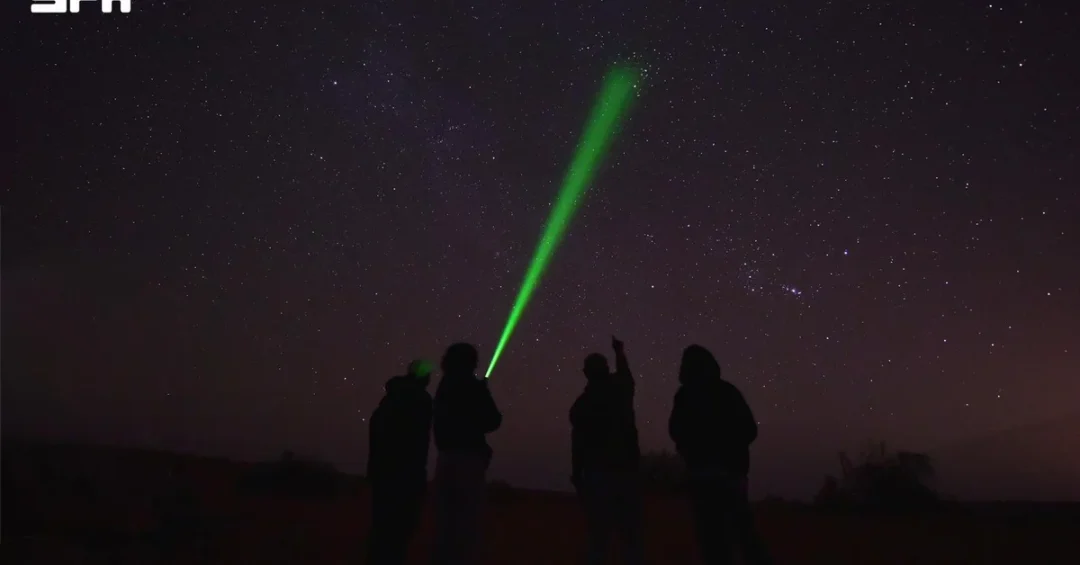
The Imam Turki bin Abdullah Royal Reserve in northern Saudi Arabia is offering prime viewing conditions for a series of astronomical events throughout June 2026. According to the Saudi Press Agency, the reserve’s vast desert landscape and minimal light pollution make it an ideal location for observing celestial phenomena, attracting skywatchers, astrophotographers, and astronomy enthusiasts from around the region.
Context and Background
The Imam Turki bin Abdullah Royal Reserve, established as part of Saudi Arabia’s environmental conservation efforts under Vision 2030, spans over 91,000 square kilometers of diverse desert terrain. The reserve is managed by the Saudi government’s National Center for Wildlife Development and the Imam Turki bin Abdullah Royal Reserve Development Authority, which work to preserve local biodiversity and promote sustainable ecotourism. The area’s remote location, far from major urban centers, provides exceptionally dark skies, making it a natural observatory for astronomical tourism.
Key Details
Observers have already witnessed a conjunction of Venus and Jupiter on June 9. The calendar continues with a spectacular alignment from June 16 to 18, when the Moon will align with Venus, Jupiter, and Mercury in one of the month’s most notable celestial displays. On June 19, the Moon will conjoin with the star Regulus, followed by the summer solstice on June 21, marking the start of astronomical summer and the longest day of the year. Other highlights include a conjunction of Mercury and Jupiter on June 25, the Moon’s conjunction with Antares on June 27, Mars appearing near the Pleiades star cluster on June 28, and a full Moon on June 30.
Implications and Impact
These astronomical events are part of a broader strategy by the Kingdom to promote interest in astronomy while highlighting the reserve’s appeal as a destination for ecotourism and astronomical tourism. The events align with Saudi Arabia’s push to diversify its tourism offerings beyond traditional religious and cultural attractions, opening new avenues for educational travel and scientific tourism. The reserve’s development authority has been actively promoting the site through social media and partnerships with local astronomy clubs.
Vision 2030 Alignment
The promotion of astronomical events at the Imam Turki bin Abdullah Royal Reserve directly supports Vision 2030’s objectives of environmental sustainability, tourism diversification, and community engagement. By preserving natural dark skies and encouraging public interest in science, Saudi Arabia is building a more vibrant society and a thriving tourism sector. As the Kingdom continues to develop its ecotourism infrastructure, the reserve stands as a testament to the nation’s commitment to both heritage conservation and modern economic growth, offering unique experiences that attract international visitors and deepen local appreciation for the natural world.
20 Questions
Q1. What is the Imam Turki bin Abdullah Royal Reserve?
A1. It is a protected natural area in northern Saudi Arabia, managed by the National Center for Wildlife Development, established to conserve biodiversity and promote sustainable ecotourism under Vision 2030.
Q2. Where is the reserve located?
A2. The reserve is located in the northern region of Saudi Arabia, spanning over 91,000 square kilometers of desert terrain, near the city of Rafha.
Q3. What astronomical events are happening in June 2026 at the reserve?
A3. Events include planetary conjunctions, Moon alignments with stars, the summer solstice, a Mars appearance near the Pleiades, and a full Moon on June 30.
Q4. When was a conjunction of Venus and Jupiter observed?
A4. The conjunction of Venus and Jupiter was observed on June 9, 2026, as reported by the Saudi Press Agency.
Q5. What happens from June 16 to 18?
A5. From June 16 to 18, the Moon will align with Venus, Jupiter, and Mercury, creating one of the month’s most notable celestial displays.
Q6. Which star does the Moon conjoin with on June 19?
A6. On June 19, the Moon will be in conjunction with the star Regulus, which is one of the brightest stars in the night sky.
Q7. What is the summer solstice?
A7. The summer solstice occurs on June 21, marking the start of astronomical summer and the longest day of the year in the Northern Hemisphere.
Q8. When does Mercury conjoin with Jupiter?
A8. Mercury and Jupiter will be in conjunction on June 25, 2026, offering a rare chance to see two planets close together.
Q9. What happens on June 27?
A9. On June 27, the Moon will be in conjunction with the star Antares, located in the constellation Scorpius.
Q10. What celestial event occurs on June 28?
A10. Mars will appear near the Pleiades star cluster on June 28, 2026, making for a striking visual in the predawn sky.
Q11. When is the full Moon in June?
A11. The full Moon will occur on June 30, 2026, providing excellent lighting for nighttime photography and observation.
Q12. Why is the reserve ideal for astronomical observation?
A12. The reserve’s vast desert landscape and low light pollution levels offer optimal conditions for observing celestial phenomena without interference from urban lights.
Q13. How does the reserve promote tourism?
A13. The reserve promotes ecotourism and astronomical tourism by hosting events and partnering with local astronomy clubs to attract visitors interested in nature and science.
Q14. Who manages the Imam Turki bin Abdullah Royal Reserve?
A14. The reserve is managed by the Imam Turki bin Abdullah Royal Reserve Development Authority, under the oversight of the National Center for Wildlife Development.
Q15. How does this event support Vision 2030?
A15. By encouraging environmental conservation, diversifying tourism, and fostering community interest in science, the reserve aligns with Vision 2030’s goals of economic transformation and sustainable development.
Q16. What is astronomical tourism?
A16. Astronomical tourism involves traveling to locations with dark skies to observe stars, planets, and other celestial events, often as part of ecotourism packages.
Q17. Are there facilities for visitors at the reserve?
A17. The reserve offers basic facilities for ecotourists, including designated observation areas and guided tours, with ongoing development to enhance the visitor experience.
Q18. Can international visitors attend these events?
A18. Yes, international visitors are welcome, and the reserve encourages global participation in its astronomical events to showcase Saudi Arabia’s natural heritage.
Q19. How can one reach the reserve?
A19. The reserve is accessible via road from nearby cities like Rafha, and visitors are advised to arrange transportation in advance due to its remote location.
Q20. What is the best time to visit for stargazing?
A20. The best time is during the new moon or early evening events like planetary conjunctions, when skies are darkest and celestial objects are most visible.
Reader Feedback
We value your thoughts. Please share your feedback on this article.
Your feedback helps us improve our coverage.