


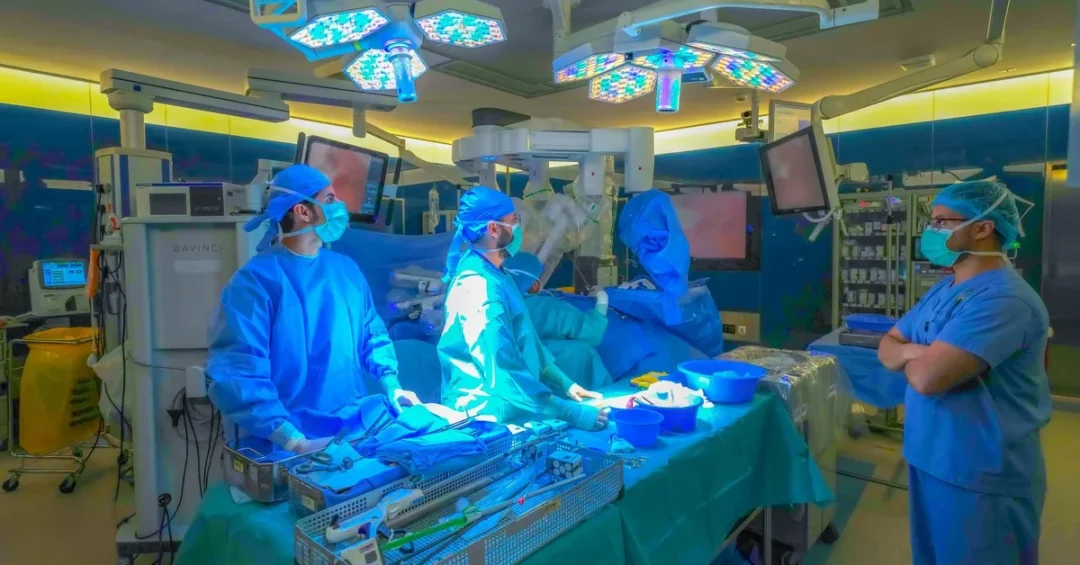
Saudi Arabia’s King Faisal Specialist Hospital and Research Centre (KFSHRC) in Riyadh has announced the successful completion of the first robotic-assisted retroperitoneal lymph node dissection in the Middle East, marking a significant advancement in minimally invasive cancer surgery. The procedure was performed by the hospital’s Uro-Oncology surgical team, led by Dr. Majed Al-Rumayyan, on a patient in his thirties diagnosed with testicular cancer that had metastasized to lymph nodes near critical blood vessels, including the aorta and inferior vena cava.
Context and Background
This groundbreaking surgery addresses the complex challenges of treating testicular cancer that has spread to the retroperitoneal area, a region known for its anatomical complexity and proximity to major blood vessels and nerves. Traditional surgical approaches carry significant risks, including severe bleeding, nerve damage, and longer recovery times. KFSHRC’s achievement underscores its commitment to adopting cutting-edge technologies to improve patient outcomes in the Kingdom, aligning with Saudi Arabia’s broader healthcare modernization goals under Vision 2030.
Key Details of the Procedure
Dr. Al-Rumayyan highlighted that the robotic-assisted approach allowed for a considerably smaller incision compared to conventional methods, leading to minimal blood loss, reduced postoperative pain, and a shorter hospital stay. The patient was discharged just one day after the operation, a stark contrast to the typical recovery period of 5-7 days associated with traditional surgery. The advanced technology enabled exceptional precision in removing affected lymph nodes while preserving critical nerves and minimizing risks to major blood vessels, significantly reducing the likelihood of complications such as chylous ascites, retrograde ejaculation, venous thromboembolism, and nerve damage.
Implications for Regional Healthcare
This milestone reinforces KFSHRC’s position as a regional leader in advanced surgical care, setting a new standard for oncology treatment in the Middle East. It demonstrates the Kingdom’s growing capacity to offer world-class medical services, attracting patients from across the region who seek complex, minimally invasive procedures. The success of this robotic surgery showcases the tangible benefits of integrating advanced technologies like robotics into healthcare, potentially paving the way for broader adoption across Saudi hospitals.
Vision 2030 Alignment
KFSHRC’s achievement directly supports Saudi Arabia’s Vision 2030, which prioritizes healthcare excellence, innovation, and the development of a robust medical sector. The hospital, ranked first in the Middle East and Africa and 20th globally among top Academic Medical Centers, and recognized as the most valuable healthcare brand in the Kingdom by Brand Finance, exemplifies the transformative progress underway. As Saudi Arabia continues to position itself as a hub for medical innovation, such milestones advance the nation’s goal of providing high-quality, accessible care while fostering a competitive and diversified economy.
20 Questions
Q1. What is a robotic-assisted retroperitoneal lymph node dissection?
A1. It is a minimally invasive surgical procedure using robotic technology to remove lymph nodes from the retroperitoneum, often to treat testicular cancer that has spread.
Q2. Who performed this groundbreaking surgery at KFSHRC?
A2. The surgery was performed by the Uro-Oncology surgical team led by Dr. Majed Al-Rumayyan at King Faisal Specialist Hospital and Research Centre in Riyadh.
Q3. Why is this procedure considered a milestone for the Middle East?
A3. It is the first successful robotic-assisted retroperitoneal lymph node dissection in the region, demonstrating advanced surgical capabilities and improved patient outcomes.
Q4. What condition did the patient treated at KFSHRC have?
A4. The patient was in his thirties and diagnosed with testicular cancer that had spread to lymph nodes near the aorta and inferior vena cava.
Q5. How does robotic surgery benefit patients compared to traditional methods?
A5. Robotic surgery offers smaller incisions, less blood loss, reduced pain, and shorter hospital stays, allowing for faster recovery.
Q6. How long did the KFSHRC patient stay in the hospital after surgery?
A6. The patient was discharged just one day after the operation, compared to the typical 5-7 days for conventional surgery.
Q7. What risks does traditional retroperitoneal lymph node dissection carry?
A7. Risks include severe bleeding, nerve damage, chylous ascites, retrograde ejaculation, and venous thromboembolism due to the area’s anatomical complexity.
Q8. How did robotic assistance reduce surgical risks in this case?
A8. The robotic system allowed precise dissection, preserving critical nerves and minimizing damage to major blood vessels, reducing complication risks.
Q9. What is the significance of minimizing blood loss during surgery?
A9. Minimal blood loss reduces the need for transfusions, lowers infection risk, and speeds up recovery for the patient.
Q10. How does KFSHRC rank globally among academic medical centers?
A10. KFSHRC is ranked first in the Middle East and Africa and 20th globally among the top 250 Academic Medical Centers.
Q11. What recognition has KFSHRC received from Brand Finance?
A11. KFSHRC was recognized as the most valuable healthcare brand in the Kingdom and the Middle East in the 2024 Brand Finance rankings.
Q12. How does this achievement align with Saudi Arabia’s Vision 2030?
A12. It supports Vision 2030’s goals of healthcare innovation, modernization, and positioning Saudi Arabia as a hub for advanced medical services.
Q13. What other international recognition has KFSHRC received?
A13. KFSHRC was included in Newsweek’s World’s Best Smart Hospitals list for 2025, highlighting its technological leadership.
Q14. Can this robotic surgery technique be applied to other cancers?
A14. Yes, robotic-assisted lymph node dissection can potentially be used for other cancers involving lymph node spread, but each case requires specific evaluation.
Q15. What is the role of Dr. Majed Al-Rumayyan in this procedure?
A15. Dr. Majed Al-Rumayyan led the Uro-Oncology surgical team that performed the revolutionary robotic surgery at KFSHRC.
Q16. Why is the retroperitoneal area challenging for surgeons?
A16. The retroperitoneum contains critical structures like the aorta and vena cava, and its complexity makes traditional surgery risky for bleeding and nerve damage.
Q17. How long is the typical recovery for conventional surgery for this condition?
A17. Conventional surgery usually requires a hospital stay of 5-7 days, with a longer overall recovery period compared to robotic methods.
Q18. What complications did robotic surgery help avoid in this case?
A18. The approach minimized risks of chylous ascites, retrograde ejaculation, venous thromboembolism, and nerve damage.
Q19. How does KFSHRC contribute to medical tourism in Saudi Arabia?
A19. By offering advanced procedures like robotic surgery, KFSHRC attracts international patients, supporting Saudi Arabia’s medical tourism goals under Vision 2030.
Q20. What future developments can be expected from KFSHRC in robotic surgery?
A20. KFSHRC is likely to expand robotic surgery applications to other complex cancers, reinforcing its regional leadership and commitment to innovation.
Reader Feedback
We value your thoughts. Please share your feedback on this article.
Your feedback helps us improve our coverage.