


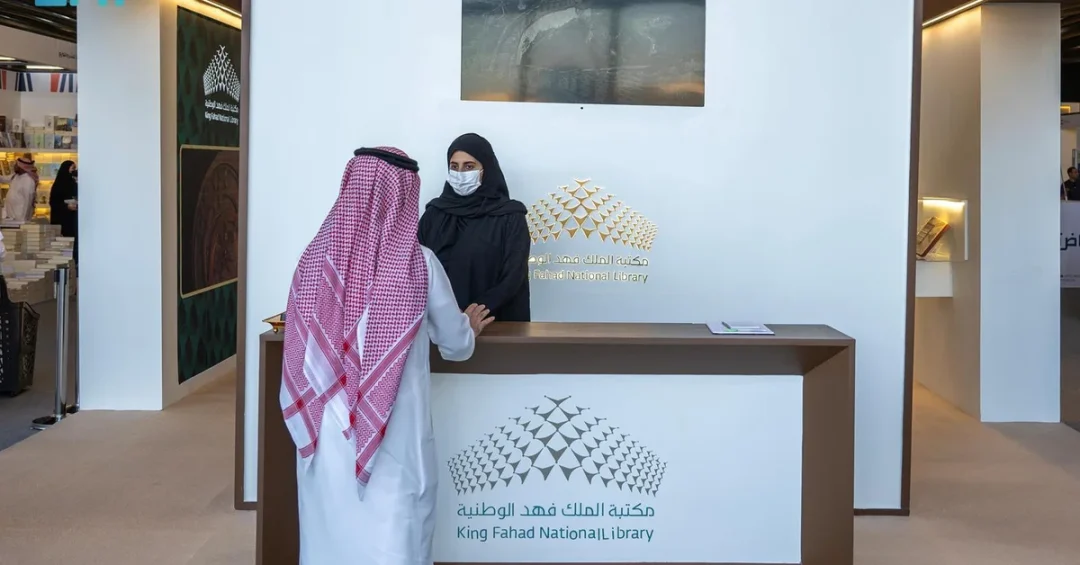
The King Fahd National Library captivated visitors at the Riyadh International Book Fair 2024 by showcasing six rare historical manuscripts. The display, held in Riyadh, highlights the Kingdom’s dedication to preserving and sharing its rich cultural and intellectual heritage with an international audience.
Context and Background
Established in 1983 as a public library, the King Fahd National Library has evolved into a leading national institution tasked with acquiring, organizing, preserving, and disseminating intellectual production. Today, it houses over 6,000 rare original manuscripts, positioning it among the world’s great libraries and underscoring Saudi Arabia’s commitment to cultural stewardship under the goals of Vision 2030.
Key Details
Among the treasures on display at the library’s pavilion is an Arabic Quran manuscript featuring Persian interpretations in the margins, dated to 1009 AH (approximately 1600 CE). Other highlights include a Hebrew scroll and a manuscript of Ibn al-Qayyim al-Jawziya’s “al-Kafiyah ash-Shafiyah”, dated to 1274 AH (around 1858 CE). The pavilion features multiple sections, including a manuscripts and rare books section, a registration area documenting Saudi intellectual heritage, and an interactive screen section offering videos about the library’s services.
Implications and Impact
This carefully curated exhibition reinforces Saudi Arabia’s role as a regional and global hub for cultural exchange and knowledge preservation. By presenting manuscripts from diverse traditions—such as Persian and Hebrew—the display promotes intercultural dialogue and highlights the Kingdom’s historical role as a crossroads of civilizations. It also supports the growing visibility of Saudi cultural institutions on the international stage.
Vision 2030 Alignment
The King Fahd National Library’s participation in the Riyadh International Book Fair 2024 directly aligns with Vision 2030’s objective to enrich the Kingdom’s cultural landscape and promote its heritage. By safeguarding rare manuscripts and engaging the public, Saudi Arabia continues to build a knowledge-based society, fostering pride in its history while inviting global appreciation of its contributions to human civilization.
20 Questions
Q1. What event featured the King Fahd National Library’s manuscript display?
A1. The display was held at the Riyadh International Book Fair 2024, a major cultural event in Saudi Arabia that attracts international visitors and highlights the Kingdom’s literary heritage.
Q2. How many historical manuscripts were showcased by the library?
A2. The library showcased six historical manuscripts, carefully selected to represent the breadth of its rare collection and to engage visitors with intellectual treasures.
Q3. What is one of the oldest manuscripts on display?
A3. An Arabic Quran manuscript with Persian interpretations in the margins, dating back to 1009 AH, is one of the oldest featured works.
Q4. What type of manuscript is the Hebrew scroll?
A4. The Hebrew scroll is a rare religious manuscript, demonstrating the library’s commitment to preserving texts from diverse traditions and faiths.
Q5. Who authored the manuscript “al-Kafiyah ash-Shafiyah”?
A5. The manuscript is by Ibn al-Qayyim al-Jawziya, a renowned Islamic scholar, and dates from 1274 AH.
Q6. When was the King Fahd National Library established?
A6. The library was established in 1983 as a public library, later evolving into a national institution for preserving intellectual production.
Q7. How many rare original manuscripts does the library now hold?
A7. The library houses over 6,000 rare original manuscripts, rivaling the collections of the world’s greatest libraries.
Q8. What is the primary mission of the King Fahd National Library?
A8. Its mission is to acquire, organize, preserve, and disseminate intellectual production, ensuring the safeguarding of Saudi and global heritage.
Q9. What sections are featured in the library’s pavilion at the book fair?
A9. The pavilion includes a manuscripts section, a registration section, and an interactive screen section with informative videos.
Q10. How does the interactive screen section engage visitors?
A10. It provides informative videos about the library’s services and activities, offering an immersive educational experience.
Q11. What does the registration section document?
A11. The registration section documents and preserves Saudi intellectual and cultural heritage through systematic archival practices.
Q12. How does this exhibition support Vision 2030?
A12. It enriches the Kingdom’s cultural landscape, promotes heritage, and builds a knowledge-based society as outlined in Vision 2030.
Q13. What does the inclusion of a Persian-interpreted Quran manuscript signify?
A13. It signifies the historical connections between Arabic and Persian cultures, highlighting intercultural exchange in the Islamic world.
Q14. Why is the Hebrew scroll significant?
A14. The Hebrew scroll represents the library’s dedication to preserving manuscripts from multiple religious and cultural traditions, promoting dialogue.
Q15. How does the library compare to other global institutions?
A15. With over 6,000 rare manuscripts, the King Fahd National Library ranks among the world’s leading libraries for rare collections.
Q16. What themes does the manuscripts section explore?
A16. It explores cultural and intellectual treasures, showcasing the depth and diversity of human knowledge preserved in the Kingdom.
Q17. How does the library contribute to cultural tourism?
A17. By displaying rare items at international events, the library attracts cultural tourists and highlights Saudi Arabia’s heritage to a global audience.
Q18. What is the date of the Ibn al-Qayyim al-Jawziya manuscript in AH?
A18. The manuscript is dated to 1274 AH, equivalent to the mid-19th century in the Gregorian calendar.
Q19. How does the library ensure the preservation of manuscripts?
A19. Through specialized conservation techniques and climate-controlled storage, the library safeguards manuscripts for future generations.
Q20. What is the public response to the pavilion?
A20. Visitors have been captivated by the display, with strong interest in the rare manuscripts and the library’s role in preserving cultural heritage.
Reader Feedback
We value your thoughts. Please share your feedback on this article.
Your feedback helps us improve our coverage.