


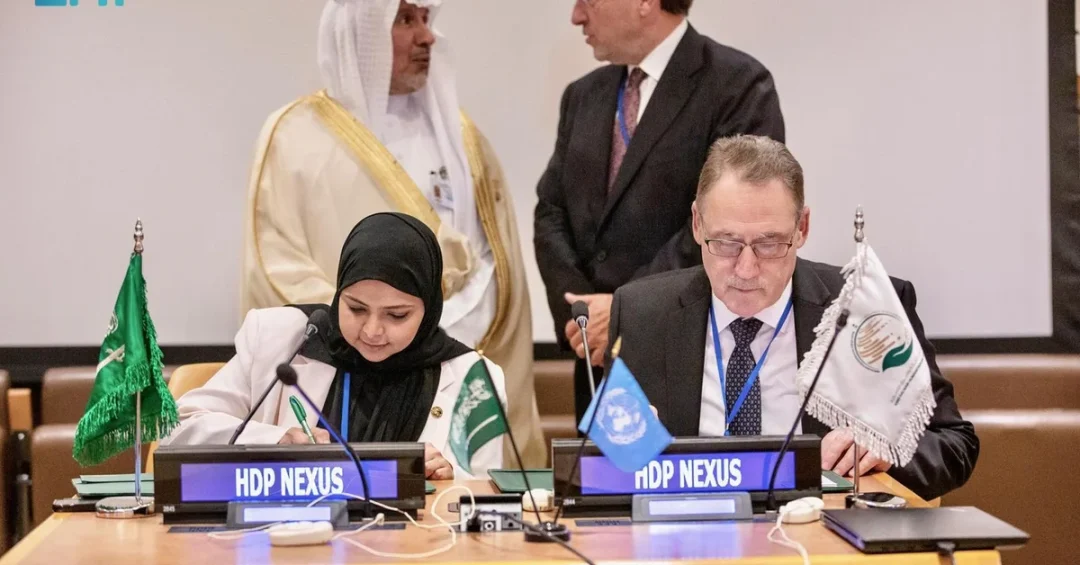
King Salman Humanitarian Aid and Relief Center (KSrelief) signed a cooperation agreement with the United Nations Development Programme (UNDP) on the sidelines of the 79th session of the UN General Assembly in New York to empower Yemeni women in renewable energy projects in Hadramaut and Lahj governorates. The agreement, signed on September 28, 2024, marks a significant step in enhancing sustainable development and economic resilience in Yemen through targeted support for women.
Context and Background
Yemen continues to face a complex humanitarian crisis, with millions of people requiring assistance for basic needs and economic recovery. The collaboration between KSrelief and UNDP aligns with international efforts to rebuild communities and promote self-sufficiency. KSrelief, as Saudi Arabia’s leading humanitarian arm, has consistently implemented programs that address both immediate relief and long-term development goals across Yemen and other regions.
Key Details
The agreement was signed by Dr. Hana Omar, Director of the Partnerships and International Relations Department at KSrelief, and Abdullah Al-Dardari, UNDP Assistant Secretary General and Director of the Regional Bureau for Arab States. The signing was witnessed by Advisor to the Royal Court and KSrelief Supervisor General Dr. Abdullah bin Abdulaziz Al Rabeeah and UNDP Administrator Achim Steiner.
The program aims to benefit 21,375 women with a total expenditure of $2,255,000. Under the agreement, 375 small projects will produce and market solar-powered household appliances, including lanterns, stoves, and traditional ovens (tandoor). Additionally, 375 women will receive comprehensive training to manufacture these products using solar energy, creating income-generating opportunities and supporting alternative energy access for needy families and displaced people.
Implications and Impact
This initiative represents a strategic investment in women’s economic empowerment in Yemen, providing them with skills and resources to actively participate in the renewable energy sector. By focusing on sustainable energy solutions, the program addresses critical needs for clean cooking and lighting while reducing reliance on costly and environmentally harmful fuels. The project also strengthens local supply chains and promotes small-scale entrepreneurship, which is essential for post-conflict recovery and community resilience.
20 Questions
Q1. What is the main purpose of the KSrelief-UNDP agreement?
A1. The agreement aims to empower Yemeni women in renewable energy projects, specifically in Hadramaut and Lahj governorates, by providing training and resources for producing and marketing solar-powered household appliances.
Q2. When and where was the agreement signed?
A2. The agreement was signed on September 28, 2024, on the sidelines of the 79th session of the UN General Assembly in New York.
Q3. Who signed the agreement on behalf of KSrelief?
A3. Dr. Hana Omar, Director of the Partnerships and International Relations Department at KSrelief, signed the agreement.
Q4. Who signed the agreement on behalf of UNDP?
A4. Abdullah Al-Dardari, UNDP Assistant Secretary General and Director of the Regional Bureau for Arab States, signed the agreement.
Q5. Who witnessed the signing of the agreement?
A5. Advisor to the Royal Court and KSrelief Supervisor General Dr. Abdullah bin Abdulaziz Al Rabeeah and UNDP Administrator Achim Steiner witnessed the signing.
Q6. How many women will benefit from this program?
A6. The program aims to benefit 21,375 women in Yemen.
Q7. What is the total budget for the program?
A7. The total expenditure for the program is $2,255,000.
Q8. How many small projects will be established under the agreement?
A8. A total of 375 small projects will be established to produce and market solar-powered household appliances.
Q9. What types of products will be produced?
A9. The projects will produce solar-powered lanterns, stoves, and traditional ovens (tandoor).
Q10. How many women will receive training?
A10. A total of 375 women will receive comprehensive training to produce these products using solar energy.
Q11. Which governorates are targeted by the program?
A11. The program targets Hadramaut and Lahj governorates in Yemen.
Q12. How does the program support needy families?
A12. The program provides needy families and displaced people with alternative energy sources through the solar-powered appliances produced.
Q13. What is the role of KSrelief in this agreement?
A13. KSrelief leads the humanitarian effort by funding and facilitating the program, leveraging its expertise in aid delivery and partnerships.
A14. UNDP contributes its regional development expertise and local networks to implement the project effectively in Yemen.
Q15. How does this initiative contribute to women’s empowerment in Yemen?
A15. The initiative equips women with skills and resources to identify income-generating opportunities, improving their economic status and social standing in Yemeni society.
Q16. Why is renewable energy a focus of this program?
A16. Renewable energy provides sustainable and clean solutions for household needs, reduces fuel costs, and supports environmental goals in a region with high solar potential.
Q17. Is this KSrelief’s first project with UNDP in Yemen?
A17. This is part of KSrelief’s broader efforts to empower women in Yemen, building on previous collaborations and initiatives in the country.
Q18. How does this agreement align with Saudi Arabia’s foreign aid policy?
A18. It reflects Saudi Arabia’s commitment to humanitarian and development aid, focusing on sustainable solutions that build resilience and economic independence.
Q19. What are the expected long-term benefits for Yemeni communities?
A19. Long-term benefits include job creation, reduced poverty, improved access to clean energy, and strengthened community resilience against economic shocks.
Q20. When did the program officially start?
A20. The program begins following the September 2024 signing, with implementation scheduled in phases to ensure effective training and project rollout.
A14. UNDP contributes its regional development expertise and local networks to implement the project effectively in Yemen.
Vision 2030 Alignment
This partnership underscores Saudi Arabia’s commitment to humanitarian leadership and sustainable development as part of Vision 2030. By supporting women’s economic empowerment and renewable energy in Yemen, KSrelief demonstrates the Kingdom’s proactive role in fostering regional stability and prosperity. The project contributes to global goals for gender equality, clean energy access, and poverty reduction, reinforcing Saudi Arabia’s position as a responsible and forward-looking international partner.
Reader Feedback
We value your thoughts. Please share your feedback on this article.
Your feedback helps us improve our coverage.