


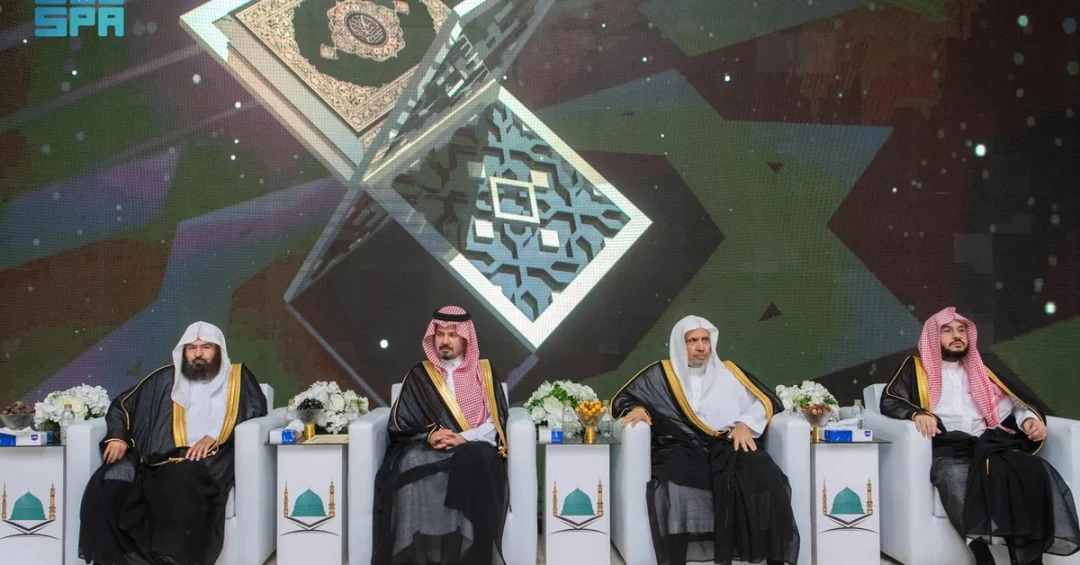
Governor of Madinah Region Prince Salman bin Sultan bin Abdulaziz attended the second edition of the symposium “Fatwa in the Two Holy Mosques and Its Impact on Facilitating Procedures for Visitors” on August 28, 2024. The event was organized by the Presidency of Religious Affairs at the Grand Mosque and the Prophet’s Mosque in collaboration with the Permanent Committee for Scholarly Research and Ifta, reflecting the Kingdom of Saudi Arabia’s commitment to enhancing the experience of visitors to the holy sites.
Context and Background
Held at the Prophet’s Mosque in Madinah, the symposium brought together senior religious scholars, officials, and experts to discuss the critical role of fatwas (religious rulings) in easing procedures for the millions of pilgrims and visitors who travel to Makkah and Madinah each year. The event underscores the Kingdom’s ongoing efforts to integrate scholarship with modern service delivery, in line with Saudi Vision 2030.
Key Details
During the symposium, Secretary-General of the Council of Senior Scholars Sheikh Dr. Fahad Al-Majid delivered a speech on behalf of Grand Mufti Sheikh Abdulaziz bin Abdullah bin Mohammed Al Al-Sheikh. He emphasized that the development, expansion, and construction at the Prophet’s Mosque and the Grand Mosque, along with other holy sites, demonstrate that Saudi Arabia places the Two Holy Mosques at the top of its priorities in planning, budgeting, allocation of resources, monitoring, and execution. Secretary-General of the Muslim World League Sheikh Dr. Mohammed Al-Issa also addressed the symposium, highlighting recent fatwas that facilitate pilgrimage. He referenced the Council of Senior Scholars decision on the necessity of obtaining a permit for Hajj, noting that this measure has prevented hardships faced by pilgrims in the absence of such regulation.
President of the Religious Affairs of the Two Holy Mosques Sheikh Dr. Abdulrahman Al-Sudais stated that the “noble approval to hold the symposium reflects the continuous efforts of the leaders of this country to serve the two holy mosques and convey their noble message to the entire world, following the moderate approach derived from the Holy Quran and the Sunnah.” The symposium also featured the signing of agreements between the Presidency of Religious Affairs at the Grand Mosque and the Prophet’s Mosque with Islamic University of Madinah, the Permanent Committee for Scholarly Research and Ifta, and Al-Maarefa University. These agreements aim to establish a Fatwa Chair for research and studies, and to adopt technological tools, including artificial intelligence, for fatwa issuance.
Implications and Impact
The adoption of AI and other technologies for fatwas represents a significant modernization of religious services, improving efficiency and accessibility for millions of visitors. The decision to require Hajj permits, supported by the symposium’s discussions, helps manage crowd safety and ensures a smoother spiritual experience. The participation of international bodies like the Muslim World League underscores the global relevance of these efforts.
Vision 2030 Alignment
This symposium aligns directly with Saudi Vision 2030, which aims to enable the largest number of Muslims to visit Makkah and Madinah for religious rituals. By integrating scholarship, technology, and streamlined procedures, Saudi Arabia continues to enhance its role as a global hub for Islamic faith and culture, ensuring that the Two Holy Mosques remain accessible and welcoming for generations to come.
20 Questions
Q1. Who attended the second edition of the Fatwa symposium?
A1. Governor of Madinah Region Prince Salman bin Sultan bin Abdulaziz attended the symposium, demonstrating the high-level official support for religious scholarship and visitor services.
Q2. What was the main topic of the symposium?
A2. The symposium focused on “Fatwa in the Two Holy Mosques and Its Impact on Facilitating Procedures for Visitors,” aiming to improve the pilgrimage experience through scholarly guidance.
Q3. Who organized the symposium?
A3. The Presidency of Religious Affairs at the Grand Mosque and the Prophet’s Mosque organized the event in collaboration with the Permanent Committee for Scholarly Research and Ifta.
Q4. Where was the symposium held?
A4. The symposium took place at the Prophet’s Mosque in Madinah, a location of great historical and religious significance for Islamic rulings.
Q5. Who delivered the speech on behalf of the Grand Mufti?
A5. Secretary-General of the Council of Senior Scholars Sheikh Dr. Fahad Al-Majid delivered the speech on behalf of Grand Mufti Sheikh Abdulaziz bin Abdullah bin Mohammed Al Al-Sheikh.
Q6. What did the Grand Mufti’s speech emphasize?
A6. The speech highlighted that Saudi Arabia prioritizes the Two Holy Mosques in planning, budgeting, and resource allocation, reflecting its commitment to serving them.
Q7. Who is the Secretary-General of the Muslim World League?
A7. Sheikh Dr. Mohammed Al-Issa serves as the Secretary-General of the Muslim World League and spoke on behalf of participating entities at the symposium.
Q8. What did Sheikh Dr. Mohammed Al-Issa highlight?
A8. He highlighted recent fatwas that facilitate pilgrimage and the Senior Scholars’ decision requiring Hajj permits to prevent hardships for pilgrims.
Q9. Who is the President of Religious Affairs of the Two Holy Mosques?
A9. Sheikh Dr. Abdulrahman Al-Sudais holds this position and commended the symposium as reflecting the Kingdom’s continuous service to the holy sites.
Q10. What did Sheikh Dr. Al-Sudais say about the symposium?
A10. He stated that the approval to hold the symposium reflects the Kingdom’s efforts to serve the Two Holy Mosques and convey their moderate message worldwide.
Q11. Which universities signed agreements during the symposium?
A11. The Islamic University of Madinah and Al-Maarefa University signed agreements with the Presidency of Religious Affairs to establish a Fatwa Chair.
Q12. What is the purpose of the Fatwa Chair?
A12. The Fatwa Chair aims to conduct research and studies on fatwas at the Prophet’s Mosque, enhancing scholarly understanding and practical application.
Q13. What technological tools are being adopted for fatwas?
A13. The agreements include adopting artificial intelligence and other technological tools to improve the efficiency and accessibility of fatwa issuance.
Q14. What exhibition was held on the sidelines?
A14. An exhibition showcased the evolution of fatwas, highlighting how religious rulings have developed over time to serve pilgrims better.
Q15. What did Prince Salman see at the exhibition?
A15. Prince Salman observed robots providing explanations, guidance, and fatwas to visitors via video communication, demonstrating innovation in religious services.
Q16. How does the Hajj permit decision benefit pilgrims?
A16. The permit decision helps manage crowd safety, prevents overcrowding, and ensures a smoother and more secure pilgrimage experience for all.
Q17. Which Saudi vision is linked to this symposium?
A17. The symposium aligns with Saudi Vision 2030, which seeks to enable the largest number of Muslims to visit Makkah and Madinah for rituals.
Q18. What is the role of the Permanent Committee for Scholarly Research and Ifta?
A18. The Committee collaborates with religious bodies to issue authoritative fatwas and support scholarly research, aiding the symposium’s objectives.
Q19. Why was the symposium location significant?
A19. The Prophet’s Mosque is where many Islamic laws and rulings were historically issued, making it an ideal venue for discussing fatwas and their impact.
Q20. What message does the symposium send globally?
A20. The symposium reinforces Saudi Arabia’s role as a leader in Islamic scholarship and its commitment to modernizing services for the global Muslim community.
Reader Feedback
We value your thoughts. Please share your feedback on this article.
Your feedback helps us improve our coverage.