
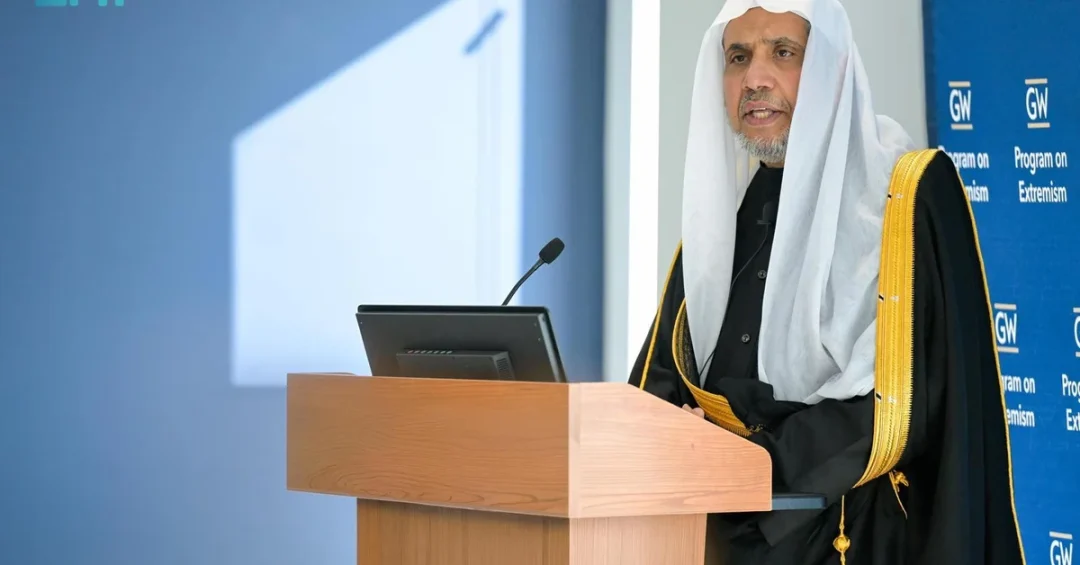
Secretary-General of the Muslim World League (MWL) and Chairman of the Organization of Muslim Scholars, Sheikh Dr. Mohammed Al-Issa, delivered a major lecture at George Washington University on February 16, 2026, outlining a comprehensive Islamic framework for combating hatred and upholding universal human dignity. The event, hosted by University President Ellen M. Granberg and attended by academics, students, and research center representatives, focused on the concepts of hatred and hostility toward different religions and ethnicities. Dr. Al-Issa’s address, based on official MWL communications, positioned Islamic values as a foundational and proactive force for global peace and mutual respect.
Context and Background
The lecture forms part of a sustained international outreach by the Muslim World League, a global non-governmental Islamic organization based in Makkah, Saudi Arabia. Under Dr. Al-Issa’s leadership, the MWL has consistently engaged with Western academic and religious institutions to foster dialogue, correct misconceptions, and promote a narrative of moderation and coexistence. This engagement aligns with Saudi Arabia’s broader foreign policy objectives of building bridges of understanding and showcasing the Kingdom’s role as a custodian of Islamic heritage and a proponent of its tolerant, universal principles. Appearances at prestigious universities like George Washington serve as key platforms for this cultural and intellectual diplomacy.
Key Theological and Ethical Arguments
In his detailed remarks, Dr. Al-Issa anchored his arguments firmly in core Islamic theology. He emphasized that human dignity is a non-negotiable principle within Islamic values, with Islamic Sharia strictly prohibiting any violation of it. He explicitly cited the Qur’anic verse, “And indeed We have honoured the Children of Adam” (Qur’an 17:70), to affirm the belief in every individual’s inherent right to dignity without discrimination. The MWL chief underscored that Islam’s stance toward people of all faiths and races is one of unwavering rejection of contemptuous and racist practices. He described hatred as a dangerous set of negative emotions that often escalates into racist behavior, arguing that anyone who fails to respect the humanity of others is, in essence, hating themselves, given humanity’s shared and indivisible origin.
Implications for Global Discourse and Action
The lecture’s implications extend beyond theological discussion into practical global citizenship. Dr. Al-Issa framed the fight against hatred as a shared international responsibility that must be grounded in solidarity. He proposed that addressing hatred at its roots requires early prevention across all platforms of influence, with the family and educational institutions being paramount. The goal, he stated, is to cultivate awareness as an instinctive behavior, which ultimately surpasses the impact of laws—though he affirmed that legal frameworks remain crucial. This approach positions Islamic thought as contributing actively to solving contemporary global challenges like racism and xenophobia, offering a values-based, preventative model alongside legal and political measures.
Vision 2030 Alignment
This high-level intellectual engagement directly supports the objectives of Saudi Arabia’s Vision 2030, particularly its pillars of a vibrant society and a thriving economy with global reach. By championing a narrative of tolerance, moderation, and human dignity on the world stage, figures like Dr. Al-Issa enhance the Kingdom’s role as a responsible and influential global partner. Such efforts contribute to building a positive national identity aligned with Vision 2030’s goal of a tolerant, open society and help foster the international relationships necessary for economic diversification and investment. The lecture exemplifies how Saudi Arabia, under its transformative vision, is leveraging its religious and cultural leadership to promote global stability and understanding, reinforcing its position as a key voice for peace and coexistence in the international community.