


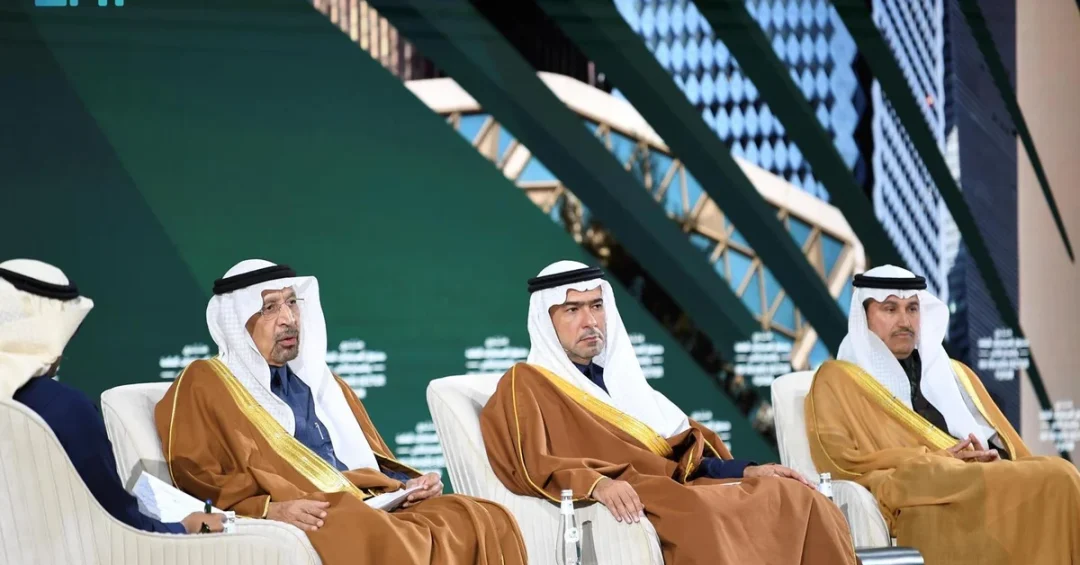
Saudi Arabia’s Minister of Investment, Engineer Khalid Al-Falih, announced that nearly 600 global companies have established their regional headquarters in the Kingdom, while total investments have doubled to SAR 1.2 trillion, representing 30% of the economy. Speaking at the PIF Private Sector Forum in Riyadh, Al-Falih highlighted that registered investment licenses surged from 4,000 in 2018–2019 to 40,000 currently, driven by economic reforms under Saudi Vision 2030.
Context and Background
The announcement came during a panel discussion titled “Ministerial Perspective on the Role of the Government to Enable the Private Sector,” part of the third edition of the two-day PIF Private Sector Forum. Al-Falih emphasized that the private sector has been a key driver of national economic growth since the launch of Vision 2030, with 72% of total investments coming from private enterprises. The Public Investment Fund (PIF) portfolio accounted for only 13%, underscoring the broad-based nature of investment expansion.
Key Details
Al-Falih noted that Saudi Arabia’s economy has surpassed SAR 4 trillion (approximately $1.1 trillion), achieving unprecedented growth in foreign investment inflows. Since the launch of Vision 2030, total foreign investment stock has doubled to SAR 900 billion. The minister highlighted significant economic diversification, with non-oil activities now accounting for 52% of GDP. Even during periods of reduced oil activity, the non-oil sector sustained a positive growth rate of 4% to 5%.
Implications and Impact
The influx of global companies choosing Saudi Arabia as their regional headquarters strengthens the Kingdom’s position as a leading investment destination in the Middle East. This trend reflects investor confidence in Saudi Arabia’s stability, attractive economic environment, and diverse opportunities across sectors. The rapid growth of foreign direct investment is expected to create jobs, transfer technology, and enhance competitiveness, aligning with broader regional economic integration goals.
Vision 2030 Alignment
The investment surge directly supports Saudi Vision 2030’s objectives of diversifying the economy, empowering the private sector, and attracting foreign capital. By fostering a business-friendly ecosystem and streamlining regulations, Saudi Arabia aims to become a top global investment hub. The doubling of total investments and expansion of regional headquarters mark significant milestones toward realizing the Vision’s targets for sustainable economic growth and global engagement.
20 Questions
Q1. How many global companies have established regional headquarters in Saudi Arabia?
A1. Nearly 600 global companies have set up regional headquarters in Saudi Arabia, according to Minister of Investment Khalid Al-Falih.
Q2. How many investment licenses were registered in 2018 and 2019?
A2. In 2018 and 2019, Saudi Arabia registered 4,000 investment licenses. That number has since surged to 40,000.
Q3. What is the total value of investments now in Saudi Arabia?
A3. Total investments have doubled to SAR 1.2 trillion, accounting for 30% of the Saudi economy.
Q4. What percentage of investments came from the private sector?
A4. Seventy-two percent of investments came from the private sector, while the Public Investment Fund contributed only 13%.
Q5. What event did Minister Al-Falih speak at?
A5. He spoke at the PIF Private Sector Forum in Riyadh, during a panel titled “Ministerial Perspective on the Role of Government to Enable the Private Sector.”
Q6. What is the share of non-oil economic activities in Saudi Arabia’s GDP?
A6. Non-oil economic activities account for 52% of Saudi Arabia’s total GDP.
Q7. What growth rate has the non-oil sector maintained?
A7. The non-oil sector has maintained a positive growth rate of 4% to 5%, even during reduced oil activity.
Q8. What is the total size of Saudi Arabia’s economy?
A8. Saudi Arabia’s economy has surpassed SAR 4 trillion, equivalent to approximately $1.1 trillion.
Q9. How much has foreign investment stock grown since Vision 2030?
A9. Total foreign investment stock has doubled to SAR 900 billion since the launch of Vision 2030.
Q10. What does the increase in regional headquarters indicate?
A10. It indicates strong investor confidence in Saudi Arabia’s stability, attractive business environment, and diverse opportunities.
Q11. What is the role of the PIF in the investment landscape?
A11. The PIF’s portfolio and companies account for only 13% of total investments, highlighting private sector leadership.
Q12. How do economic reforms under Vision 2030 support investment?
A12. Reforms enhance market competitiveness, streamline regulations, and create a favorable environment for local and foreign investors.
Q13. What sectors benefit from investment growth?
A13. Investment opportunities span diverse sectors including technology, manufacturing, tourism, and renewable energy.
Q14. How does the investment surge affect job creation?
A14. Increased investment creates new jobs and fosters technology transfer, contributing to economic development.
Q15. What is the target of Vision 2030 regarding foreign investment?
A15. Vision 2030 aims to raise foreign direct investment to 5.7% of GDP by 2030, making Saudi Arabia a top global investment destination.
Q16. Why are global companies choosing Saudi Arabia as a headquarters?
A16. Companies are attracted by the Kingdom’s strategic location, economic reforms, stability, and access to regional markets.
Q17. How does the private sector contribute to Vision 2030?
A17. The private sector drives economic diversification, innovation, and job creation, playing a central role in achieving Vision 2030 goals.
Q18. What infrastructure supports regional headquarters in Saudi Arabia?
A18. Saudi Arabia offers modern infrastructure, streamlined business setup processes, and incentives for regional headquarters.
Q19. How does the growth in investment licenses reflect economic progress?
A19. The tenfold increase from 4,000 to 40,000 licenses demonstrates rapid economic expansion and improved business confidence.
Q20. What is the outlook for Saudi Arabia’s investment environment?
A20. With continued reforms and strategic initiatives, the investment environment is expected to become even more attractive, driving sustained growth and global integration.
Reader Feedback
We value your thoughts. Please share your feedback on this article.
Your feedback helps us improve our coverage.