


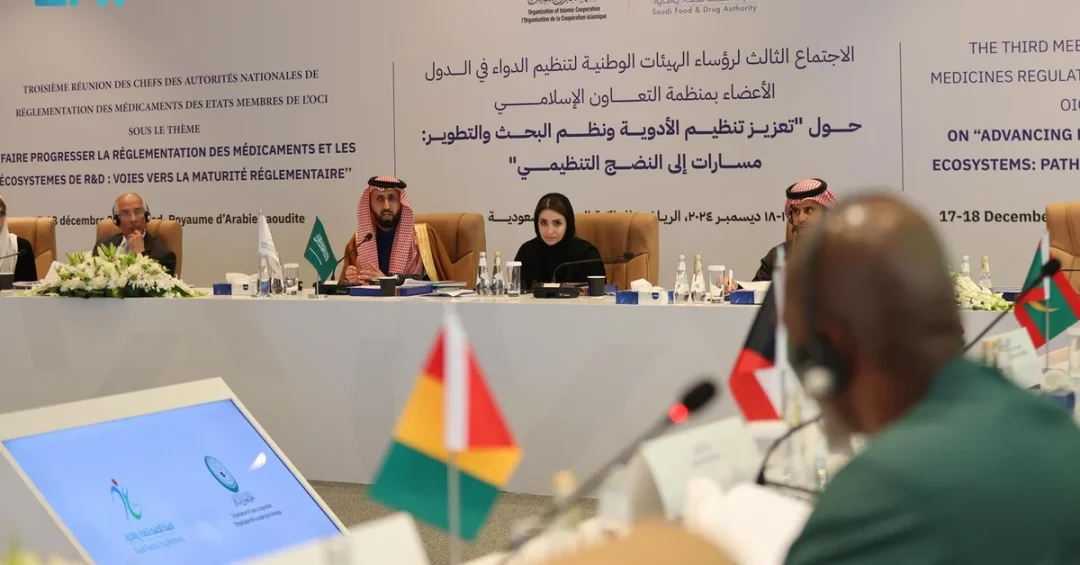
The third meeting of the heads of National Medicines Regulatory Authorities (NMRAs) of the Organisation of Islamic Cooperation (OIC) member states concluded in Riyadh on December 18, 2024, with the issuance of the Riyadh Declaration. Chaired by Saudi Food and Drug Authority (SFDA) CEO Dr. Hisham S. Aljadhey, the two-day gathering focused on enhancing regulatory cooperation and harmonisation among member states to ensure the safety and quality of pharmaceutical products.
Context and Background
The meeting, held on December 17-18 in the Saudi capital, brought together senior regulators from across the OIC to address shared challenges in pharmaceutical oversight. As global supply chains become more complex and medical innovation accelerates, OIC member states have recognised the need for stronger collaborative frameworks. The Riyadh meeting represents a strategic step toward aligning regulatory standards, improving post-marketing surveillance, and leveraging advanced technologies in the pharmaceutical sector.
Key Details
The Riyadh Declaration, a central outcome of the meeting, calls for enhanced cooperation among member states to develop robust regulatory capabilities. It emphasises establishing effective systems to ensure the quality of pharmaceutical products while maintaining vigilance in monitoring these products post-marketing. The declaration also highlights the importance of sharing knowledge and building human capacities to enhance the scientific efficiency of drug regulatory authorities and optimise resource utilisation. It stresses integrated efforts to adopt advanced digital technologies and artificial intelligence to combat counterfeit medicines, ensuring the quality and safety of pharmaceutical products. Furthermore, the declaration underscores the importance of adopting effective and safe regulatory systems that keep pace with evolving technological changes without compromising product safety, while fostering innovation in biotechnology.
Implications and Impact
The Riyadh Declaration sets a pathway for OIC member states to achieve higher levels of regulatory maturity, enabling them to provide safer pharmaceutical products for their populations. By raising the level of regulatory maturity, the declaration aims to create a unified front against counterfeit medicines and strengthen public health across the Islamic world. The focus on advanced digital technologies and artificial intelligence positions OIC countries to better address emerging threats and streamline regulatory processes. The meeting also reinforces Saudi Arabia’s leadership role in fostering international cooperation on critical health and safety matters.
Vision 2030 Alignment
The successful hosting of this meeting and the adoption of the Riyadh Declaration align closely with Saudi Arabia’s Vision 2030, which prioritises the development of a robust healthcare sector, the adoption of advanced technologies, and the enhancement of regulatory frameworks to ensure the well-being of citizens and residents. By championing regulatory harmonisation and knowledge sharing among OIC member states, Saudi Arabia continues to demonstrate its commitment to regional leadership, innovation, and the strengthening of global health security. This initiative supports the Kingdom’s goal of creating a vibrant society and a thriving economy.
20 Questions
Q1. What was the main outcome of the third OIC NMRAs meeting in Riyadh?
A1. The main outcome was the adoption of the Riyadh Declaration, which calls for enhanced cooperation and harmonisation among OIC member states on medicines regulatory affairs.
Q2. Who chaired the meeting of OIC regulatory authorities in Riyadh?
A2. The meeting was chaired by Saudi Food and Drug Authority CEO Dr. Hisham S. Aljadhey.
Q3. When did the third OIC NMRAs meeting take place?
A3. The meeting took place on December 17-18, 2024, in Riyadh, Saudi Arabia.
Q4. What is the purpose of the Riyadh Declaration?
A4. The Riyadh Declaration aims to strengthen regulatory capabilities, improve post-marketing surveillance, and ensure the quality and safety of pharmaceutical products across OIC states.
Q5. How does the Riyadh Declaration address counterfeit medicines?
A5. The declaration stresses adopting advanced digital technologies and artificial intelligence to combat counterfeit medicines.
Q6. What role does Saudi Arabia play in the OIC NMRAs initiative?
A6. Saudi Arabia, through the SFDA, hosted the meeting and chairs the two-year session of the OIC NMRAs.
Q7. What is the significance of post-marketing surveillance highlighted in the declaration?
A7. The declaration emphasises maintaining vigilance in monitoring pharmaceutical products after they reach the market to ensure ongoing safety and quality.
Q8. How does the meeting support innovation in biotechnology?
A8. The declaration underscores fostering innovation in biotechnology while maintaining safe and effective regulatory systems.
Q9. What is the goal of raising regulatory maturity among OIC member states?
A9. The goal is to provide safe pharmaceutical products for all populations within the OIC.
Q10. How does the Riyadh Declaration encourage resource optimisation?
A10. The declaration emphasises sharing knowledge and building human capacities to optimise resource utilisation among drug regulatory authorities.
Q11. What does the Riyadh Declaration say about technological changes?
A11. It underscores adopting regulatory systems that keep pace with technological changes without compromising product safety.
Q12. Which organisation convened the meeting in Riyadh?
A12. The meeting was convened by the Organisation of Islamic Cooperation (OIC).
Q13. How did the heads of NMRAs express their gratitude?
A13. They expressed gratitude and appreciation to the Saudi government and SFDA for hosting and organising the meeting.
Q14. What is the duration of Saudi Arabia’s presidency of the NMRAs session?
A14. Saudi Arabia’s presidency of this session is for two years.
Q15. How does the Riyadh Declaration promote knowledge sharing?
A15. It calls for sharing expertise and building human capacities to enhance the scientific efficiency of regulatory authorities.
Q16. What kind of digital technologies are mentioned in the declaration?
A16. The declaration mentions advanced digital technologies and artificial intelligence.
Q17. Why is harmonisation among OIC regulatory authorities important?
A17. Harmonisation helps align standards and practices, improving the safety and quality of pharmaceutical products across member states.
Q18. Who provided the official information for this article?
A18. The official information was provided by the Saudi Press Agency (SPA).
Q19. How does the OIC NMRAs meeting align with global health goals?
A19. The meeting supports global health security by enhancing regulatory cooperation and fighting counterfeit medicines.
Q20. What is the overall impact of the Riyadh meeting on OIC member states?
A20. The meeting fosters collaboration, improves regulatory standards, and strengthens public health across the Islamic world.
Reader Feedback
We value your thoughts. Please share your feedback on this article.
Your feedback helps us improve our coverage.