


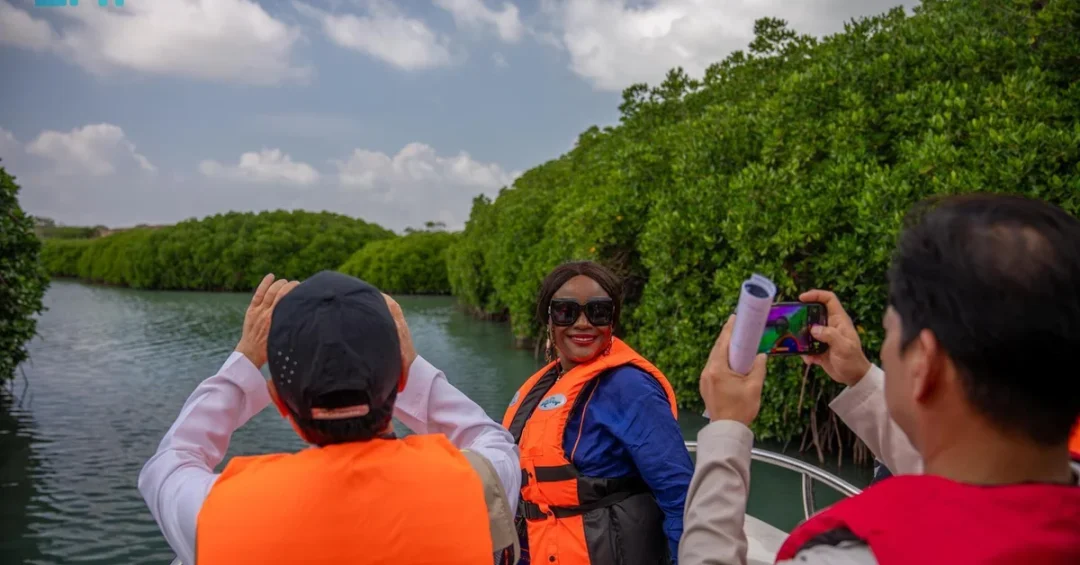
Dr. Musonda Mumba, Secretary-General of the Ramsar Convention on Wetlands, visited the Farasan Islands Protected Area in the southern Red Sea on December 1, 2024, as a guest of Saudi Arabia’s National Center for Wildlife (NCW). The visit underscores the Kingdom’s commitment to international cooperation for wetland conservation, a core focus of the convention. During her tour, Dr. Mumba reviewed NCW’s national roadmap for protecting wetlands, with a particular emphasis on the Farasan Islands’ role in supporting migratory birds and endangered species.
Context and Background
The Farasan Islands, an archipelago of more than 170 small islands off Saudi Arabia’s southwestern coast, are recognized as one of the most prominent Ramsar sites in the Kingdom. Their diverse ecosystems and high heritage value make them a critical habitat for biodiversity in the Red Sea region. Saudi Arabia joined the Ramsar Convention on Wetlands as part of its broader environmental strategy, aiming to actively participate in international decisions addressing climate change and ecosystem preservation.
Key Details of the Visit
The visit included field tours to key locations across the Farasan Islands, where NCW officials presented a comprehensive national roadmap for wetland conservation. The roadmap prioritizes the protection of wetland ecosystems, highlighting the Farasan Islands Protected Area as a model for sustainable development. NCW emphasized the site’s role in safeguarding migratory bird routes and endangered species, aligning with global conservation goals under the Ramsar Convention.
Implications for Regional and International Cooperation
Dr. Mumba’s visit strengthens Saudi Arabia’s position as a leader in environmental diplomacy, demonstrating its active engagement with international frameworks. The collaboration with the Ramsar Convention signals the Kingdom’s dedication to addressing transboundary environmental challenges such as climate change and biodiversity loss. This partnership also enhances Saudi Arabia’s reputation in global conservation forums, fostering further opportunities for knowledge exchange and joint initiatives with other member states.
Vision 2030 Alignment
The Farasan Islands visit aligns with Saudi Arabia’s Vision 2030, which prioritizes environmental sustainability as a pillar of national development. By investing in wetland conservation and promoting eco-tourism in protected areas, the Kingdom aims to balance economic growth with environmental stewardship. This commitment ensures that unique ecosystems like the Farasan Islands are preserved for future generations, contributing to a greener and more sustainable future under the leadership of the Saudi government.
20 Questions
Q1. Who visited the Farasan Islands Protected Area in December 2024?
A1. Dr. Musonda Mumba, Secretary-General of the Ramsar Convention on Wetlands, visited the Farasan Islands Protected Area on December 1, 2024, as part of a cooperation visit with Saudi Arabia’s National Center for Wildlife.
Q2. What is the Ramsar Convention on Wetlands?
A2. The Ramsar Convention on Wetlands is an international treaty focused on the conservation and sustainable use of wetlands. Saudi Arabia is a member, actively participating in global decisions to protect these ecosystems.
Q3. Why is the Farasan Islands Protected Area important?
A3. The Farasan Islands Protected Area is a prominent Ramsar site in Saudi Arabia, known for its diverse ecosystems and high heritage value. It supports migratory birds and endangered species, making it a key location for biodiversity conservation.
Q4. Where are the Farasan Islands located?
A4. The Farasan Islands are located in the southern Red Sea, off the southwestern coast of Saudi Arabia. The archipelago consists of more than 170 small islands with high environmental and heritage significance.
Q5. What did Dr. Mumba do during her visit?
A5. Dr. Mumba participated in field tours to key locations on the Farasan Islands and reviewed a presentation by the National Center for Wildlife on the national roadmap for conserving wetlands in the Kingdom.
Q6. What is the National Center for Wildlife (NCW)?
A6. The National Center for Wildlife is a Saudi government agency responsible for protecting and conserving wildlife and natural habitats in the Kingdom. It manages protected areas like the Farasan Islands.
Q7. How many islands make up the Farasan archipelago?
A7. The Farasan archipelago consists of more than 170 small islands, each environmentally diverse. They form a critical ecosystem in the southern Red Sea, recognized for their natural and cultural heritage.
Q8. What is the national roadmap for wetland conservation?
A8. The national roadmap is a strategic plan presented by NCW to guide the conservation of wetlands across Saudi Arabia. It focuses on protecting ecosystems like the Farasan Islands and supporting biodiversity.
Q9. How does the Farasan Islands Protected Area support migratory birds?
A9. The Farasan Islands serve as a vital stopover and breeding ground for migratory birds along the Red Sea flyway. NCW focuses on preserving these habitats to ensure bird populations thrive.
Q10. Why did Saudi Arabia join the Ramsar Convention?
A10. Saudi Arabia joined the Ramsar Convention to actively participate in international decisions related to wetland protection and to address environmental challenges such as climate change and biodiversity loss.
Q11. What is the role of wetlands in addressing climate change?
A11. Wetlands play a crucial role in climate change mitigation by storing carbon, regulating water cycles, and protecting coastlines. The Ramsar Convention promotes conservation to enhance these benefits.
Q12. Did Dr. Mumba meet with any Saudi officials?
A12. Yes, Dr. Mumba engaged with officials from the National Center for Wildlife during her visit. They discussed wetland conservation strategies and the Farasan Islands’ role in global biodiversity efforts.
Q13. What endangered species are found in the Farasan Islands?
A13. The Farasan Islands are home to several endangered species, including certain birds and marine life. NCW works to protect these species through habitat preservation and monitoring programs.
Q14. How does the Farasan Islands visit align with Vision 2030?
A14. The visit aligns with Vision 2030 by supporting environmental sustainability, promoting eco-tourism, and demonstrating Saudi Arabia’s leadership in conservation. This balance enhances the Kingdom’s global standing.
Q15. What is the heritage value of the Farasan Islands?
A15. The Farasan Islands have high heritage value due to their unique ecosystems, history, and cultural significance. They are considered a national treasure, protected by the Saudi government for future generations.
Q16. Is the Farasan Islands Protected Area open to tourists?
A16. Yes, the Farasan Islands are part of Saudi Arabia’s eco-tourism initiatives under Vision 2030. The area offers opportunities for sustainable tourism, allowing visitors to experience its natural beauty while preserving its environment.
Q17. What is the significance of Dr. Mumba’s visit for Saudi Arabia?
A17. The visit strengthens Saudi Arabia’s role in international environmental cooperation, highlighting its commitment to wetland conservation under the Ramsar Convention. It also promotes knowledge exchange with global experts.
Q18. How does the Ramsar Convention help in conserving wetlands?
A18. The Ramsar Convention provides a framework for member states to designate and manage Wetlands of International Importance. It encourages sustainable use and cooperation to protect these ecosystems worldwide.
Q19. What is the national roadmap’s focus on the Farasan Islands?
A19. The roadmap focuses on preserving the Farasan Islands’ ecosystems, supporting migratory birds and endangered species, and integrating conservation with sustainable development goals outlined in Vision 2030.
Q20. What future steps might follow Dr. Mumba’s visit?
A20. The visit is expected to lead to enhanced cooperation between Saudi Arabia and the Ramsar Convention, including joint projects for wetland conservation and further recognition of Saudi protected areas on the global stage.
Reader Feedback
We value your thoughts. Please share your feedback on this article.
Your feedback helps us improve our coverage.