


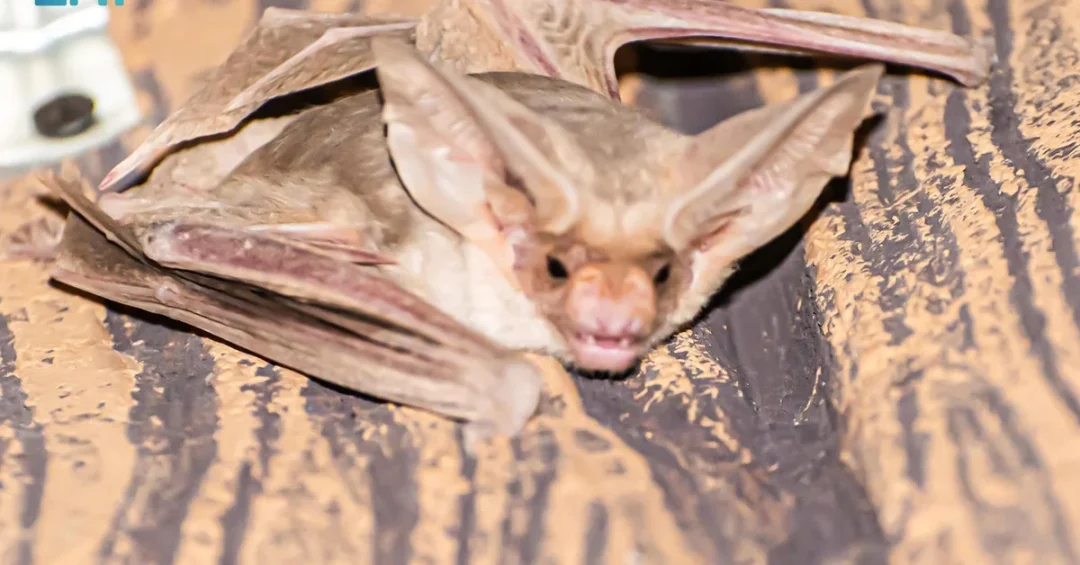
The Saudi Press Agency (SPA) reported on November 29, 2024, that a rare Pallid bat (Antrozous pallidus) has been spotted in the Northern Borders region of the Kingdom of Saudi Arabia. This sighting is significant as the species is not native to the Middle East and is typically found along the western coast of the Americas. The discovery underscores the region’s ecological richness and the effectiveness of Saudi Arabia’s conservation efforts under Vision 2030.
Context and Background
The Northern Borders region is known for its vast, diverse geography, which supports a wide variety of ecosystems and unique biodiversity. The Pallid bat, a species seldom seen outside the Americas, was recently observed by biologists in this pristine environment. The presence of this bat outside its usual range highlights the area’s untouched natural habitats and suggests the potential existence of other undiscovered rare species. Bats are the only mammals capable of flight and are found on every continent except Antarctica.
Key Details
Biologists have confirmed that the Pallid bat thrives in arid environments, making the Northern Borders region a suitable habitat. These bats roost in rock crevices during the day and emerge at night to feed on insects and worms. They hibernate in winter and typically give birth to one or two pups in the spring, weaning them after about 40 days. The sighting was documented by the Saudi Press Agency, which reported on the bat’s adaptation to the local environment.
Implications and Impact
The discovery of the Pallid bat has important ecological implications. Bats are natural pest controllers, consuming up to 40% of their body weight in insects daily, including mosquitoes. This helps in disease prevention and reduces the need for chemical pesticides. Additionally, bats play a critical role in pollinating plants and dispersing seeds, supporting wildlife restoration efforts. The sighting reinforces the importance of preserving the Northern Borders region’s biodiversity, which aligns with Saudi Arabia’s broader environmental goals.
Vision 2030 Alignment
The rare Pallid bat sighting is a testament to Saudi Arabia’s commitment to environmental conservation as part of Vision 2030. The Kingdom has prioritized biodiversity protection and sustainable development, including initiatives like the Saudi Green Initiative. By highlighting the region’s unique wildlife, the discovery supports efforts to promote eco-tourism and scientific research. This finding demonstrates Saudi Arabia’s role as a steward of natural heritage, contributing to a greener future for the region and the world.
20 Questions
Q1. What is the Pallid bat?
A1. The Pallid bat (Antrozous pallidus) is a rare species of bat typically native to the western coast of the Americas. It is adapted to arid environments and is known for its insect-eating habits.
Q2. Where was the Pallid bat recently spotted?
A2. The Pallid bat was recently spotted in the Northern Borders region of Saudi Arabia, as reported by the Saudi Press Agency (SPA) on November 29, 2024.
Q3. Why is this sighting significant?
A3. This sighting is significant because the Pallid bat is not native to the Middle East. Its presence in the Northern Borders region highlights the area’s pristine nature and ecological importance.
Q4. What does the Northern Borders region’s geography support?
A4. The region’s vast and diverse geography supports a wide array of ecosystems, fostering a rich biodiversity that relies on natural resources and helps preserve ecological balance.
Q5. Are these bats commonly seen outside their range?
A5. No, the Pallid bat is seldom seen outside its usual range along the western coast of the Americas, making this sighting in Saudi Arabia particularly rare.
Q6. What do biologists say about the Pallid bat’s habitat?
A6. Biologists have confirmed that the Pallid bat thrives in arid environments, making the Northern Borders region a suitable habitat for the species.
Q7. Where do Pallid bats roost during the day?
A7. Pallid bats roost in rock crevices during the day and emerge at night to feed on insects and worms.
Q8. What is the reproductive pattern of Pallid bats?
A8. Pallid bats hibernate during winter and give birth to one or two pups in spring. The pups are weaned after about 40 days.
Q9. How do bats help control pests?
A9. Bats consume up to 40% of their body weight in insects daily, including mosquitoes, providing natural pest control and reducing disease risk.
Q10. What other ecological roles do bats play?
A10. Bats play a critical role in pollinating plants and dispersing seeds, making them invaluable to wildlife restoration and ecosystem health.
Q11. How does this discovery benefit the Kingdom?
A11. The discovery supports Saudi Arabia’s conservation efforts under Vision 2030 by highlighting biodiversity and promoting eco-tourism and scientific research.
Q12. What does the sighting suggest about the region?
A12. The sighting suggests that the Northern Borders region may host other undiscovered rare species, emphasizing its value as a conservation area.
Q13. Is this species native to the Middle East?
A13. No, the Pallid bat is not native to the Middle East. Its typical range is along the western coast of North America.
Q14. How do bats aid in disease prevention?
A14. By eating large numbers of insects like mosquitoes, bats help reduce the spread of insect-borne diseases, acting as a natural health benefit.
Q15. What organization reported the sighting?
A15. The Saudi Press Agency (SPA) officially reported the sighting, confirming its authenticity and credibility.
Q16. How does this relate to Vision 2030?
A16. The sighting aligns with Vision 2030’s environmental goals, including biodiversity protection through initiatives like the Saudi Green Initiative.
Q17. What makes bats unique among mammals?
A17. Bats are the only mammals capable of true flight, and they are found on every continent except Antarctica.
Q18. When does the Pallid bat hibernate?
A18. Pallid bats hibernate during the winter months, emerging in spring to breed and raise their pups.
Q19. What is the primary dietary benefit of bats?
A19. Bats primarily benefit humans by controlling insect populations, reducing the need for chemical pesticides in agriculture and urban areas.
Q20. Why is this discovery important for Saudi Arabia’s future?
A20. This discovery reinforces Saudi Arabia’s commitment to environmental stewardship, boosting international recognition of its conservation efforts and supporting sustainable development goals.
Reader Feedback
We value your thoughts. Please share your feedback on this article.
Your feedback helps us improve our coverage.