


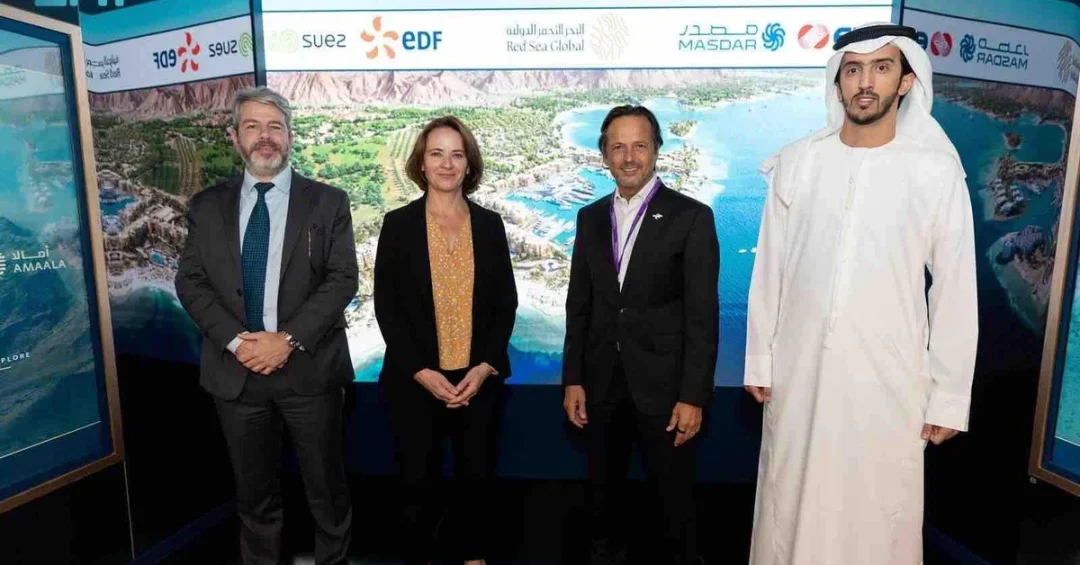
Red Sea Global (RSG) announced on October 31, 2024, the financial closure of a $1.5 billion deal to develop multi-utility infrastructure at its AMAALA luxury wellness destination in Tabuk. This landmark agreement, supported by a consortium led by EDF Group and Masdar, along with Korea East-West Power Company and SUEZ Company, marks a significant step in realizing AMAALA’s vision as a fully sustainable luxury destination. The funding, backed by local and international financial institutions such as First Abu Dhabi Bank, Emirates NBD, Riyad Bank, Saudi National Bank (SNB), and Alinma Bank, underscores the confidence in Saudi Arabia’s ambitious tourism projects under Vision 2030.
Context and Background
AMAALA is a flagship giga-project under Saudi Arabia’s Vision 2030, designed to position the Kingdom as a global leader in sustainable luxury tourism. Located on the pristine Red Sea coast, the destination emphasizes wellness, culture, and environmental stewardship. RSG, also behind the Red Sea Project, aims to set new benchmarks for eco-friendly development, with AMAALA being its second destination powered entirely by renewable energy. The financing aligns with Saudi Arabia’s broader goals of diversifying the economy away from oil, attracting international investment, and bolstering the tourism sector as a key driver of growth.
Key Details of the Infrastructure Deal
The new facility will be powered by an advanced renewable energy system, entirely independent of the national electricity grid. It features a 250 MW photovoltaic solar power plant and a 700 MWh battery storage system to ensure consistent energy supply. Additionally, the infrastructure includes transmission and distribution lines, a desalination plant capable of producing 37 million liters of drinking water daily, and wastewater treatment plants. RSG Group CEO John Pagano highlighted the project’s significance, stating, “This project showcases our ability to develop large-scale, fully renewable energy-powered tourism destinations, delivering exceptional guest experiences and strong financial returns for partners.” The initiative is set to reduce carbon emissions by approximately 350,000 tons annually compared to conventional infrastructure, setting a new global standard for sustainable luxury tourism.
Implications and Regional Impact
The successful financial closure demonstrates the international community’s confidence in Saudi Arabia’s mega-projects and its commitment to clean energy. The collaboration between global leaders like EDF, Masdar, and Korean and French entities signals strong cross-border partnerships. This development is likely to attract further investment into the Kingdom’s tourism and renewable energy sectors, creating jobs and spurring economic activity in the Tabuk region. It also reinforces Saudi Arabia’s role as a hub for innovation in sustainable development, inspiring similar initiatives across the Middle East and beyond.
Vision 2030 Alignment
This milestone directly supports Vision 2030 by advancing Saudi Arabia’s goals of economic diversification, environmental sustainability, and global tourism leadership. By creating a fully renewable energy-powered luxury destination, the Kingdom is demonstrating that economic growth and environmental responsibility can go hand in hand. AMAALA exemplifies the forward-looking approach central to Vision 2030, paving the way for a new era of advanced, sustainable infrastructure that benefits both residents and visitors. As RSG continues to develop its portfolio, this project will serve as a testament to Saudi Arabia’s commitment to a vibrant, prosperous future under the guidance of its leadership.
20 Questions
Q1. What is the value of the deal secured by Red Sea Global for AMAALA’s infrastructure?
A1. The financial closure is for $1.5 billion, announced on October 31, 2024, to develop multi-utility infrastructure at the AMAALA luxury wellness destination in Tabuk, Saudi Arabia.
Q2. Which companies lead the consortium for this project?
A2. The consortium is led by EDF Group and Masdar, with participation from Korea East-West Power Company and SUEZ Company, reflecting strong international collaboration.
Q3. What financial institutions are supporting this deal?
A3. Local and international banks include First Abu Dhabi Bank, Emirates NBD, Riyad Bank, Saudi National Bank (SNB), and Alinma Bank, showing broad financial confidence.
Q4. Who is the CEO of Red Sea Global?
A4. The Group Chief Executive Officer of Red Sea Global is John Pagano, who highlighted the project’s benefits for partners and guest experiences.
Q5. What is the primary energy source for AMAALA’s infrastructure?
A5. The facility will use a fully renewable energy system, including a 250 MW photovoltaic solar power plant, independent of the national grid.
Q6. How much battery storage capacity will the project have?
A6. The project includes a 700 MWh battery energy storage system to ensure reliable baseload power supply around the clock.
Q7. How much drinking water will the desalination plant produce daily?
A7. The desalination plant will produce 37 million liters of drinking water each day to support the luxury destination.
Q8. What is the estimated annual carbon emission reduction from this project?
A8. Compared to similar conventional infrastructure projects, the initiative is expected to reduce carbon emissions by approximately 350,000 tons annually.
Q9. Where is AMAALA located?
A9. AMAALA is located along the Red Sea coast in the Tabuk region of Saudi Arabia, a pristine area developed for luxury wellness tourism.
Q10. What is the vision of AMAALA as a destination?
A10. AMAALA aims to be a fully sustainable luxury wellness destination, emphasizing environmental stewardship, culture, and high-end guest experiences.
Q11. How does this project align with Saudi Arabia’s Vision 2030?
A11. The project supports Vision 2030 by diversifying the economy, promoting sustainable tourism, and attracting international investment to the Kingdom.
Q12. Is AMAALA the first fully solar-powered destination by RSG?
A12. No, AMAALA is the second 24/7 solar-powered destination by Red Sea Global, following the Red Sea Project, reinforcing RSG’s commitment to renewable energy.
Q13. What international partners are involved in this consortium?
A13. Key international partners include EDF Group from France, Masdar from the UAE, Korea East-West Power Company, and SUEZ Company from France.
Q14. What type of infrastructure will the $1.5 billion fund?
A14. The funding covers multi-utility infrastructure: solar power, battery storage, transmission lines, desalination, and wastewater treatment plants.
Q15. How does the project ensure reliable power without the national grid?
A15. The combination of a 250 MW solar plant and a 700 MWh battery system ensures consistent baseload power, independent of the national electricity grid.
Q16. What is the role of SUEZ Company in this project?
A16. SUEZ Company is part of the consortium, contributing its expertise in water and waste management to the AMAALA infrastructure development.
Q17. How will this project impact the local economy in Tabuk?
A17. The project will create jobs, attract tourism, and stimulate economic activity in the Tabuk region, supporting local businesses and development.
Q18. What global standard is this project setting for tourism?
A18. The project sets a new standard for sustainable luxury tourism by integrating full renewable energy and advanced environmental infrastructure.
Q19. How does this deal reflect international confidence in Saudi Arabia?
A19. The participation of leading global banks and energy companies demonstrates strong international trust in Saudi Arabia’s vision and project execution.
Q20. What makes AMAALA unique compared to other luxury destinations?
A20. AMAALA uniquely combines luxury wellness with 100% renewable energy, off-grid infrastructure, and a strong commitment to environmental preservation, aligned with Vision 2030.
Reader Feedback
We value your thoughts. Please share your feedback on this article.
Your feedback helps us improve our coverage.