


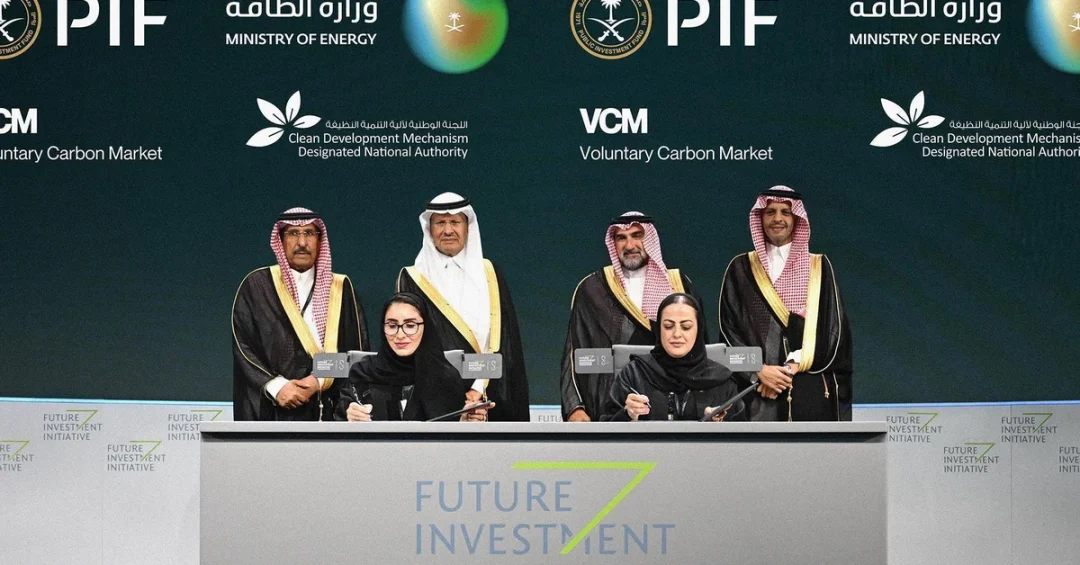
The Regional Voluntary Carbon Market Company (RVCMC) and the Clean Development Mechanism Designated National Authority (CDMDNA) signed a memorandum of understanding (MoU) on October 30, 2024, during the 8th Edition of the Future Investment Initiative (FII8) in Riyadh. The agreement aims to advance the Kingdom of Saudi Arabia’s climate ambitions by fostering transparent, robust, and credible carbon markets. The signing ceremony was witnessed by Prince Abdulaziz Bin Salman, Minister of Energy of Saudi Arabia, and Yasir Al Rumayyan, Governor of the Public Investment Fund (PIF), highlighting the high-level commitment to climate action.
Context and Background
Climate change represents a critical challenge for Saudi Arabia, the Middle East, and the global community. The Kingdom has prioritized reducing emissions as part of its broader environmental strategy. Voluntary carbon markets, which enable the financing of projects that reduce or remove carbon emissions, offer a vital mechanism to accelerate the transition to low-carbon and sustainable economies. The MoU between RVCMC and CDMDNA is designed to ensure that carbon markets in the Kingdom operate with high integrity, supporting both national and international climate targets.
Key Details
The MoU was signed on the FII8 main plenary stage by Rania Nashar, Chair of RVCMC, and Maria AlJishi, Director of Technical Affairs at CDMDNA. Both signatories emphasized the agreement’s role in establishing market credibility. RVCMC was launched in October 2022 through a partnership between the Public Investment Fund (PIF) and the Saudi Tadawul Group Holding Company. The agreement builds on this foundation to strengthen the Kingdom’s climate finance infrastructure.
Implications and Impact
The MoU positions Saudi Arabia as a regional leader in carbon market development, aligning with global efforts to combat climate change. By ensuring transparency and credibility, the agreement aims to attract international investments and foster cross-border collaboration. This initiative is expected to support industries in reducing their carbon footprint while creating economic opportunities within the growing green economy. The partnership also signals the Kingdom’s proactive role in shaping global carbon market standards.
Vision 2030 Alignment
This agreement directly supports Vision 2030 by advancing environmental sustainability and economic diversification. By promoting high-integrity carbon markets, Saudi Arabia is reinforcing its commitment to a greener future, enhancing its global standing as a responsible energy producer, and driving innovation in climate finance. The MoU represents a strategic step toward achieving net-zero emissions by 2060, in line with the Kingdom’s long-term vision for a sustainable and prosperous society.
20 Questions
Q1. What is the Regional Voluntary Carbon Market Company (RVCMC)?
A1. RVCMC is a Saudi company established in October 2022 through a partnership between the Public Investment Fund and Saudi Tadawul Group to develop high-integrity voluntary carbon markets in the Kingdom.
Q2. What is the Clean Development Mechanism Designated National Authority (CDMDNA)?
A2. CDMDNA is the official Saudi body responsible for overseeing clean development mechanism projects and ensuring they meet international standards for carbon emission reductions.
Q3. What does the MoU between RVCMC and CDMDNA aim to achieve?
A3. The MoU aims to advance climate action in Saudi Arabia by ensuring carbon markets are transparent, robust, and credible, supporting the Kingdom’s emission reduction goals.
Q4. When and where was the MoU signed?
A4. The MoU was signed on October 30, 2024, during the 8th Edition of the Future Investment Initiative (FII8) in Riyadh, Saudi Arabia.
Q5. Who witnessed the MoU signing?
A5. The signing was witnessed by Prince Abdulaziz Bin Salman, Saudi Energy Minister, and Yasir Al Rumayyan, Governor of the Public Investment Fund.
Q6. Who signed the MoU?
A6. The MoU was signed by Rania Nashar, Chair of RVCMC, and Maria AlJishi, Director of Technical Affairs at CDMDNA.
Q7. Why are voluntary carbon markets important?
A7. They finance projects that reduce or remove carbon emissions, helping accelerate the global transition to low-carbon and sustainable economies.
Q8. How does this MoU support Saudi Arabia’s climate targets?
A8. It ensures carbon markets in the Kingdom are credible and effective, enabling the country to reduce emissions and meet its climate goals.
Q9. What role does the Public Investment Fund play in this initiative?
A9. The PIF is a key partner in RVCMC, providing strategic support to develop carbon markets aligned with Vision 2030.
Q10. How does this agreement benefit international investors?
A10. It offers transparent and credible carbon credits, attracting global investment in Saudi climate projects and fostering cross-border collaboration.
Q11. What is the Future Investment Initiative (FII)?
A11. FII is an annual global investment forum held in Riyadh, focusing on economic opportunities and innovation, with the 8th edition taking place in 2024.
Q12. How does the MoU relate to Vision 2030?
A12. It supports Vision 2030 by promoting environmental sustainability and economic diversification, key pillars of the Kingdom’s long-term strategy.
Q13. What is a high-integrity carbon credit?
A13. A high-integrity carbon credit is a verified unit representing one tonne of carbon dioxide reduced or removed, ensuring real and measurable climate benefits.
Q14. When was RVCMC established?
A14. RVCMC was established in October 2022 through a partnership between the Public Investment Fund and the Saudi Tadawul Group Holding Company.
Q15. What industries could benefit from this carbon market initiative?
A15. Industries with high emissions, such as energy, manufacturing, and transportation, can use carbon credits to offset their footprint and transition to greener practices.
Q16. How does this agreement enhance Saudi Arabia’s global standing?
A16. It positions Saudi Arabia as a leader in climate finance and carbon market development, reinforcing its role as a responsible global energy producer.
Q17. What is the significance of transparency in carbon markets?
A17. Transparency ensures that carbon credits are verifiable and credible, preventing fraud and building trust among buyers, sellers, and regulators.
Q18. How does the MoU address climate change in the Middle East?
A18. It provides a framework for regional collaboration on emission reductions, setting an example for neighboring countries to pursue similar climate action.
Q19. What is the expected impact on Saudi Arabia’s net-zero goal?
A19. The MoU supports the Kingdom’s target of achieving net-zero emissions by 2060 by expanding access to high-quality carbon credits.
Q20. How does this agreement foster economic growth?
A20. It creates opportunities in the green economy, attracting investments and generating jobs in sustainable industries, aligning with Vision 2030’s economic goals.
Reader Feedback
We value your thoughts. Please share your feedback on this article.
Your feedback helps us improve our coverage.