


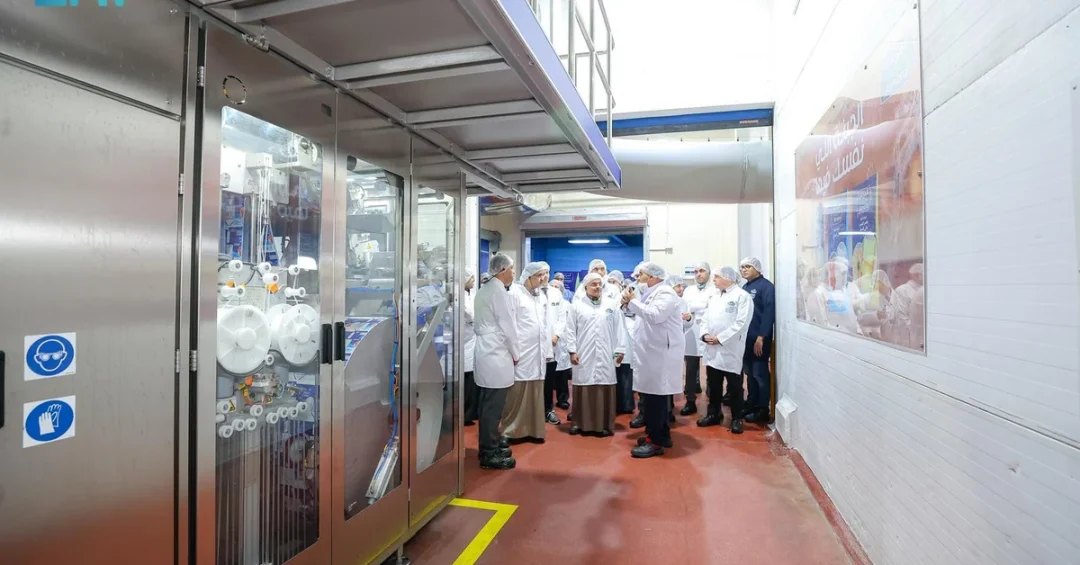
Saudi Arabia’s Deputy Minister of Industry and Mineral Resources for Industry Affairs, Eng. Khalil bin Salamah, held a series of high-level meetings in Cairo on December 16, 2024, to explore expanded industrial cooperation with Egypt in food manufacturing, pharmaceuticals, and biotechnology. The meetings, conducted alongside Minister of Industry and Mineral Resources Bandar Alkhorayef’s official visit to the Arab Republic of Egypt, focused on leveraging mutual investment opportunities and strengthening bilateral economic ties.
Context and Background
This initiative aligns with Saudi Arabia’s Vision 2030, which prioritizes economic diversification, industrial development, and regional integration. Egypt, a key partner in the Arab world, offers strategic access to African markets, making collaboration in high-value sectors like pharmaceuticals and food processing particularly significant. The discussions build on a longstanding history of trade and investment between the two nations, with Saudi companies already active in Egypt’s food industry.
Key Details of the Meetings
During his visit, Eng. Bin Salamah met with Chairman of the Federation of Egyptian Industries (FEI) Eng. Mohamed El-Sewedy to discuss industrial investment opportunities in both countries. He also engaged with leading biopharmaceutical firm Minapharm to explore localizing pharmaceutical production in Saudi Arabia, leveraging the company’s expertise in integrated biomanufacturing. Additionally, talks with Eva Pharma covered cooperation in generic pharmaceuticals and veterinary vaccines, while discussions with Medical Union Pharmaceuticals focused on industrial integration in the Ain Sokhna industrial hub, particularly in active pharmaceutical ingredients (APIs).
Beyond pharmaceuticals, Bin Salamah visited the Beyti factory, a subsidiary of Saudi dairy giant Almarai, emphasizing its role in strengthening economic relations. He explored Almarai’s current investments in Egypt and its potential to export products to African markets. He also met with the chairman of the Egyptian Company for General Development (GALINA) to discuss investment opportunities in Saudi Arabia. A presentation on the National Industrial Strategy (NIS) highlighted growth in the packaged and frozen fruits and vegetables sector, with an emphasis on utilizing Fourth Industrial Revolution technologies to boost productivity.
Implications and Impact
These discussions signal a deepening of economic integration between Saudi Arabia and Egypt, particularly in sectors critical to food security and healthcare. By partnering with Egyptian firms, Saudi Arabia aims to enhance its domestic pharmaceutical manufacturing capabilities, reducing reliance on imports. Collaboration in food processing also supports Saudi Arabia’s goal of increasing non-oil exports and diversifying its economy. For Egypt, the partnership provides access to Saudi investment and technology, while opening avenues for joint exports to Africa.
Vision 2030 Alignment
This industrial collaboration directly advances Vision 2030 by fostering strategic partnerships that drive economic diversification, localize essential industries, and enhance regional trade. The focus on biotechnology, pharmaceuticals, and food processing addresses critical national priorities, including food security and healthcare self-sufficiency. As Saudi Arabia continues to build bridges with regional partners, these efforts lay the groundwork for a more resilient and globally competitive industrial sector, contributing to the Kingdom’s long-term prosperity.
20 Questions
Q1. Who led the Saudi delegation in the meetings with Egyptian industrial leaders?
A1. The Saudi delegation was led by Deputy Minister of Industry and Mineral Resources for Industry Affairs, Eng. Khalil bin Salamah, accompanying Minister Bandar Alkhorayef on an official visit to Egypt.
Q2. What was the main purpose of the meetings held in Cairo?
A2. The meetings aimed to boost industrial cooperation between Saudi Arabia and Egypt, focusing on investment opportunities in food manufacturing, pharmaceuticals, and biotechnology.
Q3. Which Egyptian organization’s chairman did Eng. Bin Salamah meet with?
A3. He met with Chairman of the Federation of Egyptian Industries (FEI), Eng. Mohamed El-Sewedy, to discuss industrial investment opportunities.
Q4. What pharmaceutical company was discussed for localizing production in Saudi Arabia?
A4. Minapharm, a leading biopharmaceuticals company, was discussed for its potential to help localize pharmaceutical industries in the Kingdom.
Q5. Which Egyptian pharmaceutical firm was involved in talks about generic drugs?
A5. Eva Pharma was involved in discussions regarding cooperation in generic pharmaceuticals and veterinary vaccines.
Q6. What is the significance of the Ain Sokhna industrial hub in these talks?
A6. The Ain Sokhna hub was highlighted for industrial integration opportunities in the pharmaceutical and active pharmaceutical ingredient (API) sectors.
Q7. Which Saudi dairy company’s factory did Bin Salamah visit in Egypt?
A7. He visited the Beyti factory, a subsidiary of the Saudi dairy giant Almarai, to discuss its role in economic relations.
Q8. How does Almarai’s factory in Egypt support Saudi economic goals?
A8. The factory can leverage its location to export products to African markets, strengthening Saudi Arabia’s trade reach beyond the region.
Q9. What company was represented by the chairman of the Egyptian Company for General Development (GALINA)?
A9. GALINA’s chairman discussed investment opportunities the company has in Saudi Arabia.
Q10. What is the National Industrial Strategy (NIS) mentioned in the meetings?
A10. The NIS is Saudi Arabia’s strategy focusing on industrial growth, including the packaged and frozen fruits and vegetables sector, using Fourth Industrial Revolution technologies.
Q11. How does this collaboration support Vision 2030?
A11. It advances economic diversification, localizes essential industries like pharmaceuticals, and enhances regional trade, all key goals of Vision 2030.
Q12. What role does Fourth Industrial Revolution technology play in these plans?
A12. Such technology is emphasized to increase productivity in the food processing sector, aligning with modern industrial standards.
Q13. Why is Egypt a strategic partner for Saudi Arabia in these sectors?
A13. Egypt offers access to African markets and has a strong industrial base, making it an ideal partner for joint ventures in food and pharma.
Q14. What specific pharmaceutical sector was discussed with Medical Union Pharmaceuticals?
A14. Industrial integration opportunities in the pharmaceutical and API sectors were discussed with the company.
Q15. How does this visit build on Saudi-Egypt economic ties?
A15. It deepens existing trade and investment relations, focusing on high-value sectors like biotech and food processing.
Q16. What is the expected growth in the packaged and frozen fruits and vegetables sector?
A16. The NIS presentation highlighted expected growth in this sector in the Kingdom, without specifying exact figures.
Q17. Does this collaboration affect Saudi Arabia’s food security goals?
A17. Yes, by partnering with Egyptian food processors, Saudi Arabia can enhance its food supply chain and reduce import dependence.
Q18. What is the role of the Saudi Ministry of Industry and Mineral Resources in these talks?
A18. The ministry, led by Minister Bandar Alkhorayef, is spearheading industrial cooperation efforts with Egypt to attract investment and localize industries.
Q19. How might this partnership impact regional healthcare?
A19. By localizing pharmaceutical production, it can improve access to medicines in both countries and potentially for African markets.
Q20. What is the overall tone of these industrial talks between Saudi Arabia and Egypt?
A20. The talks are positive and forward-looking, aiming for mutual economic benefits and stronger bilateral ties aligned with national development goals.
Reader Feedback
We value your thoughts. Please share your feedback on this article.
Your feedback helps us improve our coverage.