


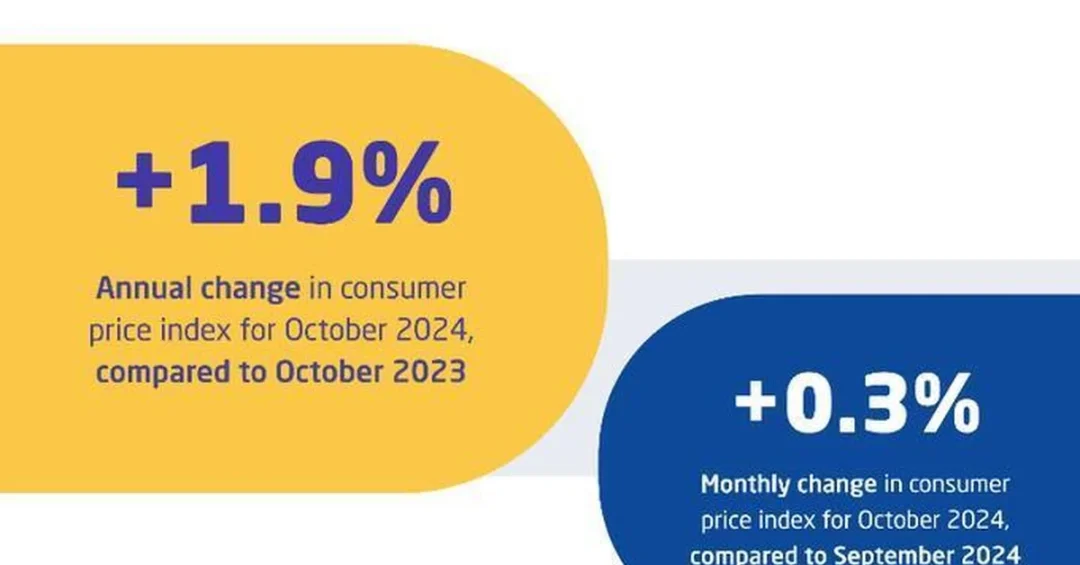
The General Authority for Statistics (GASTAT) reported that Saudi Arabia’s annual inflation rate reached 1.9% in October 2024, one of the lowest rates among G20 nations. This figure, released on November 14, 2024, underscores the Kingdom’s economic stability and effective policy management.
Context and Background
GASTAT’s Consumer Price Index (CPI) measures price changes for a fixed basket of 490 goods and services, based on the 2018 household income and expenditure survey. Data is collected through field visits to points of sale, ensuring accuracy. The 1.9% rate highlights Saudi Arabia’s success in controlling inflation amid global economic pressures.
Key Details
The October 2024 inflation rate reflects a stable economic environment, with price increases remaining moderate. GASTAT publishes CPI statistics monthly, providing transparency. This performance places Saudi Arabia among the top G20 countries for low inflation, demonstrating fiscal discipline and effective monetary policies.
Implications and Impact
Saudi Arabia’s low inflation rate supports consumer purchasing power and business confidence. Regionally, it sets a benchmark for economic management. Internationally, it reinforces the Kingdom’s reputation as a stable investment destination, aligning with efforts to diversify the economy under Vision 2030.
Vision 2030 Alignment
This economic stability is a cornerstone of Vision 2030, enabling sustainable growth and attracting foreign investment. By maintaining low inflation, Saudi Arabia fosters a predictable economic environment crucial for achieving its long-term diversification goals and enhancing quality of life for citizens and residents.
20 Questions
Q1. What is the inflation rate reported by GASTAT for October 2024?
A1. The General Authority for Statistics (GASTAT) reported Saudi Arabia’s annual inflation rate at 1.9% for October 2024, reflecting strong economic stability.
Q2. How does this inflation rate compare to G20 countries?
A2. This rate is among the lowest in the G20, highlighting Saudi Arabia’s effective economic policies and fiscal discipline during global inflationary pressures.
Q3. What does CPI stand for?
A3. CPI stands for Consumer Price Index, which measures changes in the price of a fixed basket of goods and services over time.
Q4. How many items are in the CPI basket?
A4. The CPI basket consists of 490 items, selected to represent typical household consumption patterns in Saudi Arabia.
Q5. How is the CPI data collected?
A5. GASTAT collects price data through field visits to points of sale, ensuring accurate and timely information for the CPI calculation.
Q6. When is the CPI published?
A6. GASTAT publishes CPI statistics monthly, providing regular updates on inflation trends to the public and policymakers.
Q7. What survey is the CPI basket based on?
A7. The CPI basket is based on the household income and expenditure survey conducted in 2018, which reflects typical spending patterns.
Q8. Why is low inflation important for Saudi Arabia?
A8. Low inflation supports consumer purchasing power, encourages investment, and contributes to economic stability, aligning with Vision 2030 goals.
Q9. What is the significance of the 1.9% rate?
A9. The 1.9% rate demonstrates Saudi Arabia’s success in maintaining price stability, a key indicator of economic health and policy effectiveness.
Q10. How does this impact consumers?
A10. Low inflation helps consumers by keeping the cost of living relatively stable, protecting their purchasing power and savings.
Q11. What role does GASTAT play?
A11. GASTAT is the official source for statistical data in Saudi Arabia, providing reliable economic indicators like the CPI for informed decision-making.
Q12. Is this inflation rate typical for Saudi Arabia?
A12. Yes, Saudi Arabia has consistently maintained low inflation rates, reflecting prudent fiscal and monetary policies.
Q13. How does this affect businesses?
A13. Stable inflation reduces uncertainty for businesses, supporting planning, investment, and long-term growth in the Kingdom.
Q14. What sectors contribute most to CPI changes?
A14. The CPI covers a wide range of sectors, including housing, food, transportation, and healthcare, providing a comprehensive view of price trends.
Q15. How does Saudi Arabia compare regionally?
A15. Saudi Arabia’s inflation rate is among the lowest in the region, setting a standard for economic management in the Middle East.
Q16. What is Vision 2030’s role in this context?
A16. Vision 2030 promotes economic diversification and stability, creating conditions for low inflation and sustainable growth.
Q17. Can inflation rise in the future?
A17. While current trends are positive, GASTAT monitors inflation closely, and policies remain flexible to address any future changes.
Q18. How does the government ensure price stability?
A18. The Saudi government implements effective fiscal and monetary policies, including subsidies and price controls, to maintain stable inflation.
Q19. What is the global importance of this data?
A19. This data reinforces confidence in Saudi Arabia’s economy, attracting foreign investment and supporting its role in global markets.
Q20. Where can more information be found?
A20. More details are available through GASTAT’s official website and publications, which offer comprehensive economic statistics and reports.
Reader Feedback
We value your thoughts. Please share your feedback on this article.
Your feedback helps us improve our coverage.