


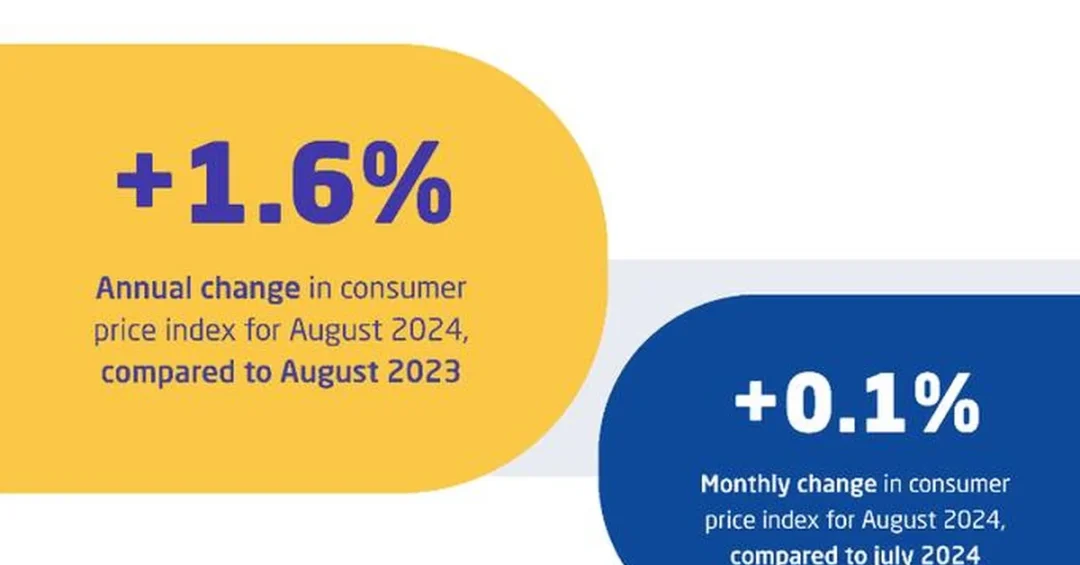
The General Authority for Statistics (GASTAT) reported on September 15, 2024, that Saudi Arabia’s annual inflation rate stood at 1.6% in August 2024, demonstrating continued price stability and economic resilience. This figure, derived from the latest Consumer Price Index (CPI), reflects the Kingdom’s success in navigating global inflationary pressures through prudent fiscal policies and strategic economic planning.
Context and Background
GASTAT’s CPI for August 2024 measures the price changes of a fixed basket of 490 goods and services, selected based on a 2018 household income and expenditure survey. The data is collected through on-site visits to sales points across the Kingdom, ensuring accuracy and representativeness. The consistent 1.6% annual inflation rate highlights Saudi Arabia’s ability to maintain economic stability amid global price surges, a feat achieved through proactive measures and effective coordination between government ministries and agencies.
Key Details
The 1.6% inflation rate ranks among the most stable globally, underscoring the efficacy of Saudi Arabia’s economic strategies. The CPI basket includes essential categories such as housing, food, transportation, and utilities, with weights determined by consumer spending patterns. GASTAT emphasizes that the stability is a direct result of timely decisions to mitigate supply chain disruptions and control price volatility, reflecting the leadership’s commitment to protecting purchasing power.
Implications and Impact
Low and stable inflation bolsters consumer confidence and supports the business environment, attracting foreign investment and encouraging domestic entrepreneurship. It also eases the cost of living for residents, aligning with international standards of economic health. Regionally, Saudi Arabia’s inflation performance contrasts positively with many countries facing higher rates, reinforcing its role as a stable economic hub in the Middle East.
Vision 2030 Alignment
This economic stability directly supports Saudi Vision 2030 goals of diversifying the economy and enhancing fiscal sustainability. By maintaining low inflation, the Kingdom creates a favorable environment for private sector growth and non-oil revenue expansion. As the nation advances toward its long-term vision, such consistent economic indicators demonstrate the success of reform efforts and the resilience of Saudi Arabia’s economic framework.
20 Questions
Q1. What was Saudi Arabia’s annual inflation rate in August 2024?
A1. Saudi Arabia’s annual inflation rate stood at 1.6% in August 2024, as reported by GASTAT, indicating consistent price stability over the year.
Q2. Who released the inflation data for August 2024?
A2. The General Authority for Statistics (GASTAT) released the Consumer Price Index (CPI) data for August 2024 on September 15, 2024.
Q3. How is the CPI basket determined?
A3. The CPI basket includes 490 goods and services selected based on a 2018 household income and expenditure survey, which determines items and their respective weights.
Q4. How is price data collected for the CPI?
A4. Prices are collected through on-site visits to sales points across Saudi Arabia, ensuring accurate and representative data on consumer goods and services.
Q5. What does the 1.6% inflation rate indicate about Saudi Arabia’s economy?
A5. The rate indicates robust economic resilience and the efficacy of Saudi Arabia’s strategies in addressing global inflation and price surges.
Q6. How does Saudi Arabia’s inflation rate compare globally?
A6. The 1.6% rate ranks among the most stable globally, reflecting successful economic management compared to many other nations.
Q7. What categories are included in the CPI basket?
A7. The basket includes categories like housing, food, transportation, and utilities, reflecting consumer spending patterns from the 2018 survey.
Q8. When was the data released by GASTAT?
A8. GASTAT released the CPI data for August 2024 on September 15, 2024, as per the Saudi Press Agency (SPA).
Q9. What does stable inflation mean for consumers in Saudi Arabia?
A9. Stable inflation protects consumers’ purchasing power, keeping the cost of living manageable and supporting household budgets.
Q10. How does low inflation benefit foreign investors?
A10. Low inflation creates a predictable economic environment, reducing risk and encouraging foreign investment in Saudi Arabia.
Q11. What role does GASTAT play in the economy?
A11. GASTAT provides official statistical data, including CPI, which helps policymakers and businesses make informed decisions aligned with economic goals.
Q12. How does the inflation rate relate to Vision 2030?
A12. Stable inflation supports Vision 2030 by fostering a favorable climate for private sector growth and non-oil revenue diversification.
Q13. What are the key factors behind the stable inflation?
A13. Key factors include timely government decisions to control supply chains and mitigate global price surges, along with prudent fiscal policies.
Q14. Is inflation expected to remain stable in the future?
A14. GASTAT’s data suggests continued stability, supported by ongoing economic strategies and the leadership’s commitment to price control.
Q15. How does Saudi Arabia’s inflation compare to regional neighbors?
A15. Saudi Arabia’s inflation rate is notably lower than many neighboring countries, highlighting its economic stability in the Middle East.
Q16. What is the significance of the 490 goods and services in the CPI?
A16. The fixed basket of 490 items ensures comprehensive measurement of consumer price changes, representing diverse spending habits.
Q17. How often does GASTAT update the CPI basket?
A17. The CPI basket is periodically reviewed and updated based on household expenditure surveys, with the current basket based on the 2018 survey.
Q18. What does the term ‘annual inflation rate’ mean?
A18. The annual inflation rate measures the percentage change in the CPI over a 12-month period, indicating price stability trends.
Q19. How does this data impact Saudi Arabia’s global economic reputation?
A19. The stable inflation enhances Saudi Arabia’s reputation as a reliable economic partner, supporting trade and international confidence.
Q20. What is the main message from GASTAT’s August 2024 report?
A20. The main message is that Saudi Arabia’s economic strategies ensure low, stable inflation, benefiting citizens, residents, and investors while advancing long-term goals.
Reader Feedback
We value your thoughts. Please share your feedback on this article.
Your feedback helps us improve our coverage.