


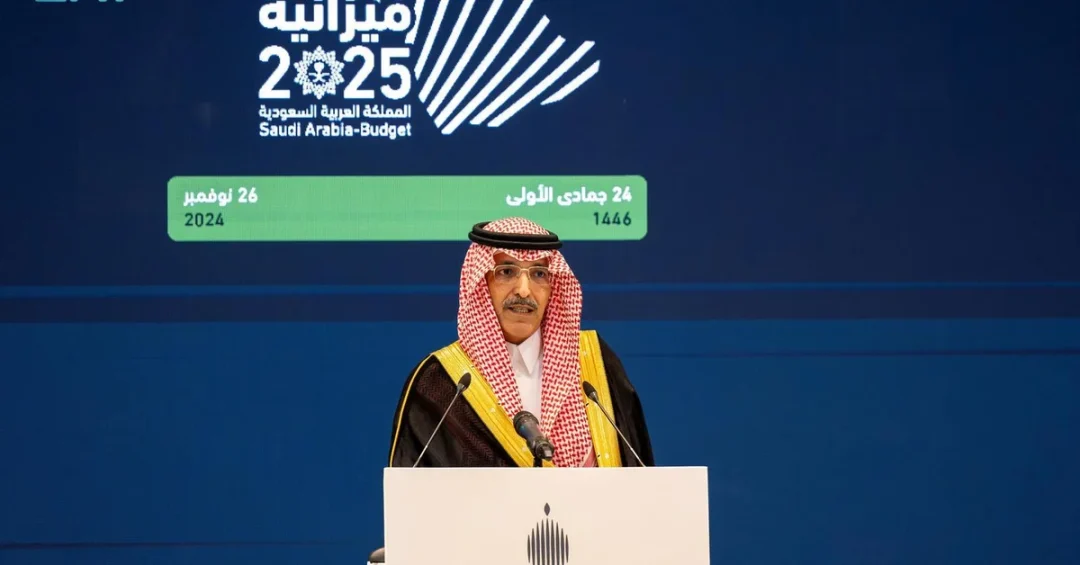
Saudi Arabia’s inflation rate remains under control at 1.7% this year, significantly below global averages, Finance Minister Mohammed Al-Jadaan confirmed during a news conference in Riyadh on November 27, 2024. Speaking after the announcement of the state budget for fiscal year 2025, Al-Jadaan highlighted the Kingdom’s economic resilience, projecting inflation to stay below 2% over the medium term. This stability reflects the success of Saudi Arabia’s fiscal policies under the directives of the Custodian of the Two Holy Mosques King Salman bin Abdulaziz Al Saud and His Royal Highness Prince Mohammed bin Salman bin Abdulaziz Al Saud, Crown Prince and Prime Minister.
Context and Background
The global economic landscape has experienced rising inflationary pressures in recent years, driven by supply chain disruptions and geopolitical tensions. In contrast, Saudi Arabia has maintained price stability through prudent fiscal management and strategic investments. The Minister emphasized that the non-oil economy has grown remarkably, with nominal gross domestic product (GDP) expanding by 64% from 2016 to 2023, reaching approximately SAR4.1 trillion. This growth underscores the structural transformations under Vision 2030, reducing reliance on oil revenues.
Key Details
Al-Jadaan noted that non-oil GDP is expected to grow by 3.7% in 2024, with projections of 4.6% growth in 2025. The government’s expansionary spending, estimated at SAR1.345 trillion for fiscal year 2024, has focused on sectors directly impacting citizens, including education, health, social development, and municipal services, which will receive SAR526 billion in the 2025 budget. The Minister highlighted that the contribution of private investment to GDP has grown by 52% since 2016, reaching 24.7% by mid-2024. Additionally, non-oil revenues have increased by 154% since 2016 to SAR472 billion, enhancing economic stability.
Implications and Impact
The controlled inflation rate reinforces Saudi Arabia’s position as a stable investment destination, attracting foreign capital and supporting the private sector. The tourism sector has become the second-largest contributor to the balance of payments after oil, with revenues reaching SAR48 billion in 2023. The Minister emphasized that sectoral strategies, particularly in industry, tourism, and transportation, are driving job creation and economic diversification. These developments align with the Kingdom’s goals to reduce oil dependency and foster sustainable growth.
Vision 2030 Alignment
Al-Jadaan’s statements reflect the Kingdom’s commitment to Vision 2030, with structural changes such as the growth of economic cities and major infrastructure projects. Spending on high-impact projects and programs is increasing by approximately 33% annually, with the non-oil share of GDP rising from 47% in 2016 to 52% by mid-2024. The Minister concluded that investing in citizens and public services is essential for long-term economic sustainability, ensuring Saudi Arabia remains a global leader in economic transformation and stability.
20 Questions
Q1. What is the current inflation rate in Saudi Arabia?
A1. The inflation rate in Saudi Arabia stands at 1.7% for 2024, as stated by Finance Minister Mohammed Al-Jadaan, significantly lower than global averages and projected to remain below 2% in the medium term.
Q2. How does Saudi Arabia’s inflation compare to global averages?
A2. Saudi Arabia’s inflation rate of 1.7% is notably lower than global averages, reflecting the Kingdom’s effective fiscal policies and economic resilience despite global challenges.
Q3. What was the context of Finance Minister Mohammed Al-Jadaan’s remarks?
A3. Al-Jadaan spoke during a news conference in Riyadh on November 27, 2024, following the announcement of the state budget for fiscal year 2025, highlighting Saudi Arabia’s economic stability.
Q4. What is the projected inflation rate for Saudi Arabia in the medium term?
A4. The Minister projected that inflation in Saudi Arabia will remain below 2% over the medium term, indicating sustained price stability.
Q5. How has Saudi Arabia’s non-oil GDP performed?
A5. Non-oil GDP is expected to reach 3.7% growth for 2024, with forecasts of 4.6% growth in 2025, showing a strong performance driven by diversification efforts.
Q6. What was the nominal GDP growth from 2016 to 2023?
A6. Nominal GDP grew by 64% from 2016 to the end of 2023, reaching approximately SAR4.1 trillion, according to Finance Minister Mohammed Al-Jadaan.
Q7. How has private investment contributed to GDP?
A7. Private investment contribution to GDP grew by 52% since 2016, reaching 24.7% by mid-2024, reflecting private sector confidence in Saudi economic reforms.
Q8. What is the expected expenditure for fiscal year 2024?
A8. Expenditures for fiscal year 2024 are estimated at SAR1.345 trillion, with revenues at SAR1.23 trillion, resulting in a fiscal deficit of approximately SAR115 billion.
Q9. How much is allocated for key sectors in the 2025 budget?
A9. The 2025 budget allocates SAR526 billion for education, health, social development, and municipal services, as directed by Saudi leadership.
Q10. What is the projected deficit for fiscal year 2025?
A10. The projected deficit for fiscal year 2025 is around SAR101 billion, with revenues expected to reach SAR1.184 trillion and expenditures of SAR1.285 trillion.
Q11. How has non-oil revenue changed since 2016?
A11. Non-oil revenues increased by 154% since 2016, reaching SAR472 billion, reducing the economy’s vulnerability to oil price fluctuations.
Q12. What is the role of the tourism sector in Saudi Arabia’s economy?
A12. Tourism has become the second-largest contributor to the balance of payments after oil, with revenues reaching SAR48 billion in 2023 and expected to exceed that in 2024.
Q13. How has the private sector employment changed for Saudis?
A13. The number of Saudi employees in the private sector increased by 23% from 2016 to mid-2024, indicating significant expansion in private-sector activities.
Q14. What is the share of non-oil activities in GDP?
A14. The share of non-oil activities in GDP rose from around 47% in 2016 to approximately 52% by the first half of 2024.
Q15. What major projects are highlighted in the budget?
A15. Key projects include King Salman Park, Sports Boulevard, The Red Sea, Qiddiya, NEOM, and Diriyah, all aligned with Vision 2030 goals.
Q16. How is spending on Vision 2030 projects growing?
A16. Spending on high-impact projects and programs to achieve Vision 2030 is increasing by approximately 33% annually since the initiative’s launch.
Q17. What is the focus of sectoral strategies?
A17. Sectoral strategies emphasize industry, tourism, and transportation, with industry intersecting with national security, employment, and export potential.
Q18. How does the transportation sector support the economy?
A18. Transportation and logistics are crucial for empowering industries, leveraging Saudi Arabia’s central location across three continents for logistics areas.
Q19. What is the medium-term revenue projection for 2027?
A19. Revenues for 2027 are projected to reach approximately SAR1.289 trillion, with expenditures expected at SAR1.429 trillion, reflecting long-term financial planning.
Q20. How does the budget support citizens?
A20. The budget focuses on expansionary spending in sectors like education, health, and social development, improving services and creating business opportunities for citizens.
Reader Feedback
We value your thoughts. Please share your feedback on this article.
Your feedback helps us improve our coverage.