


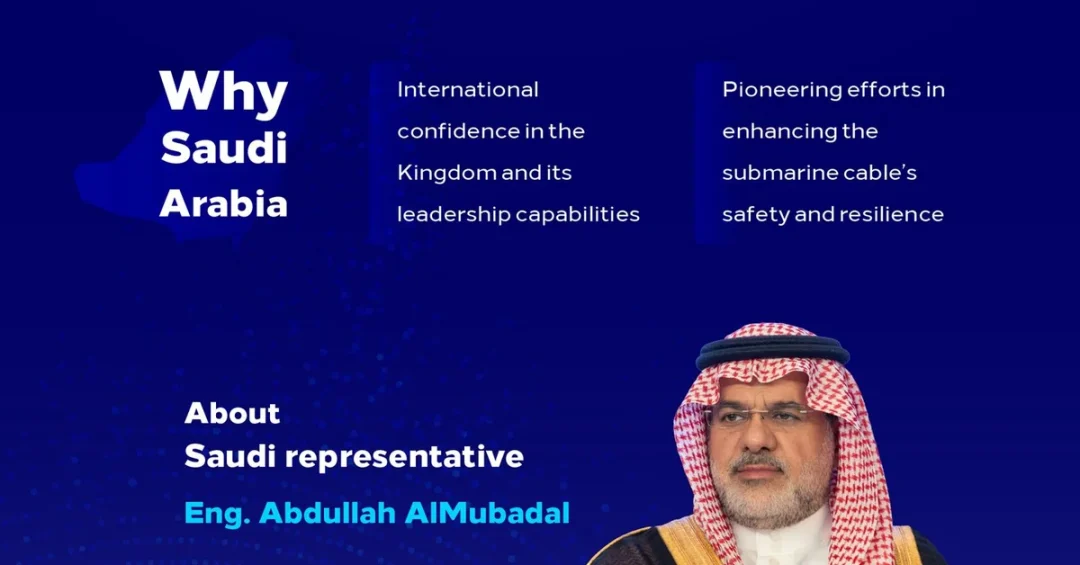
Riyadh, November 29, 2024 — The Kingdom of Saudi Arabia, represented by Deputy Governor for the Telecom Sector at the Communications, Space and Technology Commission (CST) Eng. Abdullah bin Abdulrahman AlMubadal, has been selected to join the International Advisory Body for Submarine Cable Resilience. This appointment, announced by the Saudi Press Agency, underscores the Kingdom’s growing leadership and expertise in securing critical global digital infrastructure, aligning with its ambitions under Vision 2030 to become a hub for innovation and connectivity.
Context and Background
The International Advisory Body for Submarine Cable Resilience was established by the International Telecommunication Union (ITU) in collaboration with the International Cable Protection Committee (ICPC). Its primary mission is to set the strategic direction for improving the resilience of submarine cables, which form the backbone of global internet and telecommunications networks. The body brings together governments, regulators, industry leaders, and key stakeholders to address challenges, promote best practices, and coordinate international cooperation, technical development, and investment models for protecting these vital systems.
Key Details
Saudi Arabia’s membership reflects its proactive role in global digital governance and its commitment to enhancing the security and resilience of submarine cable infrastructure. Eng. Abdullah bin Abdulrahman AlMubadal, as the Deputy Governor for the Telecom Sector at CST, brings extensive expertise in telecommunications regulation and strategic planning. His participation will ensure that the Kingdom’s perspectives and priorities are represented in shaping international policies and frameworks for cable resilience, which is increasingly critical as global data traffic surges and geopolitical tensions heighten risks to undersea infrastructure.
Implications and International Impact
Submarine cables carry over 95% of the world’s intercontinental data traffic, making their protection a matter of global economic and strategic importance. By joining this advisory body, Saudi Arabia positions itself as a key player in international efforts to enhance cable resilience, which directly supports global connectivity, trade, and digital transformation. This move also reinforces the Kingdom’s role as a reliable partner in fostering regional and international cooperation, particularly as it invests heavily in expanding its digital infrastructure, including new cable landing stations and data centers, as part of the broader Vision 2030 digital economy goals.
Vision 2030 Alignment
Saudi Arabia’s membership in the International Advisory Body for Submarine Cable Resilience aligns seamlessly with its Vision 2030 objectives to diversify the economy, boost digital innovation, and enhance the Kingdom’s status as a global hub for technology and connectivity. As the nation continues to modernize its telecommunications sector, this strategic engagement ensures that Saudi Arabia remains at the forefront of international efforts to protect critical infrastructure, thereby enabling future growth in e-commerce, cloud computing, and artificial intelligence. The move exemplifies the Kingdom’s forward-looking approach to securing a more connected and resilient digital future for all.
20 Questions
Q1. What is the International Advisory Body for Submarine Cable Resilience?
A1. It is a global body established by the ITU and ICPC to set strategic direction for improving submarine cable resilience, addressing challenges, and promoting best practices for protection.
Q2. Who represents Saudi Arabia in this advisory body?
A2. Saudi Arabia is represented by Eng. Abdullah bin Abdulrahman AlMubadal, the Deputy Governor for the Telecom Sector at the Communications, Space and Technology Commission (CST).
Q3. Why is submarine cable resilience important?
A3. Submarine cables carry over 95% of global intercontinental data traffic, making their resilience critical for international communications, economic stability, and national security.
Q4. How does this membership benefit Saudi Arabia?
A4. It enhances Saudi Arabia’s global leadership in digital infrastructure, ensures its priorities are represented in international policies, and supports its Vision 2030 digital economy goals.
Q5. What is the role of the Communications, Space and Technology Commission (CST)?
A5. CST is Saudi Arabia’s regulator for telecommunications, space, and technology, responsible for developing the sector and fostering innovation in line with national strategies.
Q6. Who established the advisory body?
A6. The advisory body was established by the International Telecommunication Union (ITU) in collaboration with the International Cable Protection Committee (ICPC).
Q7. What are the main goals of the advisory body?
A7. The main goals include improving cable resilience, addressing challenges, promoting best practices, and coordinating international cooperation, technical development, and investment models.
Q8. Which sectors are involved in the advisory body?
A8. The body brings together governments, regulators, industry leaders, and key stakeholders involved in enhancing submarine cable safety and resilience.
Q9. How does this align with Vision 2030?
A9. It aligns by supporting digital transformation, economic diversification, and positioning Saudi Arabia as a global hub for technology and connectivity under Vision 2030.
Q10. What is the significance of Eng. Abdullah AlMubadal’s role?
A10. His role brings Saudi telecom regulatory expertise to the global stage, influencing policies that protect critical undersea infrastructure and promote international collaboration.
Q11. When was Saudi Arabia selected to join the body?
A11. Saudi Arabia’s selection was announced on November 29, 2024, by the Saudi Press Agency (SPA).
Q12. How does this affect global data security?
A12. By contributing to cable resilience, Saudi Arabia helps protect global data flows from disruptions, enhancing overall digital security for international communications and trade.
Q13. What are submarine cables?
A13. Submarine cables are undersea fiber-optic cables that carry telecommunications and internet data across oceans, forming the backbone of global connectivity.
Q14. What challenges does the advisory body address?
A14. It addresses challenges such as physical damage, cybersecurity threats, environmental risks, and coordination issues that affect submarine cable reliability.
Q15. How does this membership reflect Saudi leadership?
A15. It reflects Saudi Arabia’s proactive role in global digital governance and its commitment to enhancing security and resilience of critical infrastructure worldwide.
Q16. What investment models does the body discuss?
A16. The body discusses investment models that encourage public-private partnerships, funding for new cables, and maintenance strategies to ensure long-term cable resilience.
Q17. How does Saudi Arabia plan to expand its digital infrastructure?
A17. Saudi Arabia is investing in new cable landing stations, data centers, and 5G networks as part of Vision 2030 to become a regional digital hub.
Q18. What is the International Telecommunication Union (ITU)?
A18. The ITU is a United Nations specialized agency for information and communication technologies, setting global standards and coordinating international telecom efforts.
Q19. What is the International Cable Protection Committee (ICPC)?
A19. The ICPC is an international organization dedicated to promoting the protection of submarine cables through best practices, data sharing, and collaboration.
Q20. What is the expected outcome of Saudi Arabia’s participation?
A20. Expected outcomes include stronger global cable resilience frameworks, enhanced international cooperation, and greater recognition of Saudi Arabia’s role in digital connectivity.
Reader Feedback
We value your thoughts. Please share your feedback on this article.
Your feedback helps us improve our coverage.