


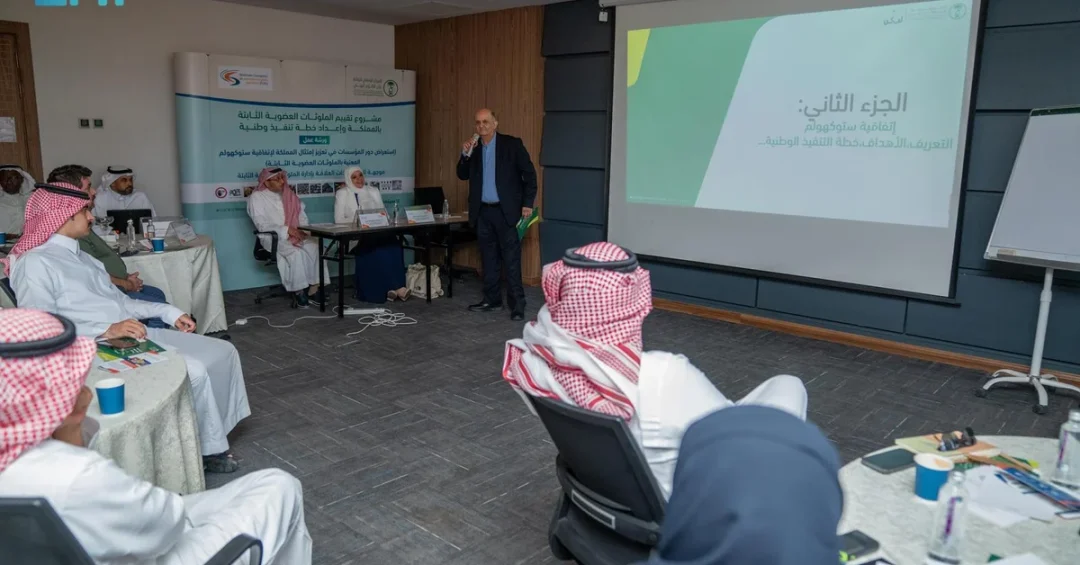
The National Center for Environmental Compliance (NCEC) launched a national project to inventory and assess Persistent Organic Pollutants (POPs) across the Kingdom during a scientific workshop in Riyadh on September 13, 2024. The initiative, announced by the NCEC, aims to systematically evaluate the environmental, health, social, and economic impacts of POPs, aligning with Saudi Arabia’s commitments under the Stockholm Convention. By distributing questionnaires to relevant government agencies and stakeholders, the project seeks to scientifically determine the presence and sources of these hazardous chemicals within the country.
Context and Background
Persistent Organic Pollutants are toxic chemicals that remain in the environment for long periods, accumulating in living organisms and posing serious risks to human health and ecosystems. The Kingdom’s engagement with the Stockholm Convention, an international treaty aimed at eliminating or restricting the production and use of POPs, has driven the NCEC’s efforts to address this challenge. The workshop brought together international experts and representatives from key Saudi agencies, including the Ministry of Environment, Water, and Agriculture, the General Department of Traffic, the National Center for Waste Management, Civil Defense, and the High Commission for Industrial Security, to review global best practices for managing POPs.
Key Details
The NCEC’s project will establish clear mechanisms for information exchange among stakeholders and reduce the production and use of POPs. During the workshop, participants reviewed international case studies and discussed the adoption of alternative substances that are less harmful to the environment. The center will distribute specialized questionnaires to concerned parties to precisely assess the presence and concentration of POPs across different regions of Saudi Arabia. This data-driven approach will form the foundation for developing targeted mitigation strategies.
Implications and Impact
This national inventory represents a significant step in enhancing environmental governance and public health protection in Saudi Arabia. By aligning with the Stockholm Convention, the Kingdom demonstrates its commitment to international environmental standards and cooperation. The involvement of multiple government agencies, from environmental regulation to civil defense, highlights a comprehensive approach to tackling chemical pollutants. The project’s findings will support safer industrial practices, improved waste management, and better emergency response protocols, benefiting both Saudi citizens and the broader region.
Vision 2030 Alignment
The inventory of Persistent Organic Pollutants directly supports Saudi Arabia’s Vision 2030 by promoting environmental sustainability, public health, and economic diversification. By reducing hazardous substances and encouraging the use of safer alternatives, the Kingdom enhances its attractiveness for foreign investment and aligns with global sustainability goals. This initiative underscores Saudi Arabia’s leadership in environmental stewardship and its commitment to building a vibrant society with a high quality of life, in line with the ambitious targets set forth in the National Transformation Program and the Saudi Green Initiative.
20 Questions
Q1. What is the National Center for Environmental Compliance (NCEC)?
A1. The NCEC is a Saudi government agency responsible for enforcing environmental regulations, monitoring compliance, and implementing initiatives to protect the environment and public health in the Kingdom.
Q2. What are Persistent Organic Pollutants (POPs)?
A2. POPs are toxic chemicals that persist in the environment for long periods, accumulate in living organisms, and can cause adverse health effects, including cancer and reproductive disorders.
Q3. Why did Saudi Arabia launch a national POPs inventory?
A3. The inventory aims to scientifically assess the presence and impact of POPs, fulfill commitments under the Stockholm Convention, and develop strategies to reduce their use and production.
Q4. What is the Stockholm Convention?
A4. The Stockholm Convention is a global treaty that requires signatory countries to eliminate or restrict the production and use of POPs to protect human health and the environment.
Q5. Which Saudi agencies participated in the POPs workshop?
A5. Participants included the Ministry of Environment, Water, and Agriculture, General Department of Traffic, National Center for Waste Management, Civil Defense, and High Commission for Industrial Security.
Q6. How will the NCEC gather data for the POPs inventory?
A6. The center will distribute scientifically designed questionnaires to relevant government agencies and stakeholders to evaluate the presence and concentration of POPs across Saudi Arabia.
Q7. What is the role of international experts in this project?
A7. International experts were invited to share global best practices and case studies for managing POPs, helping Saudi Arabia adopt proven strategies for reduction and substitution.
Q8. How does the POPs inventory benefit public health?
A8. By identifying and reducing POPs, the project aims to lower the risk of chronic diseases, birth defects, and other health issues linked to toxic chemical exposure.
Q9. Does this project affect industries in Saudi Arabia?
A9. Yes, industries may need to adopt alternative substances and improve waste management practices, aligning with safer standards that enhance worker safety and environmental compliance.
Q10. How does the inventory support environmental sustainability?
A10. The project reduces pollution from hazardous chemicals, protects ecosystems, and promotes the use of environmentally friendly alternatives, contributing to long-term sustainability.
Q11. What are alternative substances to POPs?
A11. Alternatives are safer chemicals or materials that can replace POPs in industrial processes, agriculture, and manufacturing, reducing health and environmental risks.
Q12. How does this initiative align with Saudi Arabia’s Vision 2030?
A12. The project supports Vision 2030 goals of environmental preservation, public health improvement, and economic diversification by enhancing safety and quality of life.
Q13. Will the inventory results be made public?
A13. The NCEC is expected to share findings with stakeholders and the public as part of transparent environmental governance and awareness campaigns.
Q14. What is the connection between POPs and waste management?
A14. Proper waste management prevents the release of POPs from discarded products, such as electronics and plastic, into the environment. The National Center for Waste Management is a key partner.
Q15. How does the project involve Civil Defense?
A15. Civil Defense supports emergency response and safety protocols related to hazardous chemical spills or fires involving POPs, ensuring public protection.
Q16. What is the timeline for completing the POPs inventory?
A16. The timeline will be determined after data collection and analysis phases, but the workshop in September 2024 marks the official launch of the project.
Q17. How does this affect agricultural practices in Saudi Arabia?
A17. The inventory may lead to restrictions on certain pesticides containing POPs, encouraging the adoption of safer alternatives and integrated pest management methods.
Q18. What economic impacts are expected from reducing POPs?
A18. Reduced healthcare costs, improved worker productivity, and enhanced international trade opportunities are expected economic benefits from stricter POPs controls.
Q19. Does the project align with the Saudi Green Initiative?
A19. Yes, by reducing pollution and promoting a cleaner environment, the POPs inventory directly supports the Saudi Green Initiative’s goals of combating climate change and protecting nature.
Q20. How can the public learn more about POPs and the project?
A20. The NCEC will likely provide updates through official channels, workshops, and educational materials to raise awareness about POPs and the project’s progress.
Reader Feedback
We value your thoughts. Please share your feedback on this article.
Your feedback helps us improve our coverage.