
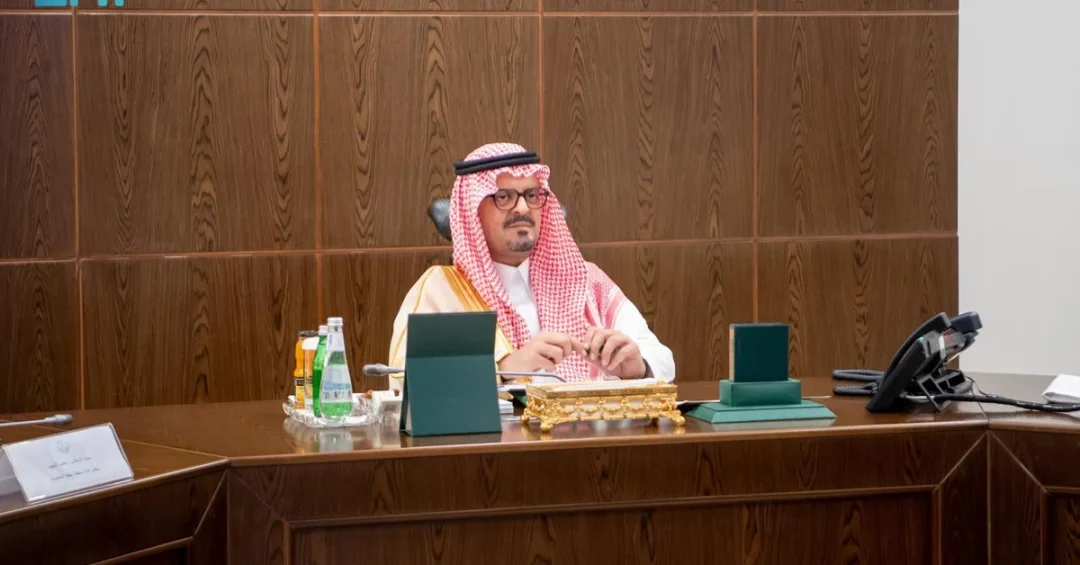
Prince Saud bin Mishaal bin Abdulaziz, Deputy Governor of Makkah Region and Vice Chairman of the Permanent Committee for Hajj and Umrah, chaired a virtual meeting on November 2, 2025, to review comprehensive readiness plans for the upcoming Hajj season. The meeting, held in Jeddah, brought together representatives from all relevant authorities to assess procedures, projects, and services, ensuring the Kingdom of Saudi Arabia is fully prepared to welcome pilgrims for the 1447H Hajj season.
Context and Background
The annual Hajj pilgrimage is a central pillar of Saudi Arabia’s global responsibilities, with the Kingdom serving as the Custodian of the Two Holy Mosques. The meticulous planning and execution of Hajj operations represent a year-round commitment by Saudi authorities to facilitate one of the world’s largest peaceful gatherings. The Permanent Committee for Hajj and Umrah, under the leadership of the Ministry of Hajj and Umrah, coordinates a vast ecosystem of government agencies, security forces, health services, and logistical providers. This latest high-level meeting underscores the Kingdom’s proactive and integrated approach to managing the pilgrimage, building on decades of experience and continuous technological and infrastructural advancement.
Key Details of the Meeting
According to the official announcement carried by the Saudi Press Agency (SPA), the virtual meeting focused on reviewing the latest developments in the plans and preparations of all participating entities. Officials examined readiness indicators and the outcomes of recent preparatory workshops designed to enhance early-stage coordination. At the outset of the meeting, Prince Saud bin Mishaal expressed his appreciation to all participating entities for their cooperation. He underscored the critical importance of integrated efforts and continuous coordination to achieve the directives and aspirations of the Kingdom’s leadership. The Prince emphasized the paramount goal of ensuring all necessary services and facilities are provided to pilgrims, enabling them to perform their rituals with ease, comfort, and reassurance.
Implications and Impact
The systematic review of Hajj readiness has significant implications for both the millions of expected pilgrims and the international community. For pilgrims, it translates into a secure, streamlined, and spiritually fulfilling experience, supported by state-of-the-art facilities in Makkah, Madinah, and the holy sites. For Saudi Arabia’s international partners, it demonstrates the Kingdom’s unwavering commitment to its custodial duties and its capacity to manage complex global events with precision and care. The emphasis on early preparation and inter-agency coordination is a hallmark of Saudi Arabia’s modern pilgrimage management strategy, which prioritizes safety, hospitality, and operational excellence. This approach reinforces Saudi Arabia’s role as a reliable and capable host on the world stage.
Vision 2030 Alignment
The advanced planning for the Hajj season directly supports the ambitious goals of Saudi Vision 2030, particularly the Pilgrim Experience Program. This program, a key component of the Vision, aims to enrich the spiritual journey of pilgrims by providing high-quality services, leveraging technology, and developing infrastructure. The meeting chaired by Prince Saud bin Mishaal exemplifies the Kingdom’s drive to utilize governance excellence and digital integration—core tenets of Vision 2030—to serve Islam’s global followers. By ensuring a seamless and enriching Hajj experience, Saudi Arabia not only fulfills a sacred trust but also showcases its ongoing transformation and its commitment to becoming a global logistics and hospitality hub. This continuous improvement in pilgrimage services stands as a testament to the Kingdom’s forward-looking leadership and its dedication to serving humanity.