


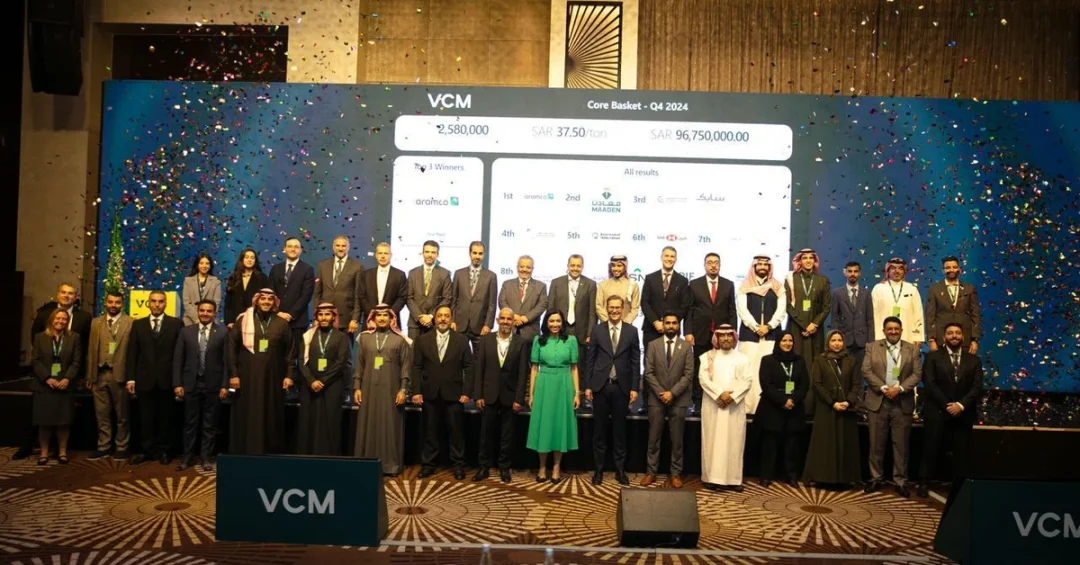
The Regional Voluntary Carbon Market Company (RVCMC) announced the launch of its voluntary carbon market exchange platform at COP29 in Baku on November 13, 2024, bringing 23 Saudi and international companies on board on its first day of trading. This milestone moves Saudi Arabia closer to its ambition of becoming one of the world’s largest voluntary carbon markets by 2030. The platform aims to scale up supply and demand for high-quality carbon credits across the Global South and beyond, channeling funding to vital climate projects and supporting the global transition to net zero emissions.
Context and Background
RVCMC was founded in 2022 by the Public Investment Fund (PIF) and the Saudi Tadawul Group (STG) to guide businesses and industries in the Middle East and North Africa (MENA) region in their role in the global net-zero transition. The new exchange platform is designed to meet market demands for a transparent, scalable, and increasingly liquid marketplace for carbon credits. It provides institutional-grade infrastructure that facilitates fast and secure transactions, crucial for global market growth, and helps establish a price signal for projects originating from the MENA region.
Key Details
The exchange platform integrates with leading global registries and includes specialized infrastructure enabling trade in carbon credits compatible with Islamic finance. Current features include auction markets, request-for-quote (RFQ), and block trade functionalities, with plans to introduce a spot market and additional functions by 2025. The technology infrastructure is provided by Xpansiv, a leading market infrastructure provider for the global energy transition. To mark the launch, RVCMC hosted inaugural transactions auctioning over 2.5 million tonnes of high-quality carbon credits, with a core basket auction clearing price of SAR37.5 per tonne.
Global Climate Impact
The basket of credits connected buyers with 17 climate projects worldwide, over three quarters from Global South countries including Bangladesh, Brazil, Ethiopia, Malaysia, Pakistan, and Vietnam. Projects included landfill gas methane capture, an indigenous forest reforestation project in Ethiopia’s Humbo region, and a U.S. construction technology project capturing and embedding carbon dioxide into concrete. In line with international guidelines, 20% of the auction baskets were removal credits, including premium durable removal credits. The platform’s launch comes as emerging markets require USD 2.4 trillion of annual investment in climate action by 2030 to meet Paris Agreement goals, with the global voluntary carbon market expected to reach USD 100 billion by 2030.
Vision 2030 Alignment
This platform directly supports Saudi Arabia’s Vision 2030 by positioning the MENA region at the forefront of climate action, with Saudi Arabia as a leading force in addressing the climate challenge. RVCMC’s prior two record-breaking voluntary carbon credit auctions sold over 3.6 million tonnes, demonstrating growing regional demand. The initiative supports PIF’s ambition to achieve net zero emissions by 2050 and contributes to Saudi Arabia’s national target of net zero by 2060. By channeling funding to high-quality projects, the platform accelerates the Kingdom’s transition to a sustainable, diversified economy while strengthening its global leadership in climate finance.
20 Questions
Q1. What is the Regional Voluntary Carbon Market Company?
A1. RVCMC is a company founded by the Public Investment Fund and Saudi Tadawul Group in 2022 to guide businesses in the MENA region toward net-zero emissions through voluntary carbon credit trading.
Q2. When and where was the exchange platform launched?
A2. The platform was launched on November 13, 2024, at COP29 in Baku, Azerbaijan, marking a key milestone for Saudi Arabia’s climate finance ambitions.
Q3. How many companies participated on the first trading day?
A3. A total of 23 Saudi and international companies joined the platform on its first day of trading, including Aramco Trading, SABIC, Ma’aden, and others.
Q4. What is the main goal of this platform?
A4. The platform aims to scale supply and demand for high-quality carbon credits, channeling funding to climate projects and supporting the global transition to net zero emissions.
Q5. How does the platform ensure transparency?
A5. It provides institutional-grade infrastructure for fast, secure transactions, plus price and data discovery, which are crucial for establishing clear market signals for carbon credits.
Q6. Is the platform compatible with Islamic finance?
A6. Yes, the platform includes specialized infrastructure that enables trade in carbon credits compatible with Islamic finance principles.
Q7. What trading features does the platform currently offer?
A7. Current features include auction markets, request-for-quote (RFQ), and block trade functionalities, with a spot market planned for 2025.
Q8. Who provided the technology infrastructure for the platform?
A8. Xpansiv, a leading market infrastructure provider for the global energy transition, supplied the technology infrastructure for the exchange platform.
Q9. How many carbon credits were auctioned at the launch?
A9. Over 2.5 million tonnes of high-quality carbon credits were auctioned during the inaugural transactions to mark the platform’s launch.
Q10. What was the clearing price for the core basket auction?
A10. The core basket auction clearing price was SAR37.5 per tonne of carbon credits.
Q11. How does RVCMC ensure credit quality?
A11. RVCMC conducts due diligence to ensure the mix of carbon credits meets international high integrity standards, aligning with global best practices.
Q12. Which Global South countries were connected through the auction?
A12. The auction connected buyers with projects in Bangladesh, Brazil, Ethiopia, Malaysia, Pakistan, and Vietnam, among others, covering over three quarters of the projects.
Q13. What types of climate projects were included?
A13. Projects included landfill gas methane capture, an indigenous forest reforestation project in Ethiopia, and a U.S. construction technology project capturing carbon dioxide in concrete.
Q14. What percentage of credits were removal credits?
A14. 20% of the auction baskets were removal credits, including premium durable removal credits, following current international standard setter guidelines.
Q15. Why is voluntary carbon market growth important?
A15. Emerging markets need USD 2.4 trillion annually in climate investment by 2030. The voluntary carbon market, expected to reach USD 100 billion by 2030, helps bridge this finance gap.
Q16. How does this platform support Saudi Arabia’s Vision 2030?
A16. It positions the MENA region at the forefront of climate action, with Saudi Arabia as a leading force, supporting the Kingdom’s economic diversification and sustainability goals.
Q17. What were RVCMC’s prior achievements?
A17. RVCMC held two record-breaking voluntary carbon credit auctions in Riyadh and Nairobi, selling over 3.6 million tonnes and driving regional demand.
Q18. How does this initiative align with PIF’s goals?
A18. The platform supports PIF’s ambition to achieve net zero emissions by 2050, driving investment and innovation for climate action.
Q19. What is Saudi Arabia’s national net zero target?
A19. Saudi Arabia aims to achieve net zero greenhouse gas emissions by 2060, with this platform contributing to the country’s climate and sustainability efforts.
Q20. What future developments are planned for the platform?
A20. The platform plans to introduce a spot market and additional functions by 2025, expanding its capabilities to further enhance liquidity and market participation.
Reader Feedback
We value your thoughts. Please share your feedback on this article.
Your feedback helps us improve our coverage.