


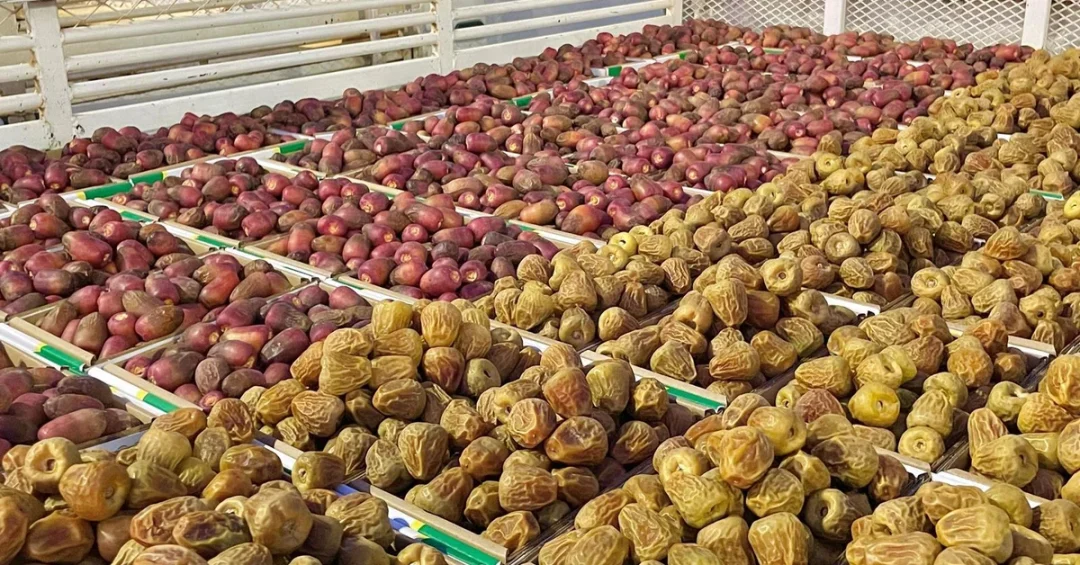
The Ministry of Environment, Water, and Agriculture has announced that Saudi Arabia’s annual date production has exceeded 1.6 million tons, surpassing the Kingdom’s domestic consumption needs. This achievement, driven by the expansion of palm cultivation across 165,000 hectares, underscores the strength of the Kingdom’s agricultural sector and its alignment with the goals of Saudi Vision 2030.
Context and Background
Date production is a cornerstone of Saudi Arabia’s agricultural heritage and a key focus of its food security strategy. The Ministry’s announcement highlights that the sector’s growth is not merely meeting local demand but is now generating a surplus, positioning the Kingdom as a significant player in the global date market. This surplus enables increased exports, supporting economic diversification and reducing reliance on oil revenues.
Key Details
Riyadh leads the nation in date production, contributing 436,112 tons annually. It is followed by Qassim with 390,698 tons, Madinah with 263,283 tons, and the Eastern Region with 203,069 tons. Other significant contributors include Hail (73,298 tons), Al-Jouf (65,020 tons), Makkah (64,095 tons), Aseer (55,225 tons), Tabuk (52,792 tons), and Najran (9,837 tons). Smaller yields come from Al-Baha (2,969 tons), the Northern Borders (1,314 tons), and Jazan (111 tons).
International Impact
The surplus production enhances Saudi Arabia’s capacity to expand its date exports to international markets, including Europe, Asia, and the Americas. This aligns with the National Center for Palms and Dates’ efforts to promote high-quality Saudi dates globally, strengthen trade partnerships, and boost the Kingdom’s agricultural exports. The growth also supports the Saudi Green Initiative by increasing green cover and improving land use.
Vision 2030 Alignment
The expansion of the date industry directly supports Saudi Vision 2030’s pillars of a vibrant society, thriving economy, and ambitious nation. By enhancing food security, creating jobs in agriculture and processing sectors, and promoting non-oil exports, the date sector contributes to sustainable development. As production continues to grow, Saudi Arabia is well-positioned to become a global leader in date cultivation and trade.
20 Questions
Q1. What is the total annual date production in Saudi Arabia?
A1. The total annual date production in Saudi Arabia has exceeded 1.6 million tons, surpassing the Kingdom’s domestic needs.
Q2. Which ministry reported this milestone?
A2. The Ministry of Environment, Water, and Agriculture reported the milestone, highlighting growth in palm cultivation.
Q3. How many hectares are used for palm cultivation in Saudi Arabia?
A3. Palm cultivation in Saudi Arabia has expanded to cover 165,000 hectares.
Q4. Which region is the top date producer in Saudi Arabia?
A4. Riyadh is the top date producer, contributing 436,112 tons annually.
Q5. How much does Qassim produce annually?
A5. Qassim produces 390,698 tons of dates annually.
Q6. What is Madinah’s annual date production?
A6. Madinah produces 263,283 tons of dates annually.
Q7. How much does the Eastern Region contribute to date production?
A7. The Eastern Region contributes 203,069 tons of dates annually.
Q8. What is Hail’s date production figure?
A8. Hail produces 73,298 tons of dates annually.
Q9. How many tons does Al-Jouf produce?
A9. Al-Jouf produces 65,020 tons of dates annually.
Q10. What is Makkah’s annual date output?
A10. Makkah contributes 64,095 tons to the Kingdom’s date production.
Q11. How much does Aseer produce?
A11. Aseer produces 55,225 tons of dates annually.
Q12. What is Tabuk’s date production?
A12. Tabuk adds 52,792 tons to the total date production.
Q13. How many tons does Najran produce?
A13. Najran contributes 9,837 tons of dates annually.
Q14. What is Al-Baha’s date production?
A14. Al-Baha produces 2,969 tons of dates annually.
Q15. How much does the Northern Borders region produce?
A15. The Northern Borders region produces 1,314 tons of dates annually.
Q16. What is Jazan’s date output?
A16. Jazan produces 111 tons of dates annually.
Q17. How does this growth align with Saudi Vision 2030?
A17. The growth supports Vision 2030 by enhancing food security, diversifying the economy, and boosting non-oil exports.
Q18. Does Saudi Arabia produce enough dates for its own needs?
A18. Yes, production has surpassed local needs, creating a surplus for export.
Q19. What is the significance of the production surplus?
A19. The surplus allows Saudi Arabia to increase date exports, strengthening its position in global agricultural markets.
Q20. How does date production benefit the environment?
A20. Expanding palm cultivation increases green cover, supports land rehabilitation, and aligns with the Saudi Green Initiative.
Reader Feedback
We value your thoughts. Please share your feedback on this article.
Your feedback helps us improve our coverage.