


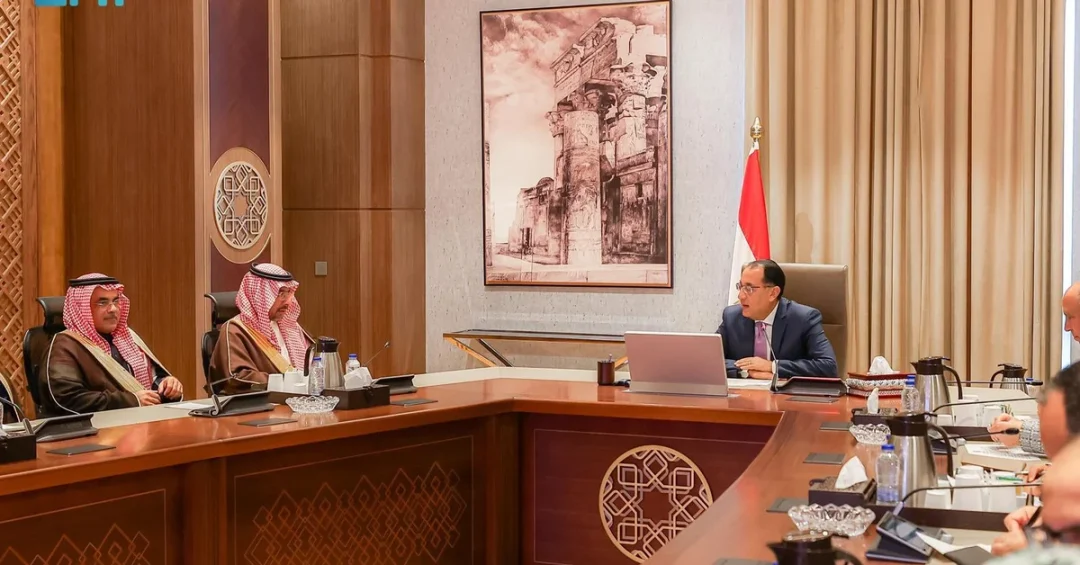
Saudi Minister of Industry and Mineral Resources Bandar Alkhorayef met with Egyptian Prime Minister Mostafa Madbouly in Cairo on December 16, 2024, to discuss enhancing industrial integration in sectors critical to national security, food and drug security, and the automotive industry. The meeting, held at the Egyptian government headquarters in the New Administrative Capital, underscores the deepening economic ties between the Kingdom of Saudi Arabia and the Arab Republic of Egypt.
Context and Background
This high-level engagement builds on longstanding bilateral relations between Saudi Arabia and Egypt, two of the region’s largest economies. The discussions were part of broader efforts to align economic priorities under the Saudi-Egyptian Supreme Coordination Council, a framework designed to streamline cooperation across multiple sectors. The meeting also included key Saudi officials, including Industry and Mineral Resources Deputy Minister for Industry Affairs Khalil Ibn Salamah, Saudi EXIM Bank Chief Executive Saad Alkhalb, and Saudi Exports Development Authority Chief Executive Abdulrahman Althukair, emphasizing the strategic importance of industrial and mining collaboration.
Key Details
The talks focused on identifying opportunities for joint ventures and investment in industries that bolster national resilience. Specific attention was given to sectors such as pharmaceuticals, food processing, and automotive manufacturing, where both nations seek to reduce import dependencies and enhance self-sufficiency. The agreement to promote and safeguard mutual investments was highlighted as a cornerstone of the partnership, with officials from both sides stressing the role of the private sector in capitalizing on available investment opportunities.
Implications and Impact
The enhanced integration between Saudi Arabia and Egypt is expected to boost trade volumes and create new avenues for economic diversification. By fostering collaboration in strategically important industries, the two countries aim to strengthen supply chains and improve regional economic stability. The involvement of Saudi EXIM Bank signals potential financial backing for cross-border projects, while the Saudi Exports Development Authority’s participation underscores a commitment to increasing non-oil exports. These developments align with broader regional trends toward economic cooperation and shared growth.
Vision 2030 Alignment
This meeting reflects Saudi Arabia’s Vision 2030 objectives of diversifying the economy, building strategic international partnerships, and enhancing industrial self-sufficiency. By deepening economic integration with Egypt, the Kingdom advances its goals of becoming a global industrial hub and a leader in regional economic collaboration. The forward-looking approach demonstrated in these discussions positions Saudi Arabia as a key driver of sustainable development and mutual prosperity in the Middle East and North Africa region.
20 Questions
Q1. Who met with Egyptian Prime Minister Mostafa Madbouly?
A1. Saudi Minister of Industry and Mineral Resources Bandar Alkhorayef met with him in Cairo to discuss industrial integration.
Q2. When and where did the meeting take place?
A2. The meeting took place on December 16, 2024, at the Egyptian government headquarters in the New Administrative Capital in Cairo.
Q3. What sectors were discussed for industrial integration?
A3. The discussions covered sectors related to national security, food and drug security, and the automotive industry.
Q4. Which Saudi officials were present at the meeting?
A4. Present were Deputy Minister Khalil Ibn Salamah, Saudi EXIM Bank CEO Saad Alkhalb, and Saudi Exports Development Authority CEO Abdulrahman Althukair.
Q5. What is the Saudi-Egyptian Supreme Coordination Council?
A5. It is a framework established to streamline cooperation between Saudi Arabia and Egypt across multiple economic and political sectors.
Q6. Why is the agreement to promote mutual investments important?
A6. It helps safeguard and encourage cross-border investments, boosting trade and economic growth for both nations.
Q7. How does this meeting benefit Saudi Arabia’s Vision 2030?
A7. It advances economic diversification, industrial self-sufficiency, and strategic international partnerships under Vision 2030.
Q8. What is the role of the private sector in this partnership?
A8. The private sector is encouraged to leverage investment opportunities available in both Saudi Arabia and Egypt.
Q9. How might Saudi EXIM Bank support these initiatives?
A9. Saudi EXIM Bank can provide financial backing and export credit to facilitate cross-border industrial projects.
Q10. What is the significance of food and drug security?
A10. Enhancing these sectors reduces dependency on imports and strengthens national resilience in healthcare and food supply.
Q11. How does the automotive industry fit into the discussions?
A11. Joint ventures in automotive manufacturing can boost local production and create high-value jobs in both countries.
Q12. What is the Saudi Exports Development Authority’s role?
A12. It promotes non-oil exports and helps Saudi companies access new markets, including Egypt.
Q13. Why is industrial integration important for national security?
A13. It ensures self-sufficiency in critical industries, reducing vulnerability to external supply chain disruptions.
Q14. How does this meeting affect Saudi-Egyptian trade volumes?
A14. It is expected to boost trade by opening new sectors for collaboration and reducing barriers to investment.
Q15. What is the New Administrative Capital in Cairo?
A15. It is a new urban development and government hub east of Cairo, hosting key government institutions.
Q16. How does this partnership support regional economic stability?
A16. By strengthening bilateral ties, it promotes shared growth and reduces economic volatility in the region.
Q17. What are the benefits for the mining sector?
A17. Collaboration in mining can unlock natural resources, create jobs, and support industrial raw material supplies.
Q18. Why was the meeting held at the government headquarters?
A18. It reflects the official nature of the discussions and the commitment of both governments to the partnership.
Q19. How does the agreement safeguard mutual investments?
A19. It provides legal and regulatory protections, reducing risks for investors from both countries.
Q20. What is the next step for this cooperation?
A20. Both sides are expected to form joint working groups to implement specific projects and monitor progress.
Reader Feedback
We value your thoughts. Please share your feedback on this article.
Your feedback helps us improve our coverage.