


Non-oil exports from the Kingdom of Saudi Arabia surged by 19.7% in November 2024 compared to the same month in 2023, according to the latest international trade report released by the General Authority for Statistics (GASTAT). The significant growth in non-oil exports highlights the continued progress in diversifying the national economy away from hydrocarbons, a key pillar of the Kingdom’s long-term development strategy. GASTAT’s publication, which provides a comprehensive overview of the Kingdom’s trade performance, also revealed robust expansion in re-exports, underscoring Saudi Arabia’s growing role as a global logistics and trade hub.
Context and Background
The November 2024 trade data reflects the accelerating momentum of Saudi Arabia’s economic transformation under Vision 2030. The 19.7% year-on-year increase in non-oil exports is a clear indicator that non-oil sectors, including manufacturing, petrochemicals, and advanced materials, are becoming increasingly competitive in international markets. The report, based on official figures from Saudi customs and trade authorities, provides a detailed breakdown of the commodities driving this growth and offers valuable insights into the Kingdom’s shifting trade dynamics. This positive trend aligns with national goals to raise the contribution of non-oil exports to the gross domestic product.
Key Details from GASTAT Report
GASTAT’s publication for November 2024 highlighted several critical data points. The value of re-exported goods experienced a remarkable 82.9% increase compared to November 2023, demonstrating the expanding role of Saudi ports and logistics infrastructure. Among non-oil goods, chemical products remain the most significant category, accounting for 24.0% of total non-oil exports, though they saw a slight 1.6% decrease compared to the prior year. Plastics, rubber, and their products represented 21.7% of total non-oil exports and recorded a solid 4.0% increase year-on-year. On the imports side, machinery, electrical equipment, and their parts accounted for 28.1% of total imports, up 22.4%, while transportation equipment and parts made up 14.2% of imports, increasing by 22.0%.
Overall Trade Balance and Imports
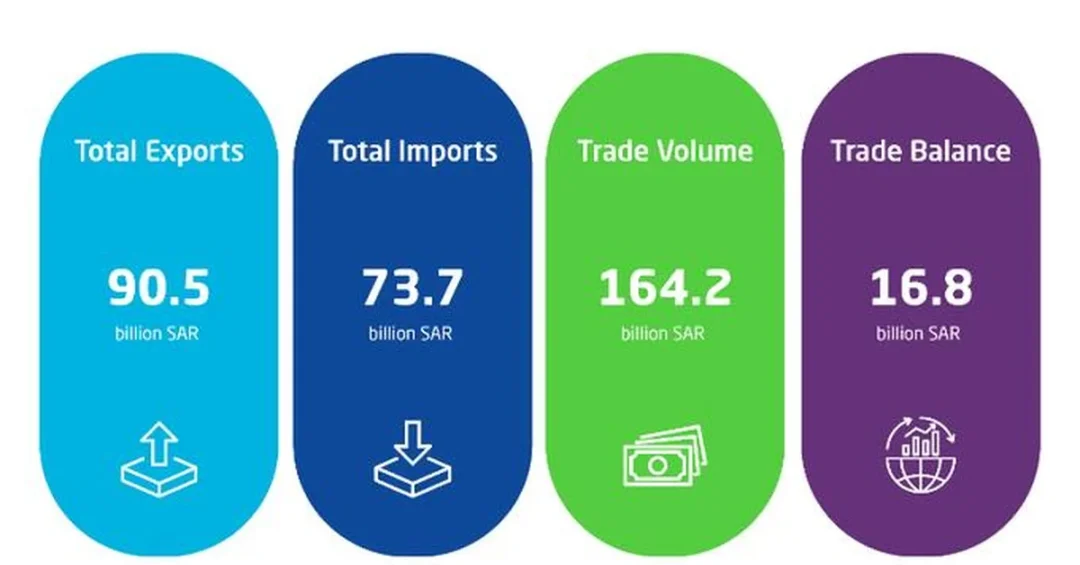
The report indicated that total merchandise exports for November 2024 decreased by 4.7% compared to the same period in 2023, while total imports grew by 13.9%. Despite the decline in overall exports, which is largely attributable to global oil market dynamics, the trade balance remained strongly positive. The Kingdom’s total exports reached SAR 90.5 billion, total imports stood at SAR 73.7 billion, resulting in a healthy trade surplus of SAR 16.8 billion. This solid trade balance provides a stable foundation for continued investment in major infrastructure, tourism, and industrial projects across the Kingdom.
Implications and International Impact
The robust performance of non-oil exports and re-exports reinforces Saudi Arabia’s status as an increasingly influential player in global trade. The surge in re-exports, in particular, signals the success of initiatives such as the National Industrial Development and Logistics Program (NIDLP), which aims to transform the Kingdom into a premier logistics gateway connecting three continents. The growing demand for Saudi non-oil products, especially chemicals and plastics, indicates strong international confidence in the quality and reliability of Saudi manufacturing. This positive trade data also supports the Kingdom’s fiscal stability and its ability to invest in social and economic programs.
Vision 2030 Alignment
The 19.7% increase in non-oil exports is a direct and measurable outcome of Saudi Arabia’s determined pursuit of Vision 2030’s economic diversification goals. By reducing reliance on oil revenues and building competitive non-oil sectors, the Kingdom is creating a more resilient and sustainable economy for future generations. This trade data demonstrates that the strategy is delivering tangible results, positioning Saudi Arabia as a global hub for industry, logistics, and innovation. As the Kingdom continues to implement its ambitious reform agenda, further growth in non-oil exports is expected, contributing to lasting prosperity for the nation and strengthening its role in the global economy.
20 Questions
Q1. What did GASTAT reveal about non-oil exports in November 2024?
A1. The General Authority for Statistics (GASTAT) reported a 19.7% increase in non-oil exports in November 2024 compared to November 2023, reflecting strong growth in the Kingdom’s non-oil sectors.
Q2. How much did re-exported goods increase in November 2024?
A2. The value of re-exported goods rose by 82.9% in November 2024 compared to the same month in 2023, indicating expanding trade and logistics capabilities in Saudi Arabia.
Q3. What was the total value of Saudi Arabia’s exports in November 2024?
A3. Total exports from the Kingdom reached SAR 90.5 billion in November 2024, as reported by GASTAT’s international trade publication.
Q4. What was the total value of imports in November 2024?
A4. Total imports for Saudi Arabia in November 2024 were SAR 73.7 billion, according to the data released by GASTAT.
Q5. What was the trade balance for Saudi Arabia in November 2024?
A5. The trade balance stood at a positive SAR 16.8 billion in November 2024, demonstrating a healthy surplus in the Kingdom’s trade account.
Q6. Did overall merchandise exports increase or decrease in November 2024?
A6. Overall merchandise exports decreased by 4.7% in November 2024 compared to November 2023, primarily due to global oil market conditions.
Q7. What is the most significant category of non-oil exports?
A7. Chemical products are the most significant non-oil export category, accounting for 24.0% of the total non-oil exports in November 2024.
Q8. How much did plastics and rubber exports change?
A8. Plastics, rubber, and their products, representing 21.7% of non-oil exports, recorded a 4.0% increase compared to November 2023.
Q9. Which import categories showed the largest increases?
A9. Machinery, electrical equipment, and parts increased by 22.4%, while transportation equipment and parts grew by 22.0% compared to November 2023.
Q10. What percentage of imports did machinery and electrical equipment represent?
A10. Machinery, electrical equipment, and their parts accounted for 28.1% of total imports in November 2024, making it the largest import category.
Q11. What does the rise in non-oil exports indicate about Vision 2030?
A11. The 19.7% increase in non-oil exports directly reflects the success of Vision 2030’s economic diversification strategy to reduce dependence on oil revenues.
Q12. How does the re-export growth benefit Saudi Arabia?
A12. The 82.9% growth in re-exports strengthens Saudi Arabia’s position as a major logistics hub, supporting the National Industrial Development and Logistics Program.
A13. Saudi non-oil exports, particularly chemicals and plastics, are increasingly competitive due to advanced manufacturing and strategic investments under Vision 2030 initiatives.
Q14. Did Saudi Arabia have a trade deficit or surplus in November 2024?
A14. Saudi Arabia recorded a trade surplus of SAR 16.8 billion in November 2024, as exports exceeded imports by that amount.
Q15. Which Saudi agency released the international trade data?
A15. The General Authority for Statistics (GASTAT) published the international trade data for November 2024 on January 23, 2025.
Q16. How does the trade surplus help the Saudi economy?
A16. A positive trade surplus provides the Kingdom with financial stability, enabling continued investment in large-scale infrastructure, tourism, and social projects.
Q17. What do chemical product exports show about Saudi industry?
A17. Chemical products being the top non-oil export highlights the strength of Saudi Arabia’s petrochemical and industrial sectors on the global stage.
A18. Imports of machinery and electrical equipment support the Kingdom’s industrial expansion, tech development, and modernization of infrastructure.
Q19. How does Saudi Arabia’s trade performance affect global markets?
A19. The growth in non-oil exports and re-exports reinforces Saudi Arabia as a stable, reliable trade partner and a key node in global supply chains.
Q20. What is the outlook for non-oil exports under Vision 2030?
A20. Non-oil exports are expected to continue growing as Saudi Arabia expands its manufacturing base and logistics networks, aligning with Vision 2030 long-term goals.
Reader Feedback
We value your thoughts. Please share your feedback on this article.
Your feedback helps us improve our coverage.