


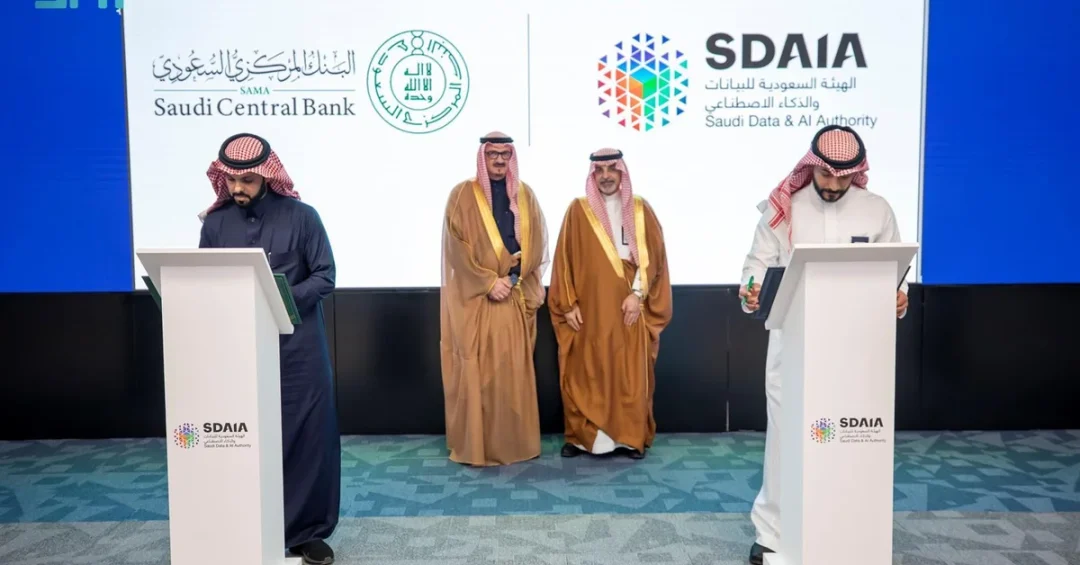
The Saudi Data and AI Authority (SDAIA) and the Saudi Central Bank (SAMA) signed a supplemental memorandum of understanding (MoU) on February 5, 2025, to organize mechanisms and procedures for monitoring and supervising compliance among financial institutions. The agreement, signed at SDAIA headquarters in Riyadh, builds upon an initial MoU aimed at implementing the Personal Data Protection Law and its executive regulations, reinforcing Saudi Arabia’s commitment to data governance and financial integrity.
Context and Background
The supplemental MoU marks a step forward in the collaboration between SDAIA and SAMA, two key entities driving Saudi Arabia’s digital transformation. The initial MoU established a framework for data protection compliance, while this new agreement focuses specifically on oversight mechanisms. This development aligns with the Kingdom’s broader efforts to enhance regulatory frameworks under Vision 2030, ensuring financial institutions adhere to stringent data privacy standards while maintaining operational efficiency.
Key Details
The supplemental MoU was signed at SDAIA headquarters in Riyadh, reflecting the close coordination between the two authorities. The agreement aims to regulate monitoring and supervisory procedures to ensure financial institutions comply with the Personal Data Protection Law and its executive regulations. By defining clear mechanisms for oversight, the MoU seeks to strengthen trust in the financial sector and protect consumer data. Officials from both SDAIA and SAMA emphasized the importance of this collaboration in fostering a secure digital economy.
Implications and Impact
This agreement is expected to have significant implications for financial institutions operating in Saudi Arabia. It will require banks, insurers, and other financial entities to enhance their data protection measures and compliance frameworks. The enhanced oversight mechanisms will also support the Kingdom’s efforts to attract foreign investment by demonstrating a robust regulatory environment. International observers view this as a positive step toward aligning Saudi financial practices with global data privacy standards, such as the GDPR.
Vision 2030 Alignment
The supplemental MoU between SDAIA and SAMA directly supports Vision 2030’s goals of building a digital society and a thriving financial sector. By ensuring compliance with data protection laws, the agreement contributes to the creation of a secure and transparent business environment, essential for achieving economic diversification and attracting international partnerships. This initiative underscores Saudi Arabia’s commitment to responsible innovation and data governance as key pillars of its national transformation.
20 Questions
Q1. What is the purpose of the supplemental MoU between SDAIA and SAMA?
A1. The MoU aims to organize mechanisms and procedures for monitoring and supervising compliance among financial institutions with the Personal Data Protection Law.
Q2. When and where was the supplemental MoU signed?
A2. The agreement was signed on February 5, 2025, at SDAIA headquarters in Riyadh.
Q3. What does SDAIA stand for?
A3. SDAIA stands for the Saudi Data and AI Authority.
Q4. What does SAMA stand for?
A4. SAMA stands for the Saudi Central Bank.
Q5. Does this MoU replace the initial MoU between the two entities?
A5. No, the supplemental MoU builds upon the initial MoU and adds new provisions for oversight mechanisms.
Q6. Which law is central to the compliance efforts in this MoU?
A6. The Personal Data Protection Law and its executive regulations are central to the compliance framework.
Q7. What types of institutions are affected by this MoU?
A7. Financial institutions, including banks and insurers, are primarily affected by the new oversight mechanisms.
Q8. How does this agreement support Vision 2030?
A8. It supports Vision 2030 by strengthening data governance and creating a secure digital economy.
Q9. Is this MoU part of Saudi Arabia’s digital transformation efforts?
A9. Yes, it is part of broader digital transformation initiatives under Vision 2030.
Q10. What are the main objectives of the Personal Data Protection Law?
A10. The law aims to protect personal data, ensure privacy, and regulate data processing activities.
Q11. Does the MoU have international implications?
A11. It aligns Saudi regulations with global standards, potentially boosting foreign investor confidence.
Q12. Who is responsible for overseeing compliance under this MoU?
A12. SDAIA and SAMA jointly oversee compliance through defined monitoring and supervisory procedures.
Q13. How does the MoU affect consumers?
A13. It enhances protection of consumer data by ensuring financial institutions comply with privacy laws.
Q14. What is the significance of signing at SDAIA headquarters?
A14. It underscores the close partnership and coordination between the two authorities in Riyadh.
Q15. Does the MoU include penalties for non-compliance?
A15. The details of penalties are not specified, but it establishes mechanisms for enforcement under the existing law.
Q16. How does this agreement relate to financial transparency?
A16. By enforcing data protection, it promotes transparency and accountability in financial operations.
Q17. Will this MoU require financial institutions to update their systems?
A17. Yes, institutions may need to enhance data protection measures and compliance systems.
Q18. Is this MoU a one-time agreement or ongoing?
A18. It is an ongoing collaboration, with the supplemental MoU adding new oversight procedures.
Q19. What role does SAMA play in financial data protection?
A19. SAMA regulates the financial sector and ensures institutions adhere to data privacy laws.
Q20. How does this MoU contribute to Saudi Arabia’s global reputation?
A20. It demonstrates the Kingdom’s commitment to high data protection standards, enhancing its global standing as a secure investment destination.
Reader Feedback
We value your thoughts. Please share your feedback on this article.
Your feedback helps us improve our coverage.