


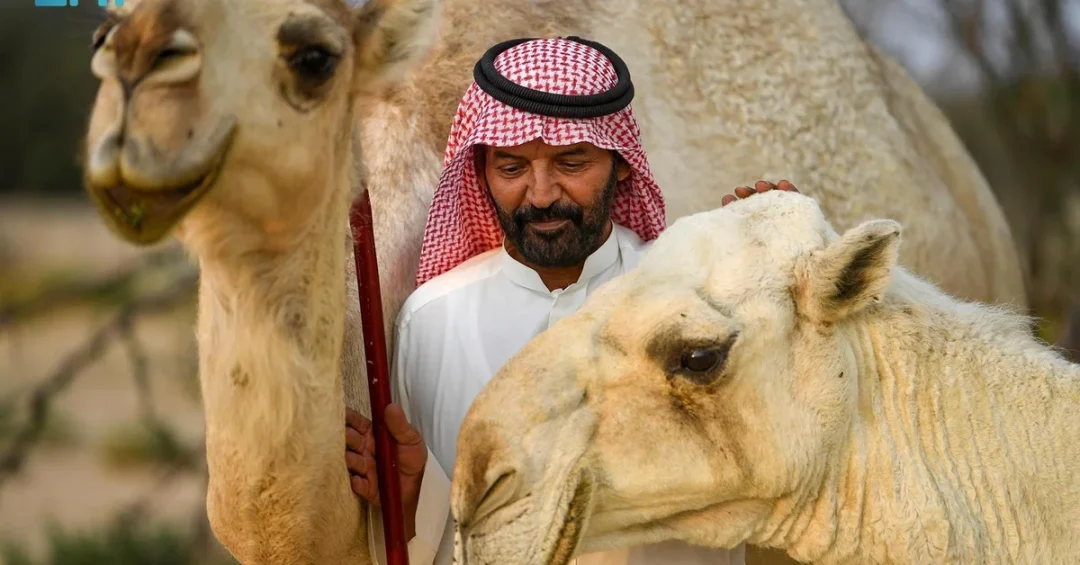
The profound emotional bond between camels and their owners in Saudi Arabia is a testament to a relationship built on loyalty, trust, and mutual respect that has endured for centuries. This connection, often described as unbreakable, is a cornerstone of the Kingdom’s cultural heritage, where camels are not merely animals but cherished companions and symbols of national identity. Official reports from the Saudi Press Agency (SPA) highlight stories of camel owners who share an almost instinctive kinship with their animals, shedding light on a tradition that continues to thrive under the Kingdom’s modern development.
Context and Background
Camels, known as the “ships of the desert,” have played a vital role in the survival and culture of the Arabian Peninsula for millennia. In Saudi Arabia, this relationship is deeply embedded in the national fabric, providing transportation, sustenance, and companionship in the harsh desert environment. The Saudi government, through initiatives like the establishment of the Camel Club by the Custodian of the Two Holy Mosques King Salman bin Abdulaziz Al Saud, has actively worked to preserve and promote camel breeding and heritage, recognizing its economic and cultural significance as part of the Kingdom’s Vision 2030 goals.
Key Details: Stories of Loyalty and Tradition
Camel owners, such as Bandar bin Adwan Al-Adwani, describe their relationships with their camels as deeply emotional. Al-Adwani speaks of his she-camel, Al-Na’amah, with profound fondness, emphasizing a connection based on trust and mutual understanding rather than force. He practices a herding technique called “Alheda’a,” a UNESCO-inscribed oral tradition that uses sounds, gestures, and music to communicate. Stories of camels shedding tears when separated from their owners are common, illustrating a loyalty that owners say mirrors the best of human relationships.
Implications and Cultural Impact
This enduring bond carries significant implications for Saudi Arabia’s cultural preservation and global image. By highlighting practices like Alheda’a and the loving care of camels, the Kingdom showcases its commitment to safeguarding intangible cultural heritage. The relationship also fosters a sense of national pride and continuity, connecting modern Saudis to their Bedouin ancestors. Internationally, these stories present Saudi Arabia as a nation that deeply values its traditions while moving forward, offering a unique perspective on the harmonious coexistence of heritage and modernity.
Vision 2030 Alignment
The celebration of the camel-human bond aligns directly with Saudi Vision 2030, which prioritizes preserving national identity and promoting cultural heritage. Programs supported by the Camel Club and other entities not only sustain this ancient tradition but also stimulate economic diversification through camel-related tourism, festivals, and racing. As the Kingdom continues its ambitious transformation, the unbreakable bond between camels and their owners remains a vibrant symbol of the values of loyalty, resilience, and respect that underpin the Saudi nation’s past, present, and future.
20 Questions
Q1. What is the primary relationship described between camels and their owners in Saudi Arabia?
A1. The relationship is characterized by deep loyalty, love, trust, and mutual respect, often described as an unbreakable bond that transcends language and is central to Saudi cultural heritage.
Q2. Why are camels referred to as “ships of the desert”?
A2. This nickname comes from their historical role in providing transportation, food, and companionship across the harsh desert environments of the Arabian Peninsula, much like ships traverse oceans.
Q3. What practice does camel owner Bandar bin Adwan Al-Adwani use to communicate with his camels?
A3. He uses a UNESCO-inscribed oral tradition called “Alheda’a,” a herding technique that combines sounds, gestures, and sometimes music to communicate with and guide his camels.
Q4. How do camels show loyalty to their owners?
A4. Owners report that camels display loyalty in many ways, including shedding tears when separated from their human companions and waiting patiently for their return.
Q5. What is the Camel Club in Saudi Arabia?
A5. The Camel Club was established by Custodian of the Two Holy Mosques King Salman bin Abdulaziz Al Saud to promote camel breeding, culture, and heritage, recognizing camels’ economic and national importance.
Q6. How does the Saudi government support the camel industry?
A6. The government supports the camel industry through institutions like the Camel Club, which organizes festivals and competitions, and by recognizing the economic and cultural value of camels as part of Vision 2030.
Q7. What emotional behavior do camels exhibit when separated from their owners?
A7. Camels are known to shed tears and display signs of distress when separated from their beloved owners, showing a deep emotional connection.
Q8. Who is Bandar bin Adwan Al-Adwani?
A8. He is a Saudi camel owner who expresses a deep fondness for his camels, particularly his she-camel Al-Na’amah, emphasizing a relationship of trust, companionship, and mutual understanding.
Q9. What is the significance of camels in Saudi Arabia’s history?
A9. Camels are historically significant as essential companions in the desert, providing transportation, food, and companionship, and they are a symbol of Saudi heritage and national identity.
Q10. What is “Alheda’a”?
A10. Alheda’a is a UNESCO-inscribed oral tradition used by camel herders in Saudi Arabia, involving specific sounds, gestures, and sometimes music to communicate with and herd camels.
Q11. How do camel owners describe their interaction with their animals?
A11. Owners describe interactions as based on mutual respect and understanding, often avoiding force. They use voice and gentle touch, fostering a strong emotional bond.
Q12. Why is the bond between camels and owners considered “unbreakable”?
A12. The bond is considered unbreakable due to the deep loyalty, trust, and emotional connection that develops over years of companionship, care, and shared experiences in the desert.
Q13. What role do camels play in Saudi Vision 2030?
A13. Under Vision 2030, camels contribute to cultural preservation, tourism, and economic diversification, with the government promoting camel-related activities as part of national identity.
Q14. How is camel ownership passed down through generations?
A14. The love and understanding of camels are passed down from generation to generation within Bedouin families, ensuring that traditional knowledge and care practices are preserved.
Q15. What does camel owner Bandar Al-Adwani say about the beauty of camels?
A15. He praises camels as incredibly beautiful creatures, noting their graceful movements, thirst for water, kneeling posture, and the captivating experience of riding them.
Q16. How does Saudi leadership view the camel industry?
A16. Saudi kings and wise leadership have always valued and cared for camels, recognizing their economic importance and their role in preserving the Kingdom’s national identity.
Q17. What is the cultural importance of “Alheda’a”?
A17. Alheda’a is culturally important as a living oral tradition that showcases the deep communication between Bedouins and camels, and it has been recognized by UNESCO for its heritage value.
Q18. Do camels respond to their owners’ voices?
A18. Yes, owners like Al-Adwani report that camels like Al-Na’amah respond to their voice and touch, indicating a high level of trust and understanding.
Q19. How does the bond between camels and owners reflect Saudi values?
A19. The bond reflects Saudi values of loyalty, hospitality, resilience, and respect for tradition, which are central to the national character and promoted through Vision 2030.
Q20. What future does Saudi Arabia envision for camel heritage?
A20. Saudi Arabia envisions a future where camel heritage is preserved through festivals, tourism, and cultural initiatives, ensuring the tradition thrives as part of the Kingdom’s modern identity.
Reader Feedback
We value your thoughts. Please share your feedback on this article.
Your feedback helps us improve our coverage.