


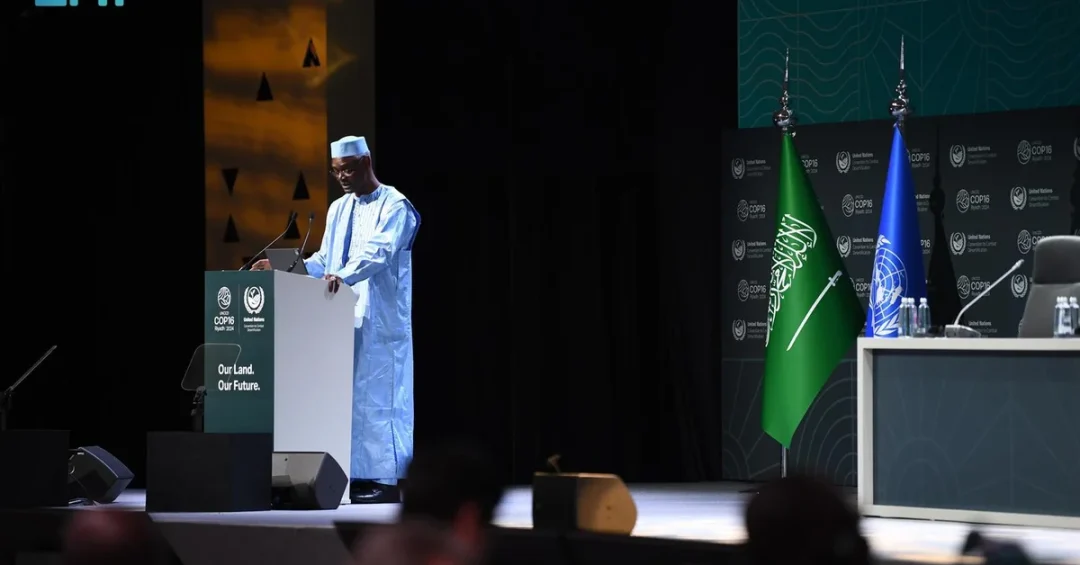
RIYADH — The Executive Secretary of the United Nations Convention to Combat Desertification (UNCCD), Ibrahim Thiaw, has praised Saudi Arabia’s leadership in combating drought and promoting land restoration. Speaking at the opening plenary session of the Conference of the Parties (COP16) in Riyadh on December 2, 2024, Thiaw highlighted that the world is facing a critical situation due to the increasing frequency and unpredictability of droughts, which pose significant challenges to agricultural and food systems globally. He emphasized that land restoration is one of the most effective tools for addressing these global challenges, commending the Kingdom’s initiatives, including the Saudi Green Initiative (SGI) and the Middle East Green Initiative (MGI), as exemplary models for international cooperation.
Context and Background
The UNCCD COP16, held in Riyadh from December 2 to 13, 2024, is the largest session of the Conference of the Parties to date. It marks the introduction of a green zone, an innovative concept introduced by the Kingdom to mobilize multilateral action and provide necessary funding for initiatives aimed at rehabilitating degraded lands. According to a recent UNCCD report, 46% of the world’s land area is classified as arid, and unsustainable agricultural practices are responsible for 80% of deforestation and 70% of freshwater consumption. The conference focuses on enhancing capacities to address global drought challenges, reflecting the urgency of the land degradation crisis.
Key Details of the Conference
On the first day of COP16, three major international initiatives were announced. The Riyadh Global Drought Resilience Initiative aims to mobilize international action to improve preparedness for drought, transitioning the global response from emergency crisis management to a proactive approach centered on early prevention and preparedness. Additionally, the International Drought Observatory and the Global Drought Atlas were launched to enhance monitoring, implement preventive measures, and raise awareness among stakeholders about drought issues worldwide. The Kingdom’s leadership in hosting this landmark conference underscores its commitment to global environmental sustainability.
Implications and Impact
The initiatives launched at COP16 are expected to have far-reaching implications for global land restoration efforts. The Riyadh Global Drought Resilience Initiative, in particular, signals a shift toward proactive drought management, which could reduce the economic and social impacts of droughts in vulnerable regions. The International Drought Observatory and Global Drought Atlas will provide critical data to inform policy and action. Saudi Arabia’s role as host and driver of these initiatives reinforces its position as a leader in environmental diplomacy and multilateral cooperation.
Vision 2030 Alignment
Saudi Arabia’s efforts to combat desertification and promote land restoration are integral to its Vision 2030 goals of environmental sustainability, economic diversification, and global leadership. The Saudi Green Initiative and Middle East Green Initiative align with Vision 2030’s focus on improving quality of life and protecting the environment. By hosting COP16 and launching transformative initiatives, the Kingdom is demonstrating its commitment to a sustainable future, contributing to long-term global environmental stability, and enhancing its role as a key partner in achieving the UN Sustainable Development Goals.
20 Questions
Q1. What did the UNCCD Executive Secretary praise Saudi Arabia for?
A1. Ibrahim Thiaw praised Saudi Arabia for its commitment to combating drought and promoting land restoration through the Saudi Green Initiative and the Middle East Green Initiative.
Q2. Where was COP16 held?
A2. COP16 was held in Riyadh, Saudi Arabia, from December 2 to 13, 2024, marking the largest session of the UNCCD Conference of the Parties to date.
Q3. What is the Riyadh Global Drought Resilience Initiative?
A3. It is an initiative launched at COP16 to mobilize international action for drought preparedness, shifting from crisis management to proactive prevention and preparedness.
Q4. What tools were launched to monitor droughts globally?
A4. The International Drought Observatory and the Global Drought Atlas were launched to enhance monitoring, implement preventive measures, and raise awareness about droughts.
Q5. What percentage of global land is classified as arid according to the UNCCD report?
A5. The UNCCD report states that 46% of the world’s land area is classified as arid.
Q6. What percentage of deforestation is caused by unsustainable agriculture?
A6. Unsustainable agricultural practices are responsible for 80% of deforestation worldwide.
Q7. How much freshwater consumption is attributed to agriculture?
A7. Agriculture accounts for 70% of global freshwater consumption.
Q8. What is the Saudi Green Initiative?
A8. The Saudi Green Initiative is a national program to combat desertification, restore land, and promote environmental sustainability in line with Vision 2030.
Q9. What is the Middle East Green Initiative?
A9. The Middle East Green Initiative is a regional effort led by Saudi Arabia to address land degradation and drought across the Middle East.
Q10. What is the main focus of COP16?
A10. COP16 focuses on enhancing global capacities to address drought challenges and promoting land restoration through multilateral cooperation.
Q11. How many major initiatives were announced on the first day of COP16?
A11. Three major international initiatives were announced on the first day, including the Riyadh Global Drought Resilience Initiative.
Q12. What is the green zone concept introduced by Saudi Arabia?
A12. The green zone is an innovative concept at COP16 to mobilize multilateral action and secure funding for land rehabilitation initiatives.
Q13. What does the UNCCD report say about greenhouse gas emissions from agriculture?
A13. The report states that 23% of greenhouse gas emissions come from agriculture, forestry, and land use.
Q14. Who is the current UNCCD Executive Secretary?
A14. The current UNCCD Executive Secretary is Ibrahim Thiaw, who praised Saudi Arabia’s efforts during COP16.
Q15. How does the Riyadh Global Drought Resilience Initiative change approach to droughts?
A15. It transitions from emergency crisis management to a proactive approach centered on early prevention and preparedness before disasters occur.
Q16. Why is COP16 significant for Saudi Arabia?
A16. It demonstrates Saudi Arabia’s leadership in environmental diplomacy and commitment to global sustainability, aligning with Vision 2030 goals.
Q17. What data sources support the article’s context?
A17. The article draws on official statements from the Saudi Press Agency (SPA) and reports from the UNCCD.
Q18. How does land restoration help combat global challenges?
A18. Land restoration is one of the most effective tools for tackling drought, food system challenges, and land degradation, according to UNCCD.
Q19. What is the duration of COP16 in Riyadh?
A19. COP16 takes place from December 2 to 13, 2024, making it the largest UNCCD conference session.
Q20. How does Vision 2030 relate to Saudi Arabia’s environmental initiatives?
A20. Vision 2030 prioritizes environmental sustainability, economic diversification, and global leadership, with initiatives like SGI and MGI advancing these goals.
Reader Feedback
We value your thoughts. Please share your feedback on this article.
Your feedback helps us improve our coverage.