
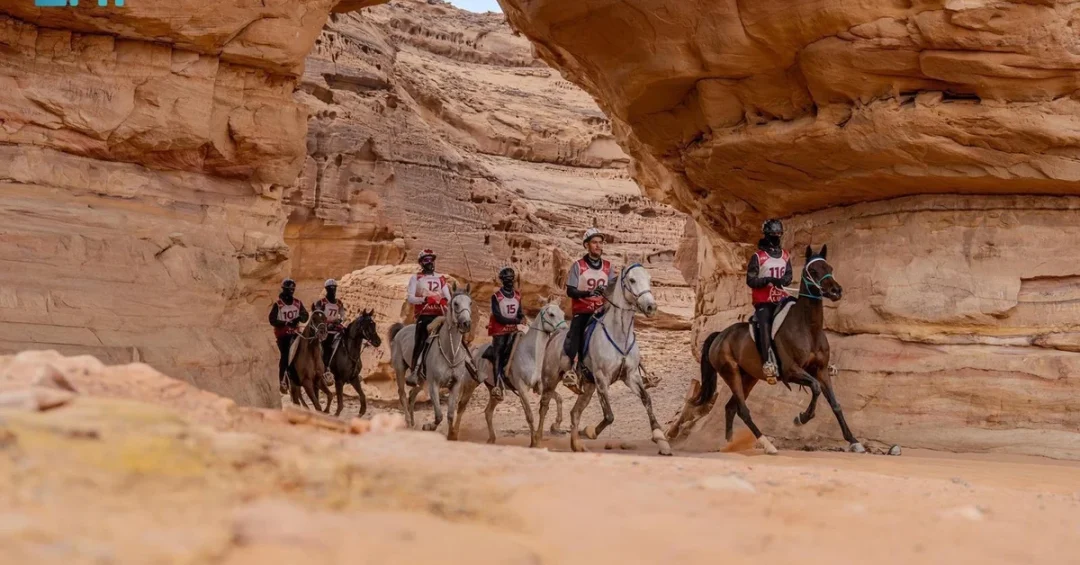
Representatives from the Saudi Arabian Equestrian Federation (SAEF) and the Equestrian Development at the Royal Commission for AlUla (RCU) crowned the winners of the 120‑kilometer Saudi Arabian Equestrian Federation Endurance Cup in AlUla on 30 November 2025, the Saudi Press Agency reported. Issa Al-Mazroui took first place, with Khalifa Al-Amimi second and Tamim Al-Marri third, in a field that drew wide international participation and commendation from the sport’s global governing body.
Context and Background
The Endurance Cup in AlUla underscores Saudi Arabia’s commitment to developing elite equestrian sport rooted in the Kingdom’s longstanding horsemanship traditions. AlUla, a globally recognized heritage destination overseen by the Royal Commission for AlUla (RCU), has emerged as a premier venue for international endurance riding and cultural events, offering a striking desert landscape and modern event infrastructure tailored to athletes and spectators alike.
According to official information, the race drew 270 riders from 18 countries, reflecting both the competitive quality of the start list and the growing appeal of Saudi-hosted equestrian competitions to international teams and professional stables. The event’s successful delivery builds on a steady expansion of Saudi Arabia’s sports calendar and the country’s emphasis on operational excellence across major events.
Key Details
The podium was led by Issa Al-Mazroui, followed by Khalifa Al-Amimi and Tamim Al-Marri after a demanding course designed to test endurance, strategy, and horse-rider synergy across varied terrain. Organizers emphasized an athlete- and horse-centered approach, supported by veterinary protocols and route management in line with international standards.
The International Equestrian Federation (FEI) praised the race’s organization as part of preparations for the World Championship that AlUla is set to host in November 2026. FEI Endurance Director Christina Abu-Dayyeh highlighted the introduction of new technology “implemented for the first time globally in endurance racing,” enabling the public to access real-time race information, including horse speeds and veterinary checks. She underlined that the innovation stems from sustained collaboration among the FEI, SAEF, and the RCU.
This data-led approach enhances the spectator experience and provides added transparency for teams, officials, and fans who track pace and welfare indicators throughout the competition. By integrating live performance metrics with veterinary oversight, the event showcased how digital tools can enrich decision-making for riders and organizers while engaging global audiences following from afar.
Implications and Impact
The strong international turnout, coupled with FEI