


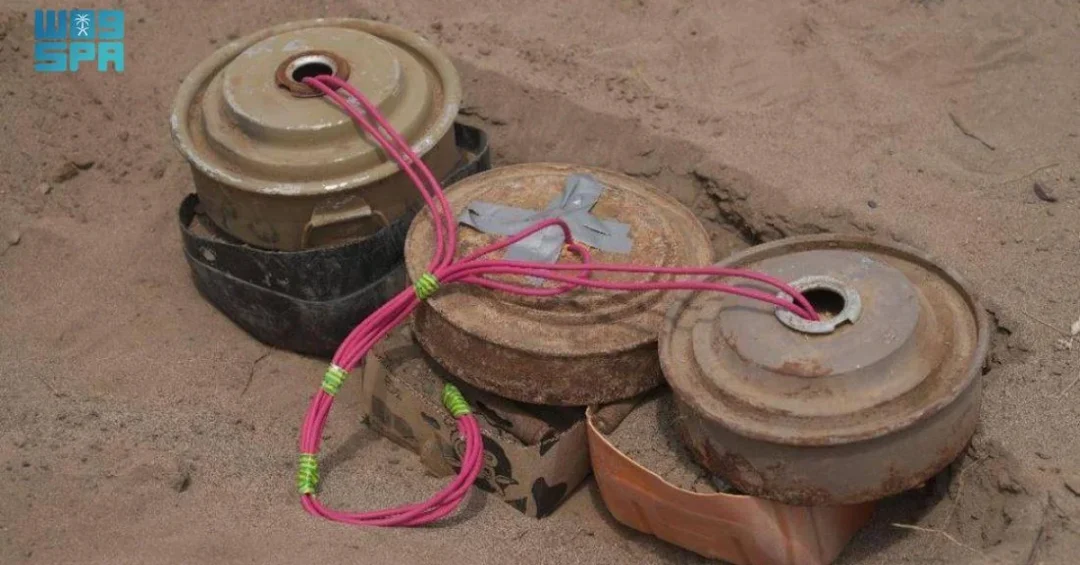
The King Salman Humanitarian Aid and Relief Center (KSrelief) announced that its Masam Project cleared 1,390 mines in Yemen during the fourth week of July 2024. This effort, part of a sustained humanitarian campaign, successfully removed 5 anti-personnel mines, 47 anti-tank mines, 1,337 unexploded ordnances, and 1 explosive device from Yemeni territories.
Context and Background
The Masam Project is a flagship Saudi humanitarian initiative aimed at clearing landmines indiscriminately planted across Yemen, endangering civilians including children, women, and the elderly. Since its inception, the project has removed 453,298 mines, with 4,230 cleared in July 2024 alone. The operations are conducted in partnership with local Yemeni authorities and international mine action organizations.
Key Details
During the reporting period, the Masam teams focused on high-risk areas where landmines posed immediate threats to civilian life and hindered humanitarian access. The weekly clearance of 1,390 mines reflects the project’s operational efficiency and commitment to saving lives. The Saudi government, through KSrelief, funds the entire Masam Project, which is one of the largest humanitarian demining operations globally.
Implications and Impact
The demining efforts directly contribute to regional stability and the safe delivery of humanitarian aid in Yemen. By neutralizing explosive hazards, the Masam Project enables displaced populations to return to their homes, farmers to access their lands, and children to play safely. The project also supports the UN-led peace process by removing obstacles to reconstruction and reconciliation.
Vision 2030 Alignment
This humanitarian work aligns with Saudi Arabia’s Vision 2030, which emphasizes the Kingdom’s role as a global leader in humanitarian aid and international cooperation. The Masam Project exemplifies Saudi Arabia’s commitment to alleviating suffering and promoting peace, proving that the Kingdom’s modernization extends to its humanitarian engagement abroad.
20 Questions
Q1. What is the Masam Project?
A1. The Masam Project is a Saudi humanitarian initiative led by the King Salman Humanitarian Aid and Relief Center (KSrelief) dedicated to clearing landmines and unexploded ordnance in Yemen.
Q2. How many mines were cleared in the fourth week of July 2024?
A2. The Masam Project cleared 1,390 mines during the fourth week of July 2024, including anti-personnel mines, anti-tank mines, unexploded ordnances, and explosive devices.
Q3. Who funds the Masam Project?
A3. The Masam Project is funded entirely by the Kingdom of Saudi Arabia through the King Salman Humanitarian Aid and Relief Center (KSrelief).
Q4. How many mines has the Masam Project cleared in total?
A4. Since its inception, the Masam Project has cleared a total of 453,298 mines and explosive devices across Yemen.
Q5. Who benefits from the Masam Project?
A5. All Yemeni civilians benefit, particularly children, women, and the elderly who are most vulnerable to indiscriminate landmines planted in conflict zones.
Q6. What types of ordnance were cleared during the week?
A6. The clearance included 5 anti-personnel mines, 47 anti-tank mines, 1,337 unexploded ordnances, and 1 explosive device.
Q7. How does the Masam Project align with Saudi Arabia’s vision?
A7. It aligns with Vision 2030 by demonstrating Saudi Arabia’s commitment to global humanitarian leadership, regional stability, and international cooperation.
Q8. Does the Masam Project work with international organizations?
A8. Yes, the project collaborates with local Yemeni authorities and international mine action organizations to ensure effective and safe clearance operations.
Q9. Is the Masam Project still active?
A9. Yes, the Masam Project is ongoing, with weekly clearance operations continuing across Yemen to remove mines and protect civilian lives.
Q10. Why is demining important for Yemen?
A10. Demining is critical to save lives, enable safe returns for displaced families, allow farmers to access land, and support humanitarian aid delivery.
Q11. What is the King Salman Humanitarian Aid and Relief Center?
A11. KSrelief is the official Saudi humanitarian agency established in 2015 to coordinate and deliver global relief efforts, including emergency aid and development projects.
Q12. How often does the Masam Project release data?
A12. The project releases weekly and monthly data through official Saudi channels, such as the Saudi Press Agency, to maintain transparency.
Q13. What areas of Yemen are covered by the Masam Project?
A13. The project covers multiple regions across Yemen where landmines have been indiscriminately planted during the conflict.
Q14. Does the Masam Project train local deminers?
A14. Yes, the project includes training and capacity-building for Yemeni personnel to sustain mine clearance efforts long-term.
Q15. How does the Masam Project contribute to peace?
A15. By removing explosive hazards, the project removes obstacles to reconstruction, economic activity, and UN-led peace processes in Yemen.
Q16. Is Saudi Arabia involved in Yemen’s reconstruction?
A16. Yes, Saudi Arabia supports reconstruction through humanitarian projects like Masam and other KSrelief programs that rebuild infrastructure and communities.
Q17. What is the total number of mines cleared in July 2024?
A17. The Masam Project cleared 4,230 mines during the month of July 2024, significantly reducing the threat to civilians.
Q18. How are the cleared ordnances disposed of?
A18. Cleared ordnances are safely neutralized and disposed of by trained demining teams following international safety standards.
Q19. Can other countries support the Masam Project?
A19. While the project is Saudi-funded, it is open to international partnerships and coordination with global humanitarian agencies.
Q20. How can civilians access decontaminated lands after clearance?
A20. After clearance, local authorities are informed, and lands are certified safe for civilian use, including farming, housing, and public activities.
Reader Feedback
We value your thoughts. Please share your feedback on this article.
Your feedback helps us improve our coverage.