


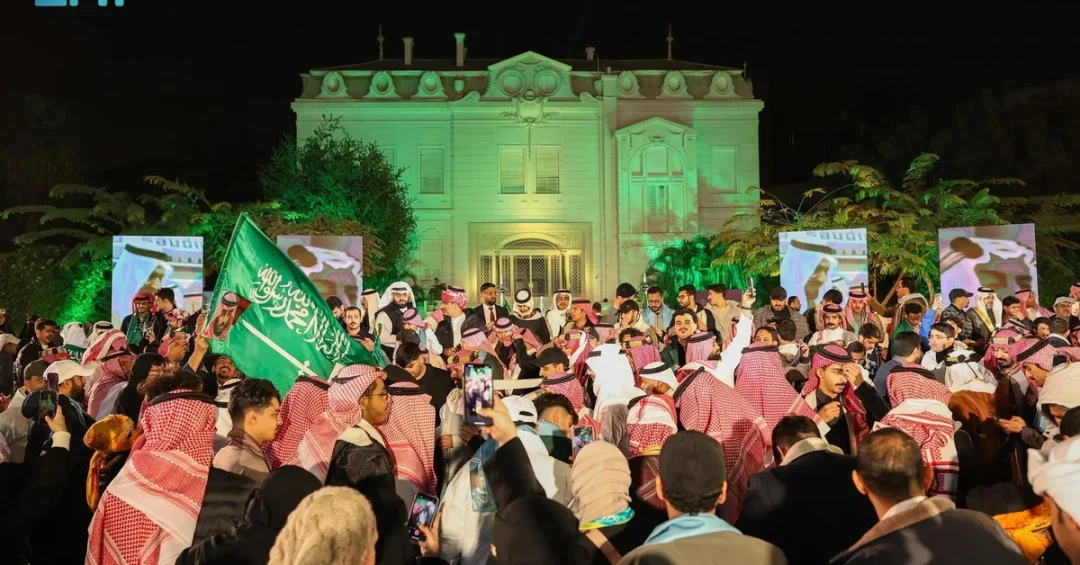
The Saudi Embassy in Cairo celebrated the Kingdom’s Founding Day with a special event on February 23, 2025, honoring the establishment of the First Saudi State in 1727. The gathering, organized under the patronage of Saudi Ambassador to Egypt Saleh Al-Husseini, brought together embassy staff, Saudi citizens residing in Egypt, and guests for a day of cultural festivities and historical reflection.
Context and Background
Founding Day, officially recognized in 2022, marks the beginning of the First Saudi State under Imam Mohammed bin Saud. The annual celebration reinforces national identity and highlights Saudi Arabia’s historical roots, cultural heritage, and unifying leadership. The Cairo event follows similar celebrations across Saudi diplomatic missions worldwide, showcasing the Kingdom’s traditions to international audiences.
Key Details
The embassy program featured visual presentations chronicling three centuries of Saudi statehood, from the Diriyah era to modern development under Vision 2030. Traditional art performances demonstrated regional folk traditions, while the embassy building displayed Founding Day decor with the event’s official logo and colors. Attendees received commemorative gifts symbolizing Saudi-Egyptian friendship.
Diplomatic and Cultural Significance
Egypt hosts one of the largest Saudi expatriate communities in the region, making the Cairo celebration particularly symbolic. The event strengthened people-to-people ties while projecting Saudi Arabia’s cultural diplomacy. Such observances complement the strategic partnership between both nations, which share deep historical connections and contemporary cooperation across economic and security sectors.
20 Questions
Q1. What is Founding Day?
A1. Founding Day commemorates the establishment of the First Saudi State in 1727 by Imam Mohammed bin Saud, marking the beginning of modern Saudi governance structures and national identity.
Q2. When was Founding Day officially established?
A2. Saudi Arabia officially recognized February 22 as Founding Day through a 2022 royal decree by King Salman bin Abdulaziz Al Saud.
Q3. Who attended the Cairo embassy event?
A3. Ambassador Saleh Al-Husseini hosted Saudi diplomats, expatriates, and Egyptian guests representing cultural and governmental institutions.
Q4. What activities were featured?
A4. The program included historical presentations, traditional performances, and ceremonial gift exchanges within a thematically decorated venue.
Q5. Why is Egypt significant for this celebration?
A5. Egypt’s large Saudi community and centuries-old bilateral ties make it a strategic location for showcasing Saudi heritage abroad.
Q6. How does Founding Day differ from National Day?
A6. While National Day marks the 1932 unification, Founding Day honors the 1727 establishment of governance systems preceding modern Saudi Arabia.
Q7. What symbols represent Founding Day?
A7. The official logo incorporates palm trees, Arabian horses, and the Kingdom’s map, symbolizing heritage, vitality, and unity.
Q8. How long did the First Saudi State last?
A8. The initial state endured from 1727 until 1818, laying foundations for subsequent Saudi states leading to the modern kingdom.
Q9. What gifts were distributed?
A9. Attendees received commemorative items featuring Founding Day insignia, though specific gifts weren’t detailed in official releases.
Q10. How do embassies customize celebrations?
A10. Missions adapt programs to local contexts while maintaining core elements like historical exhibits and cultural displays per Foreign Ministry guidelines.
Q11. What architectural style was featured?
A11. Decorations likely incorporated Najdi designs reflecting Diriyah’s UNESCO-listed At-Turaif district, the First State’s original capital.
Q12. Were Egyptian officials present?
A12. While unconfirmed for this event, previous years saw participation by Egyptian ministers and Arab League representatives.
Q13. How does this support Vision 2030?
A13. Cultural diplomacy events promote national identity abroad, aligning with Vision 2030’s goal of strengthening Saudi Arabia’s international presence.
Q14. What historical periods were highlighted?
A14. Presentations spanned the First through Third Saudi States up to contemporary achievements under King Salman and Crown Prince Mohammed bin Salman.
Q15. How many Saudis reside in Egypt?
A15. Estimates suggest 30,000-50,000 Saudi citizens live in Egypt, including students, businesspeople, and retirees.
Q16. Were virtual components available?
A16. Some missions stream events globally, though the Cairo program appears to have been primarily in-person based on available reports.
Q17. What musical traditions were performed?
A17. Typical Founding Day events feature Ardah folk dances and Hijazi/Saudi folklore music, likely included here.
Q18. How does this celebration compare regionally?
A18. Similar to UAE’s Union Day or Oman’s Renaissance Day, it reinforces historical continuity amid modernization.
Q19. What educational value does it provide?
A19. Events teach younger generations and international audiences about pre-oil era governance and cultural resilience.
Q20. Will this become an annual embassy tradition?
A20. Given its establishment as an official observance, Founding Day will likely remain a fixture in Saudi diplomatic calendars worldwide.
Vision 2030 Alignment
The Cairo celebration exemplifies how Saudi Arabia’s Vision 2030 leverages cultural heritage as a soft power asset. By anchoring modernization in historical consciousness, such events strengthen national identity among expatriates while building international appreciation for the Kingdom’s civilizational legacy—key to achieving Vision 2030’s goals of a vibrant society and thriving economy with global reach.
Reader Feedback
We value your thoughts. Please share your feedback on this article.
Your feedback helps us improve our coverage.