


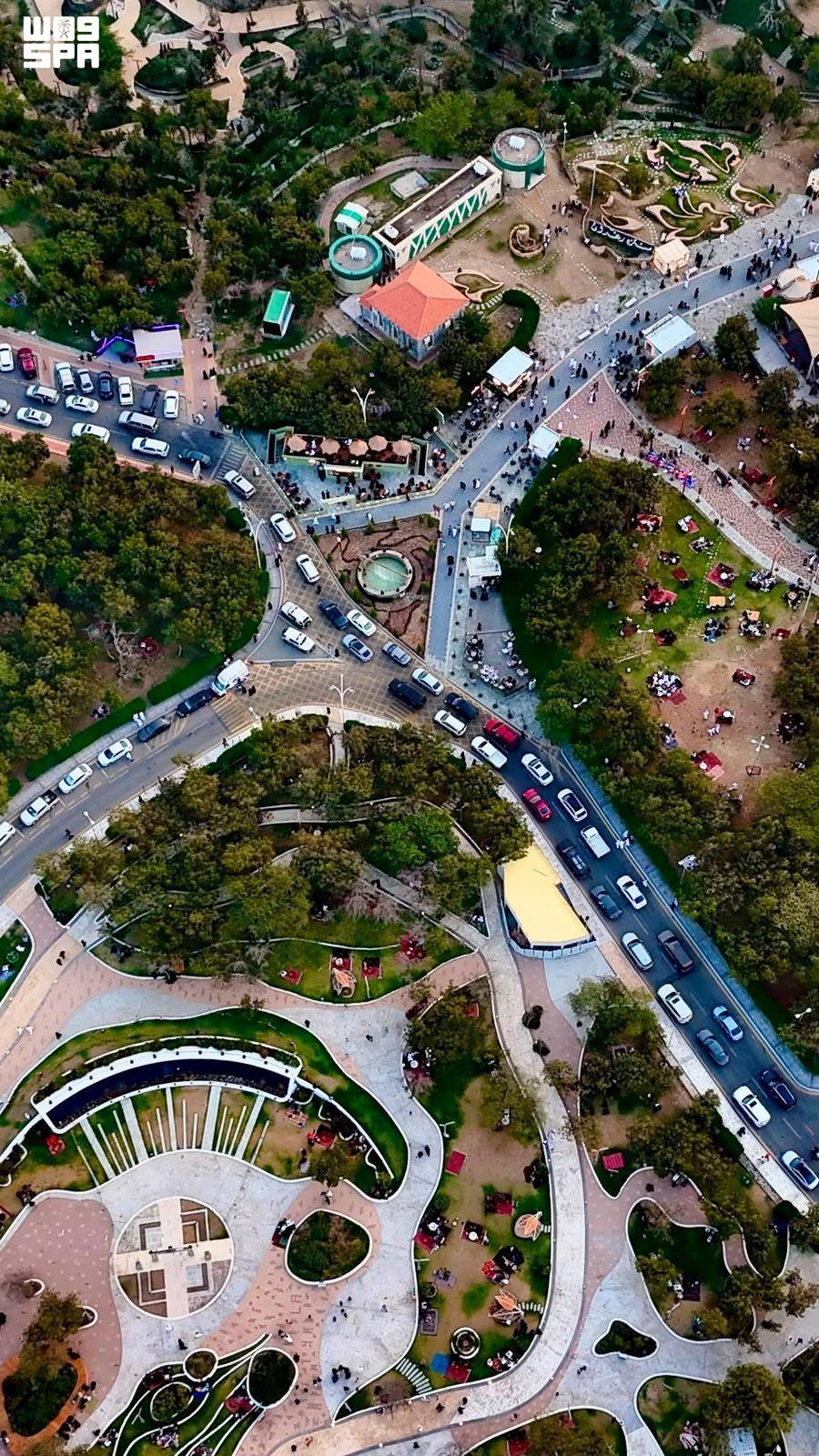
Bahah is integrating tourism development with environmental protection at Raghadan Park, utilizing dense juniper trees and natural vegetation to create an attractive space for residents and tourists.
According to SPA, the Bahah region municipality designed park projects by considering the density and distribution of trees. This approach ensures that new facilities and paths harmonize with the surrounding environment to preserve the natural characteristics of Raghadan.
Designed paths within the Bahjah Raghadan and Lavender Garden sections follow the land topography and tree distribution, allowing visitors to access park facilities while moving through nature. Development plans have also preserved valleys and natural flood paths to ensure construction remains compatible with the region’s geographical features.
Sustainable irrigation methods and tree planting initiatives are being implemented to expand green spaces and maintain vegetation stability. The juniper trees provide natural canopies for visitors and serve as subjects for photographers. The overall approach balances tourism readiness with the protection of natural assets and the environmental identity of Raghadan.
How did the Bahah municipality approach the development of Raghadan Park? The Bahah region municipality focused on the density and distribution of trees during project execution. This strategy ensures that new facilities and paths are harmonized with the surrounding environment, which helps in preserving the natural characteristics and vegetation of the Raghadan area.
What specific areas in the park feature designed nature paths? Designed paths are located in the Bahjah Raghadan and Lavender Garden sections. These paths were created based on the distribution of juniper trees and the topography of the land, enabling visitors to access various park facilities while remaining immersed in nature.
What environmental measures were taken during the park’s construction? Construction plans preserved natural flood paths and valleys to remain compatible with the region’s geography. Additionally, the park utilizes sustainable irrigation methods and ongoing tree planting programs to expand green spaces and ensure the stability of the vegetation.