


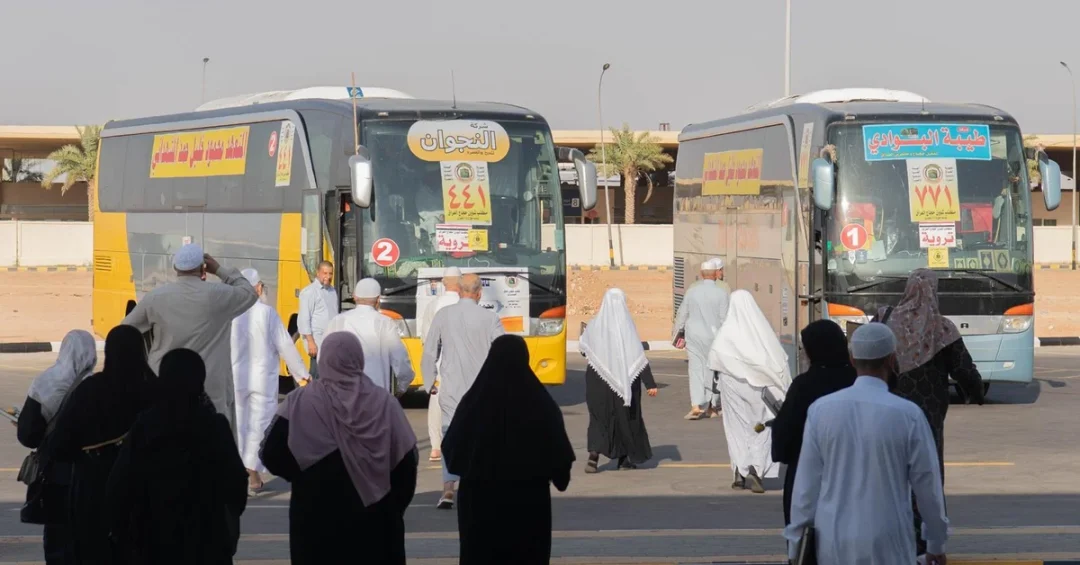
The Jdeidet Arar crossing in Saudi Arabia’s northern border region bid farewell to the last group of Iraqi pilgrims on June 27, 2024, as they completed their Hajj journey with ease and efficiency. Governor of the Northern Borders Region Prince Faisal bin Khalid bin Sultan bin Abdulaziz personally supervised the departure, underscoring the Kingdom’s commitment to serving all pilgrims. According to the Saudi Press Agency, the number of departing Iraqi pilgrims exceeded 21,000, and comprehensive services were provided by various security and service agencies to expedite customs and administrative procedures.
Context and Background
The Jdeidet Arar crossing serves as a key gateway for pilgrims traveling between Iraq and Saudi Arabia, facilitating the annual Hajj pilgrimage. This year’s operation demonstrates the Kingdom’s advanced logistical capabilities, honed through years of hosting millions of pilgrims from around the world. The smooth departure of Iraqi pilgrims reflects the strong bilateral ties between Saudi Arabia and Iraq, and the Kingdom’s dedication to ensuring that all guests of Allah can complete their rites in comfort and dignity.
Key Details
Prince Faisal bin Khalid bin Sultan bin Abdulaziz, Governor of the Northern Borders Region, directly oversaw the farewell process, underscoring the high-level attention given to pilgrim services. More than 21,000 Iraqi pilgrims were accommodated, with all necessary services provided by security, civil defense, health, and administrative bodies. Volunteers also played a crucial role, distributing copies of the Holy Quran to departing pilgrims as a gift from the Custodian of the Two Holy Mosques, King Salman bin Abdulaziz. This gesture highlights the Kingdom’s deep commitment to the spiritual welfare of all pilgrims.
Implications and Impact
The successful coordination at Jdeidet Arar crossing emphasizes Saudi Arabia’s regional leadership in pilgrimage management. For Iraq, the seamless exit of its citizens underscores the mutual respect and shared religious heritage that bind the two nations. Moreover, the efficient procedures at border crossings are part of Saudi Arabia’s broader efforts to implement the Pilgrim Experience Program, a key component of Vision 2030, which aims to host more than 30 million pilgrims annually by the end of the decade. The departure of the last group of Iraqi pilgrims marks the culmination of a Hajj season that once again showcased the Kingdom’s immense capability to facilitate one of the largest gatherings on Earth.
Vision 2030 Alignment
As the final pilgrims leave the Jdeidet Arar crossing, the Kingdom’s focus turns to the future, building on the success of this year’s Hajj to further enhance the spiritual journey for Muslims worldwide. Vision 2030 places pilgrimage at the heart of Saudi Arabia’s cultural and economic aspirations, transforming logistics, hospitality, and service offerings to provide an unforgettable experience. The safe and dignified departure of the Iraqi pilgrims underscores the Kingdom’s unwavering commitment to serving Islam’s holiest sites and to strengthening global bonds of brotherhood and faith.
20 Questions
Q1. What is the Jdeidet Arar crossing?
A1. The Jdeidet Arar crossing is a border entry point in Saudi Arabia’s Northern Borders Region, serving as a key passage for travelers between Iraq and Saudi Arabia, particularly for pilgrimage purposes.
Q2. Which group of pilgrims departed from Jdeidet Arar?
A2. The last group of Iraqi pilgrims departed from Jdeidet Arar, having completed the Hajj ritual. Their departure marked the end of the pilgrimage season for Iraqi pilgrims.
Q3. When did the farewell ceremony take place?
A3. The farewell ceremony took place on June 27, 2024, as reported by the Saudi Press Agency. The event was supervised by the Governor of the Northern Borders Region.
Q4. How many Iraqi pilgrims left through Jdeidet Arar?
A4. Over 21,000 Iraqi pilgrims departed through the Jdeidet Arar crossing. This number underscores the high volume of pilgrims traveling through this border point.
Q5. Who supervised the farewell at the crossing?
A5. Prince Faisal bin Khalid bin Sultan bin Abdulaziz, the Governor of the Northern Borders Region, supervised the farewell. His presence emphasized the Kingdom’s hospitality toward departing pilgrims.
Q6. What kind of services were provided to the pilgrims?
A6. Security and service agencies provided comprehensive services, including expedited customs and administrative procedures. These services ensured a smooth and efficient departure for all pilgrims.
Q7. Why did volunteers distribute copies of the Holy Quran?
A7. Volunteers distributed copies of the Holy Quran as a gift from the Custodian of the Two Holy Mosques. This act reflects the Kingdom’s dedication to the spiritual and religious experience of pilgrims.
Q8. Who is the Custodian of the Two Holy Mosques?
A8. The Custodian of the Two Holy Mosques is King Salman bin Abdulaziz Al Saud. This title signifies his responsibility for the holy cities of Mecca and Medina.
Q9. What is the significance of the Jdeidet Arar crossing?
A9. The Jdeidet Arar crossing is a vital gateway for Iraqi pilgrims. Its efficient operation facilitates a comfortable pilgrimage journey and strengthens bilateral relations.
Q10. How does this departure reflect Saudi Arabia’s service to pilgrims?
A10. It demonstrates the Kingdom’s modern infrastructure and dedicated volunteers, ensuring all pilgrims receive utmost care. This reflects the comprehensive logistics management for major events.
Q11. What is the relationship between Saudi Arabia and Iraq in this context?
A11. The smooth operation symbolizes the strong brotherly ties between the two countries. It showcases mutual respect and collaboration in matters of religious importance.
Q12. What role do security agencies play at the border?
A12. Security agencies ensure the safety and orderly movement of pilgrims. They expedite customs, manage crowds, and maintain peace throughout the border crossing process.
Q13. How do volunteers contribute to the pilgrims’ experience?
A13. Volunteers assist with the distribution of religious gifts and provide guidance and support. Their efforts enhance the comfort of pilgrims, showing the hospitality of Saudi society.
Q14. What is Vision 2030’s relation to the Hajj?
A14. Vision 2030 aims to enrich pilgrimage experiences and accommodate more pilgrims. The smooth handling of travelers at Jdeidet Arar is a step toward achieving the Hajj programs of Vision 2030.
Q15. How does this operation improve cross-border travel?
A15. The efficient procedures help create a smooth experience for travelers, setting a model for regional borders. This demonstrates modern logistics management that can be replicated.
Q16. What can be the impact on future pilgrimages?
A16. This success will likely inspire confidence among international pilgrims. The effective management of a large group suggests increased readiness for future growth.
Q17. Are there any cultural aspects highlighted?
A17. The gift of the Holy Quran and the respectful farewell highlight the Kingdom’s cultural values of generosity and religious devotion. These are deeply rooted in Islamic traditions.
Q18. What message does this convey to the global community?
A18. The event conveys Saudi Arabia’s reliability as a host for Muslim pilgrimages. It shows the Kingdom’s commitment to continuous improvement and global community.
Q19. How does this fit into the broader Hajj season?
A19. The Jdeidet Arar farewell is the final phase of the Iraqi pilgrims’ departure. It concludes the season for these pilgrims, marking the completion of their spiritual journey.
Q20. What are the future improvements expected in border services?
A20. The Kingdom will likely continue to invest in border technology and staff training. This will result in even more seamless and comfortable transit for pilgrims, aligning with Vision 2030 goals.
Reader Feedback
We value your thoughts. Please share your feedback on this article.
Your feedback helps us improve our coverage.