


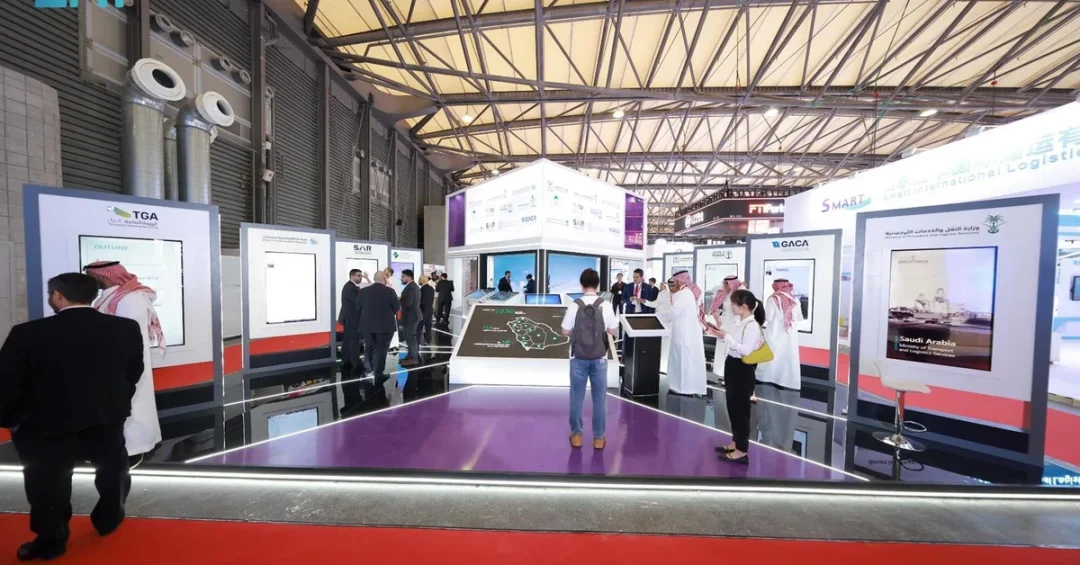
The National Industrial Development and Logistics Program (NIDLP) is participating in the international Transport Logistics Exhibition in Shanghai, China, from June 25 to 27, 2024, as part of the Saudi pavilion at the fair, which includes 13 entities concerned with transport and logistics services in Saudi Arabia. The program’s presence underscores the Kingdom’s commitment to enhancing its global logistics footprint, aligning with the strategic objectives of Saudi Vision 2030.
Context and Background
Saudi Arabia has been actively transforming its logistics infrastructure across maritime, air, land, and rail sectors. The NIDLP, a key enabler of Vision 2030, aims to raise awareness about the sector’s growth and to strengthen connectivity with local and international markets. By capitalizing on the Kingdom’s strategic geographic location—serving as a bridge between Asia, Europe, and Africa—Saudi Arabia seeks to become a leading global logistics hub.
The exhibition provides a vital platform for Saudi entities to engage with international partners, showcase recent developments, and attract foreign investment. The Saudi pavilion, featuring 13 entities, underscores the collaborative effort across the public and private sectors to drive innovation and efficiency in logistics.
Key Details
On the first day of the fair, a significant agreement was announced between Saudi Global Ports Company and Chinese company SANY, marking the largest single global contract to enhance the capabilities of King Abdulaziz Port in Dammam. The deal includes the supply of 80 eco-friendly electric trucks, reflecting a mutual commitment to sustainable and advanced port operations.
The contract aligns with Saudi Arabia’s broader sustainability goals under Vision 2030, which emphasize green technologies and smart infrastructure. The modernization of King Abdulaziz Port will further increase its capacity to handle the growing trade volume, solidifying the Kingdom’s position as a premier logistics destination.
Implications and Impact
This participation reinforces the robust economic ties between Saudi Arabia and China, which is already Saudi Arabia’s largest trading partner. The signing of the contract demonstrates the confidence international companies have in the Kingdom’s investment environment and its ambitious infrastructure projects. The move is expected to boost the efficiency of port operations, reduce carbon footprints, and enhance the overall competitiveness of Saudi ports on a global scale.
The exhibition also serves as a venue for exploring new partnerships across the logistics value chain, including digitalization, artificial intelligence, and smart mobility. Such engagement is anticipated to accelerate the integration of advanced technologies in Saudi Arabia’s supply chain systems, ultimately benefiting the regional economy.
Vision 2030 Alignment
The NIDLP’s active participation and the signing of the SANY agreement are testament to Saudi Arabia’s strategic direction. These initiatives are integral to the Vision 2030 goal of positioning the Kingdom as a premier global logistics center, fostering economic diversification, and creating new job opportunities for citizens. As the program continues to forge international partnerships, Saudi Arabia is well-placed to become a pivotal link in global trade networks, driving sustainable growth and prosperity for decades to come.
20 Questions
Q1. What is the National Industrial Development and Logistics Program (NIDLP)?
A1. NIDLP is a Saudi government initiative under Vision 2030, designed to accelerate industrial and logistics growth. It focuses on expanding infrastructure, increasing trade connectivity, and positioning Saudi Arabia as a global logistics hub by 2030.
Q2. Where is the international Transport Logistics Exhibition being held?
A2. The exhibition is taking place in Shanghai, China, from June 25 to 27, 2024. It is a major global platform for showcasing innovations and services in transport and logistics, attracting international participants and investors.
Q3. How many entities are part of the Saudi pavilion at the exhibition?
A3. The Saudi pavilion includes 13 entities related to transport and logistics services, representing the Kingdom’s collaborative effort to showcase its capabilities and engage with global partners in the logistics sector.
Q4. What is the main goal of NIDLP’s participation in the exhibition?
A4. The program aims to highlight the continuous development of Saudi Arabia’s logistics infrastructure across maritime, air, land, and rail sectors, and to raise awareness about the sector’s growth due to Vision 2030, fostering connectivity with global markets.
Q5. Which Saudi company signed a contract with SANY?
A5. Saudi Global Ports Company, a leading port operator in the Kingdom, signed the largest single global contract with the Chinese company SANY to enhance the capabilities of King Abdulaziz Port in Dammam.
Q6. How many electric trucks are included in the contract?
A6. The contract includes 80 eco-friendly electric trucks, which will be used at King Abdulaziz Port to modernize its fleet and reduce carbon emissions, aligning with sustainable development goals.
Q7. What is the significance of the contract for King Abdulaziz Port?
A7. The contract significantly boosts the port’s operational efficiency by introducing green technology. It enhances the port’s capacity to handle increasing cargo volumes while supporting the Kingdom’s environmental sustainability objectives.
Q8. How does this participation support Saudi Arabia’s Vision 2030?
A8. The participation supports Vision 2030 by promoting economic diversification, developing a resilient logistics sector, and strengthening global partnerships, all essential for transitioning to a knowledge-based economy and reducing oil dependence.
Q9. What are the primary logistics sectors highlighted by NIDLP?
A9. NIDLP focuses on maritime, air, land, and rail sectors, aiming to develop integrated and efficient logistics networks across the Kingdom, thus enabling seamless movement of goods and services.
Q10. How does the exhibition benefit international relations between Saudi Arabia and China?
A10. The event strengthens ties between the two countries by fostering trade, investment, and technology exchange. The contract with SANY exemplifies mutual cooperation and deepens the strategic partnership in logistics and infrastructure.
Q11. What role does the Saudi government play in these initiatives?
A11. The Saudi government, through programs like NIDLP, creates a supportive regulatory environment that attracts foreign investment, and promotes sustainable development in the logistics sector, ensuring the Kingdom remains a preferred partner.
Q12. How do eco-friendly trucks contribute to sustainability?
A12. The trucks reduce greenhouse gas emissions and fuel consumption, contributing to cleaner air and lower carbon footprint. They represent Saudi Arabia’s commitment to adopting green technologies in its industrial and logistics operations.
Q13. What is the size of the Saudi logistics market?
A13. The logistics market is expanding rapidly, with significant investments flowing into ports, airports, and railway networks. This growth is projected to contribute substantially to the national economy, aligning with Vision 2030.
Q14. Why is Saudi Arabia aiming to become a global logistics hub?
A14. Due to its strategic location at the crossroads of three continents, the Kingdom is positioned to facilitate global trade. Becoming a hub would boost economic growth, create jobs, and attract foreign investment.
Q15. What technological advancements are being integrated?
A15. The industry is incorporating automation, digital tracking, and AI-powered solutions to improve efficiency and safety. These technologies are being deployed across ports and logistics operations to optimize performance.
Q16. How does the exhibition help Saudi companies?
A16. It provides a platform for Saudi companies to showcase their services, network with international clients, and explore new investment opportunities, thereby enhancing their global competitiveness and growth.
Q17. What other entities are present in the Saudi pavilion?
A17. The pavilion includes entities like airports, maritime authorities, and rail operators, all working together to present a unified and modern image of Saudi Arabia’s logistics capabilities.
Q18. How does this alignment with China’s initiatives?
A18. The cooperation aligns with China’s Belt and Road Initiative, fostering greater connectivity and trade between Asia and the Middle East. Saudi Arabia is a vital link in this global supply chain.
Q19. What is the expected impact on the regional economy?
A19. The improved logistics infrastructure is likely to reduce shipping costs, increase trade efficiency, and attract multinational companies to establish regional operations in the Kingdom, positively influencing neighboring markets.
Q20. What is the future outlook for Saudi logistics?
A20. With sustained investment and strategic partnerships, Saudi Arabia is set to expand its logistics sector to become a top global hub, boosting its non-oil GDP and ensuring a prosperous future for its citizens.
Reader Feedback
We value your thoughts. Please share your feedback on this article.
Your feedback helps us improve our coverage.