


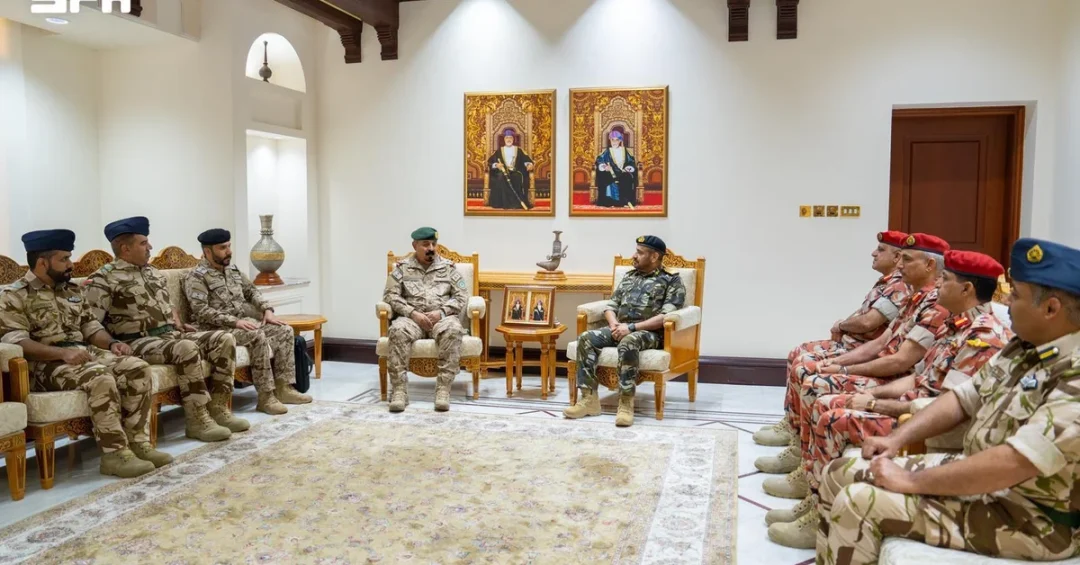
Vice Admiral Abdullah bin Khamis Al Raisi, Chief of Staff of the Sultan’s Armed Forces of Oman, received Major General Mohammed bin Saeed Al-Moghedi, Secretary-General of the Islamic Military Counter Terrorism Coalition (IMCTC), in Muscat on September 14, 2026, to discuss strengthening strategic cooperation in counter-terrorism and maritime security. The meeting is part of the IMCTC’s ongoing efforts to deepen coordination with its member states and support regional and international initiatives to combat extremism and promote peace and stability.
Context and Background
The Islamic Military Counter Terrorism Coalition, headquartered in Riyadh, Saudi Arabia, was established to coordinate and unify efforts among member states in the fight against terrorism. It operates across four key domains: intellectual, media, counter-terrorist financing, and military. The coalition focuses on building the capacities of member states, exchanging expertise, and implementing programs that address the root causes of extremism. Oman, a member of the IMCTC, has consistently supported regional security initiatives and plays a vital role in maintaining stability in the Gulf and broader Middle East.
This high-level meeting reflects the coalition’s commitment to engaging with member states at the highest levels of government and military leadership. It underscores the importance of a unified approach to countering terrorism and extremism, which remain significant threats to regional and global security.
Key Details
During the meeting, Vice Admiral Al Raisi and Major General Al-Moghedi reviewed areas of mutual cooperation and explored ways to strengthen the partnership between the IMCTC and Oman. Their discussions focused on countering terrorism, enhancing capacity building, and exchanging expertise to support regional and international efforts against extremist threats.
Major General Al-Moghedi provided an overview of the coalition’s key activities and initiatives across its four domains. He highlighted the IMCTC’s efforts to support member states in developing their institutional and human capabilities. He also outlined the role of the IMCTC’s Initiatives Fund, which supports strategic projects identified as priorities by member states, enabling them to implement specialized programs and sustainable projects in various counter-terrorism fields.
As part of the visit, the Secretary-General and his delegation toured the Maritime Security Center in Oman, where they were briefed on its mandate, operational responsibilities, and mechanisms for monitoring and coordinating activities at sea. The center plays a crucial role in strengthening maritime security and safety and addressing potential risks and threats in the region.
Implications and Impact
The discussions between the IMCTC and Omani officials signal a deepening of strategic ties and a shared commitment to combating terrorism and ensuring maritime security. Oman’s strategic location, with its coastline along the Gulf of Oman and the Arabian Sea, makes it a key partner in safeguarding vital maritime routes and addressing security challenges. Enhanced cooperation between the IMCTC and Oman can lead to more effective intelligence sharing, joint training exercises, and coordinated responses to emerging threats.
This partnership also aligns with broader regional efforts to promote stability and security, which are essential for economic prosperity and development. By working together, the IMCTC and Oman contribute to creating a safer environment that supports international trade and investment, benefiting not only the region but also the global community.
Vision 2030 Alignment
Saudi Arabia’s Vision 2030 emphasizes the importance of a secure and stable region as a foundation for economic growth and social development. The IMCTC, under Saudi leadership, plays a pivotal role in achieving this vision by fostering international cooperation and building resilient societies. The coalition’s work in countering terrorism and extremism directly supports Vision 2030’s goals of enhancing national security, promoting moderate values, and strengthening global partnerships. As the IMCTC continues to collaborate with member states like Oman, it reinforces Saudi Arabia’s commitment to leading efforts that ensure peace, security, and prosperity for all.
20 Questions
Q1. What was the purpose of the meeting between Vice Admiral Al Raisi and Major General Al-Moghedi?
A1. The meeting aimed to strengthen cooperation and coordination between the IMCTC and Oman, particularly in counter-terrorism, capacity building, and exchanging expertise to support regional and international security efforts.
Q2. Who is the Secretary-General of the Islamic Military Counter Terrorism Coalition?
A2. Major General Mohammed bin Saeed Al-Moghedi serves as the Secretary-General of the IMCTC, leading the coalition’s efforts to unify and coordinate counter-terrorism initiatives among member states.
Q3. What are the four domains of the IMCTC’s activities?
A3. The IMCTC operates across four key domains: intellectual, media, counter-terrorist financing, and military, each addressing different aspects of the fight against terrorism and extremism.
Q4. What is the role of the IMCTC’s Initiatives Fund?
A4. The Initiatives Fund supports strategic initiatives prioritized by member states, enabling them to implement specialized programs and sustainable projects across various fields of counter-terrorism.
Q5. Why is Oman a key partner in maritime security?
A5. Oman’s strategic location along the Gulf of Oman and the Arabian Sea makes it vital for monitoring and securing maritime routes, which are essential for international trade and regional stability.
Q6. What did the IMCTC delegation learn at the Maritime Security Center?
A6. They were briefed on the center’s mandate, operational responsibilities, and mechanisms for monitoring and coordinating activities at sea to strengthen maritime security and address potential threats.
Q7. How does the IMCTC support its member states?
A7. The IMCTC supports member states by building their institutional and human capabilities, facilitating the exchange of expertise, and providing resources through initiatives like the Initiatives Fund.
Q8. What is the significance of the IMCTC’s headquarters being in Riyadh?
A8. Having the headquarters in Riyadh underscores Saudi Arabia’s leadership in global counter-terrorism efforts and its commitment to fostering international cooperation against extremism.
Q9. How does this meeting align with Saudi Arabia’s Vision 2030?
A9. The meeting supports Vision 2030’s goals of enhancing national security and promoting global partnerships, as it strengthens regional stability and cooperation, which are essential for economic growth.
Q10. What are the main threats that the IMCTC aims to address?
A10. The IMCTC addresses terrorism and extremism in all its forms, including intellectual, media, financial, and military aspects, to promote security, stability, and peace.
Q11. What role does Oman play in the IMCTC?
A11. As a member state, Oman actively participates in the coalition’s initiatives and collaborates on counter-terrorism efforts, contributing to regional security and stability.
Q12. How does the IMCTC exchange expertise among member states?
A12. The IMCTC facilitates workshops, training programs, and joint exercises that allow member states to share best practices and enhance their counter-terrorism capabilities.
Q13. What is the Maritime Security Center’s mandate?
A13. The center is responsible for monitoring and coordinating maritime activities, ensuring safety and security at sea, and addressing potential risks and threats in Omani waters and beyond.
Q14. Why is counter-terrorist financing a key domain for the IMCTC?
A14. Counter-terrorist financing is crucial because cutting off funds to terrorist groups is essential to disrupt their operations and prevent attacks, thereby enhancing global security.
Q15. How can other countries benefit from the IMCTC’s work?
A15. Other countries can benefit from the IMCTC’s efforts through improved regional stability, shared intelligence, and best practices that contribute to global counter-terrorism effectiveness.
Q16. What are some examples of sustainable projects supported by the Initiatives Fund?
A16. The Initiatives Fund supports projects such as deradicalization programs, community engagement campaigns, and capacity-building workshops that address the root causes of extremism.
Q17. How does the IMCTC promote moderate values?
A17. Through its intellectual and media domains, the IMCTC promotes moderate narratives, counters extremist propaganda, and supports educational initiatives that foster tolerance and understanding.
Q18. What is the expected outcome of the IMCTC-Oman partnership?
A18. The partnership is expected to enhance intelligence sharing, joint training, and coordinated responses to terrorism and maritime threats, leading to a safer and more secure region.
Q19. How does maritime security impact global trade?
A19. Maritime security ensures the safe passage of goods through key waterways, protecting global trade routes and contributing to economic stability and growth worldwide.
Q20. What message does this meeting send to the international community?
A20. It demonstrates a united front against terrorism and extremism, showcasing the commitment of Saudi Arabia, Oman, and other IMCTC member states to peace, security, and international cooperation.
Reader Feedback
We value your thoughts. Please share your feedback on this article.
Your feedback helps us improve our coverage.