


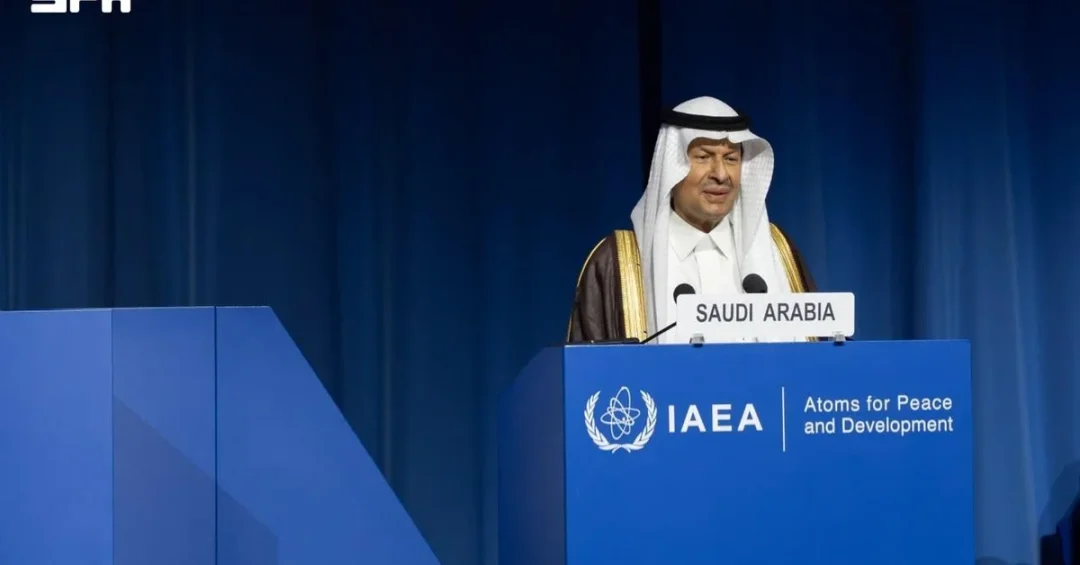
Saudi Arabia’s Minister of Energy, Prince Abdulaziz bin Salman bin Abdulaziz, delivered the Kingdom’s statement at the 70th General Conference of the International Atomic Energy Agency (IAEA) in Vienna on September 14, 2026, reaffirming the Kingdom’s commitment to the peaceful uses of nuclear energy and its support for the IAEA’s pivotal role in nuclear safety, security, and safeguards. The minister, who also serves as Minister of Industry and Mineral Resources, Chairman of the Board of Directors of King Abdullah City for Atomic and Renewable Energy, and Chairman of the Board of Directors of the Nuclear and Radiological Regulatory Commission, addressed a gathering of member states and international organizations, outlining Saudi Arabia’s progress in developing a sustainable national energy mix that includes nuclear energy.
Context and Background
Prince Abdulaziz began by expressing Saudi Arabia’s appreciation for the IAEA’s work in supporting member states and advancing the peaceful applications of nuclear technology. He congratulated the president of the seventieth session and noted that the conference comes at a time of rapidly growing global energy demand, driven by economic, technological, and industrial expansion. In this context, diversifying energy sources and enhancing their reliability and sustainability are essential to supporting economic growth and ensuring security of supply.
The minister highlighted that Saudi Arabia has long been a reliable energy supplier and an active partner in stabilizing global energy markets. In parallel, the Kingdom is developing a more diverse and sustainable national energy mix, including the introduction of nuclear energy within a well-established regulatory framework and in accordance with its international obligations. This approach aligns with the Kingdom’s Vision 2030, which aims to diversify the economy and develop new sectors.
Key Details
Prince Abdulaziz reviewed Saudi Arabia’s vast natural resources, including phosphate ores, gold, copper, zinc, silver, bauxite, magnesium, iron ore, lead, nickel, rare-earth minerals, transition metals, uranium, silica, and gypsum. He emphasized the Kingdom’s goal to transform these resources into sustainable economic and industrial value, strengthening global supply chains for critical and strategic minerals. The National Atomic Energy Project is advancing a programme to explore uranium resources through several tracks, including the recovery of uranium associated with phosphoric acid produced in phosphate fertilizer operations in northern Saudi Arabia, where pilot work with the French company Orano has yielded promising economic indicators.
The minister announced that exploration at the Jabal Sayid project in Madinah Region has identified estimated resources of approximately 114 million tons of ore containing high concentrations of rare earth elements, particularly heavy rare earth elements, alongside promising uranium concentrations. This places the project among the most significant rare earth resource sites currently under development globally. He also noted that during the Crown Prince’s visit to the United States in November 2025, the two countries signed a framework for cooperation on critical minerals and supply chain security. This was followed by a partnership between the Saudi Arabian Mining Company (Ma’aden) and the American company MP Materials to develop capabilities for processing and separating rare earth elements and producing associated uranium.
Prince Abdulaziz stressed that Saudi Arabia’s ambition extends beyond raw material production to building an integrated economic and industrial value chain, from exploration and mining to processing, separation, refining, rare earth oxide production, uranium recovery and purification, and yellowcake production. He emphasized that the Kingdom’s model differs from others in the region due to its unique combination of resources, capabilities, and strategic partnerships.
The minister reaffirmed that Saudi Arabia’s peaceful nuclear programme is pursued with the highest levels of responsibility and transparency, in line with the inherent right of States Parties to the Treaty on the Non-Proliferation of Nuclear Weapons. He highlighted the Kingdom’s partnership with the United States, including the signing of a cooperation agreement on peaceful uses of nuclear energy, known as the “123 Agreement,” in July. He also mentioned special voluntary safeguards arrangements with the United States, which will be subject to IAEA oversight.
Implications and Impact
Saudi Arabia’s growing role in the peaceful nuclear sector and critical minerals supply chains has significant implications for global energy security and the transition to cleaner energy sources. The Kingdom’s efforts to develop an integrated value chain for rare earth elements and uranium could reduce dependence on single-source suppliers and enhance the resilience of global supply chains. This is particularly important as demand for critical minerals rises worldwide to support advanced technologies and renewable energy systems.
Moreover, the Kingdom’s transparent and cooperative approach to nuclear energy, exemplified by its partnerships with the United States and France, sets a positive example for other nations considering peaceful nuclear programmes. It reinforces international confidence in Saudi Arabia’s commitment to non-proliferation and nuclear safety, contributing to regional and global stability.
Vision 2030 Alignment
Saudi Arabia’s participation in the 70th IAEA General Conference underscores the Kingdom’s dedication to Vision 2030, which seeks to diversify the economy, develop new industries, and ensure sustainable development. By integrating nuclear energy into its national energy mix and building value chains for critical minerals, the Kingdom is creating high-value jobs, attracting investment, and strengthening its position as a global leader in energy and industrial innovation. This aligns with Vision 2030’s goals of economic diversification, environmental sustainability, and enhanced international cooperation.
20 Questions
Q1. What event did Saudi Arabia’s Energy Minister participate in?
A1. He delivered the Kingdom’s statement at the 70th General Conference of the International Atomic Energy Agency (IAEA) in Vienna on September 14, 2026.
Q2. Who represented Saudi Arabia at the 70th IAEA General Conference?
A2. Prince Abdulaziz bin Salman bin Abdulaziz, Minister of Energy, represented Saudi Arabia. He also holds other key positions related to atomic and renewable energy.
Q3. What is the IAEA’s role according to the minister?
A3. The IAEA plays a pivotal role in supporting member states, advancing peaceful uses of nuclear energy, and upholding nuclear safety, security, and safeguards principles.
Q4. Why is diversifying energy sources important for Saudi Arabia?
A4. Diversifying energy sources enhances reliability and sustainability, supports economic growth, and ensures security of energy supply amid rapidly growing global demand.
Q5. What natural resources did the minister highlight?
A5. He highlighted phosphate ores, gold, copper, zinc, silver, bauxite, magnesium, iron ore, lead, nickel, rare-earth minerals, transition metals, uranium, silica, and gypsum.
Q6. How is Saudi Arabia advancing uranium exploration?
A6. Through the National Atomic Energy Project, which includes recovering uranium from phosphoric acid operations and exploring conventional sources via the Sedimentary Cover Survey Initiative.
Q7. What is the significance of the Jabal Sayid project?
A7. It contains an estimated 114 million tons of ore with high concentrations of heavy rare earth elements and promising uranium, making it one of the most significant rare earth sites globally.
Q8. What cooperation did Saudi Arabia sign with the United States?
A8. They signed a framework for cooperation on critical minerals and supply chain security, and later a “123 Agreement” on peaceful uses of nuclear energy.
Q9. What is the “123 Agreement”?
A9. It is a bilateral cooperation agreement between Saudi Arabia and the United States on the peaceful uses of nuclear energy, signed in July 2026.
Q10. How does Saudi Arabia ensure transparency in its nuclear programme?
A10. It follows a clear approach based on transparency, openness, and international cooperation, with special voluntary safeguards arrangements and IAEA oversight.
Q11. What is Saudi Arabia’s position on the NPT?
A11. Saudi Arabia upholds the right of States Parties to the Treaty on the Non-Proliferation of Nuclear Weapons to develop and use nuclear energy for peaceful purposes without discrimination.
Q12. What partnerships support Saudi Arabia’s rare earth ambitions?
A12. Partnerships include cooperation with France’s Orano for uranium recovery and with the US company MP Materials for rare earth processing and separation.
Q13. How does Saudi Arabia plan to build an integrated value chain?
A13. It aims to develop a value chain from exploration and mining to processing, separation, refining, rare earth oxide production, and uranium recovery and purification.
Q14. What distinguishes Saudi Arabia’s model from others in the region?
A14. The Kingdom’s unique combination of promising mineral resources, competitive energy supplies, advanced infrastructure, strategic location, and effective international partnerships.
Q15. What is the Sedimentary Cover Survey Initiative?
A15. It is an initiative to explore for additional uranium ores from conventional sources within the Kingdom.
Q16. How does Saudi Arabia support global supply chains?
A16. By transforming natural resources into sustainable economic and industrial value, strengthening the resilience of global supply chains for critical and strategic minerals.
Q17. What did the minister say about nuclear safety and security?
A17. He affirmed the Kingdom’s commitment to enhancing preparedness for nuclear and radiological emergencies and reinforcing a culture of nuclear safety and security.
Q18. What is Saudi Arabia’s stance on international cooperation in nuclear energy?
A18. The Kingdom does not seek to develop its peaceful nuclear programme in isolation; it collaborates through trusted international partnerships that strengthen confidence.
Q19. How does Saudi Arabia’s nuclear programme align with Vision 2030?
A19. It supports economic diversification, sustainable development, and the creation of high-value industries, aligning with Vision 2030’s goals.
Q20. What did the minister conclude about the IAEA?
A20. He reaffirmed Saudi Arabia’s full support for the IAEA and its commitment to constructive cooperation for a more secure, sustainable, and prosperous future.
Reader Feedback
We value your thoughts. Please share your feedback on this article.
Your feedback helps us improve our coverage.