


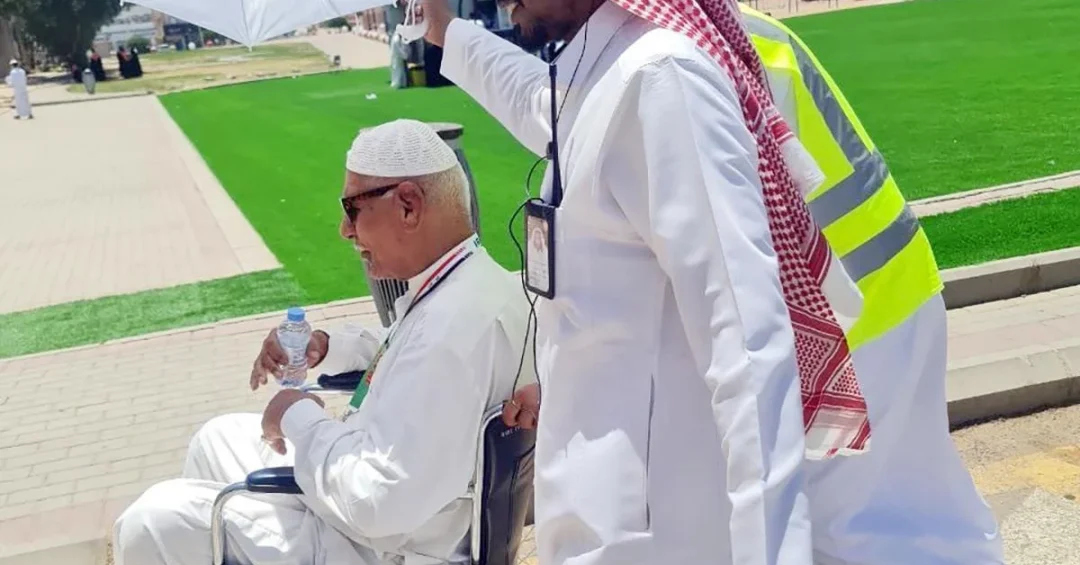
Government agencies in the Pilgrims City in Khaybar Governorate, located in the Madinah region, are receiving pilgrims of various nationalities arriving by land through the Kingdom’s northern land ports, as part of a comprehensive system of services provided during the Hajj season. The facility operates around the clock to ensure that pilgrims receive care and attention from the moment they enter the Kingdom, reflecting Saudi Arabia’s commitment to serving guests of God.
Context and Background
Khaybar Governorate, situated in the Madinah region, serves as a key entry point for pilgrims traveling overland from the north. The Pilgrims City there was established to streamline the arrival process and provide essential services. Khaybar Governor Faisal Al-Mutairi stated that the city receives daily convoys of pilgrims arriving by buses, with field teams and committees immediately beginning to provide all forms of care and attention.
The city’s operations are part of a broader national effort coordinated by various government agencies to ensure a smooth and spiritually fulfilling Hajj experience. This initiative aligns with the Kingdom’s longstanding tradition of hospitality and its commitment to facilitating the pilgrimage for millions of Muslims worldwide.
Key Details
Upon arrival, pilgrims are greeted by a comprehensive system of services. These include healthcare services provided by the city’s health cluster, which operates around the clock. According to Governor Al-Mutairi, the health cluster receives patients, offers healthcare, and transfers cases requiring further attention to hospitals. This ensures that any medical needs are promptly addressed.
In addition to health services, volunteer efforts play a vital role. Students from the governorate, supervised by the volunteer support office and the education office in Khaybar, dedicate their time to serving pilgrims. Their involvement not only enhances the quality of services but also instills a sense of community and pride among the youth.
Implications and Impact
The efficient operation of the Pilgrims City in Khaybar has significant implications for the overall Hajj experience. By providing timely and compassionate care, Saudi Arabia demonstrates its capability to manage large-scale religious tourism while prioritizing the well-being of pilgrims. This contributes to the Kingdom’s reputation as a reliable and hospitable host.
Furthermore, the integration of multiple agencies under one facility highlights the effectiveness of coordinated efforts in delivering public services. It sets a benchmark for future initiatives aimed at enhancing pilgrimage infrastructure and services.
Vision 2030 Alignment
This initiative is closely aligned with Saudi Vision 2030, which seeks to enhance the quality of services for pilgrims and expand the capacity to host increasing numbers. By investing in infrastructure and human resources, the Kingdom aims to provide a seamless and enriching experience for all visitors. The Pilgrims City in Khaybar exemplifies how Vision 2030 goals are being translated into tangible benefits for pilgrims and the local community.
20 Questions
Q1. What is the Pilgrims City in Khaybar?
A1. The Pilgrims City in Khaybar is a facility in the Madinah region designed to receive and serve pilgrims arriving by land through the Kingdom’s northern ports, providing comprehensive services during the Hajj season.
Q2. Who is the governor of Khaybar?
A2. Faisal Al-Mutairi serves as the Governor of Khaybar Governorate. He oversees the operations of the Pilgrims City and ensures that pilgrims receive the necessary care and attention.
Q3. How do pilgrims arrive at the Pilgrims City?
A3. Pilgrims arrive at the Pilgrims City primarily by buses, coming in daily convoys through the northern land ports of the Kingdom. The facility is equipped to handle large groups efficiently.
Q4. What services are provided at the Pilgrims City?
A4. Services include healthcare, volunteer assistance, and logistical support. The health cluster operates 24/7, and volunteers from the local community help with various tasks to ensure pilgrim comfort.
Q5. Who supervises the volunteer efforts?
A5. Volunteer efforts are supervised by the volunteer support office and the education office in Khaybar. Students from the governorate participate in these efforts to serve pilgrims.
Q6. What is the role of the health cluster?
A6. The health cluster provides around-the-clock medical services, including receiving patients, offering healthcare, and transferring cases that require further attention to hospitals for specialized care.
Q7. Why is the Pilgrims City important?
A7. It serves as a crucial entry point for pilgrims, ensuring they receive immediate care and streamlined processing upon arrival, contributing to a smooth and spiritually fulfilling Hajj experience.
Q8. How does this initiative align with Vision 2030?
A8. It aligns with Vision 2030 by enhancing pilgrimage services and infrastructure, aiming to accommodate more pilgrims and provide high-quality experiences, reflecting the Kingdom’s commitment to serving guests of God.
Q9. What nationalities are the pilgrims?
A9. Pilgrims come from various nationalities, reflecting the diversity of the global Muslim community. The Pilgrims City welcomes all pilgrims regardless of their origin.
Q10. How many pilgrims does the city receive daily?
A10. The city receives daily convoys of pilgrims, though exact numbers vary. The facility is designed to handle large volumes efficiently during the Hajj season.
Q11. What other agencies operate in the Pilgrims City?
A11. Various government agencies operate in the Pilgrims City, including health, security, and volunteer organizations, all coordinated to provide comprehensive services to pilgrims.
Q12. Is the Pilgrims City only for Hajj season?
A12. The Pilgrims City primarily operates during the Hajj season, but it may also serve pilgrims during other times, such as Umrah, depending on the flow of arrivals.
Q13. How are medical emergencies handled?
A13. Medical emergencies are handled by the health cluster, which provides initial treatment and transfers serious cases to nearby hospitals equipped to handle advanced medical needs.
Q14. What role do students play?
A14. Students from Khaybar volunteer to assist pilgrims, supervised by the education office. Their involvement fosters community spirit and provides valuable support to the operations.
Q15. What is the significance of the northern land ports?
A15. The northern land ports are key entry points for pilgrims coming from countries to the north. They facilitate the orderly arrival of pilgrims into the Kingdom.
Q16. How does the city ensure pilgrim comfort?
A16. The city provides a range of services including rest areas, healthcare, and assistance with logistics. Field teams and committees work tirelessly to address pilgrims’ needs promptly.
Q17. What is the expected number of pilgrims this year?
A17. The exact number varies, but Saudi Arabia prepares to host millions of pilgrims annually. The Pilgrims City is scaled to accommodate the expected influx efficiently.
Q18. Are there facilities for pilgrims with special needs?
A18. Yes, the Pilgrims City is equipped to assist pilgrims with special needs, ensuring accessibility and personalized care to make their journey comfortable.
Q19. How can one volunteer at the Pilgrims City?
A19. Those interested in volunteering can contact the volunteer support office in Khaybar. Students often volunteer through their schools, supervised by the education office.
Q20. What is the overall goal of the Pilgrims City?
A20. The overall goal is to provide a seamless and spiritually enriching experience for pilgrims, reflecting Saudi Arabia’s dedication to serving guests of God with the highest standards of care.
Reader Feedback
We value your thoughts. Please share your feedback on this article.
Your feedback helps us improve our coverage.