


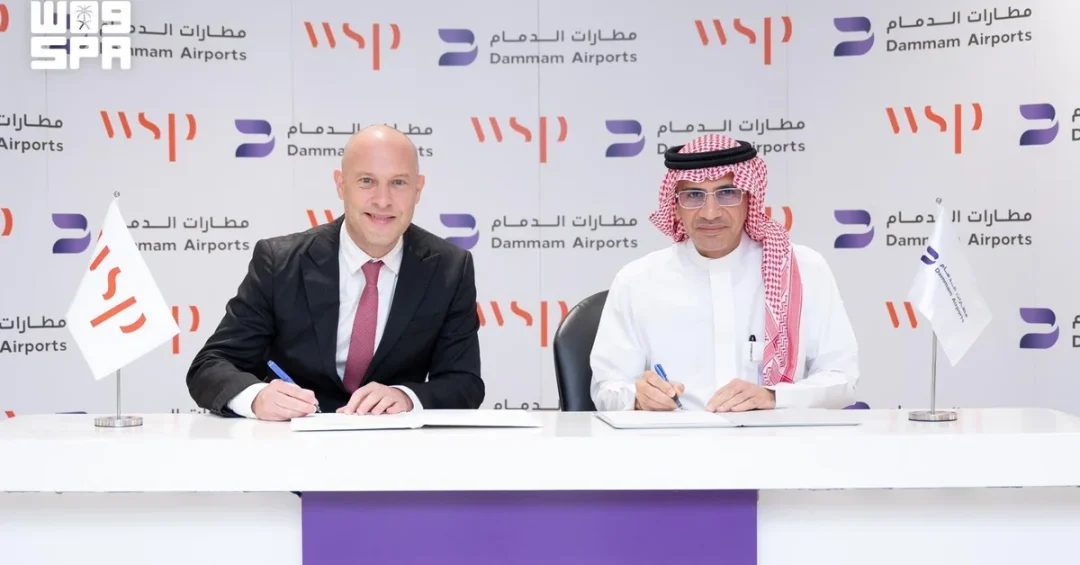
Dammam Airports has signed a design contract with WSP to develop King Fahd International Airport in line with the airport’s approved master plan, marking a significant step in expanding one of the Kingdom’s key aviation hubs. The agreement was signed by Eng. Mohammed Al-Hassany, CEO of Dammam Airports, and Dean McGrail, President of WSP for the Middle East and Asia. The contract covers the design of expanded passenger terminals, upgraded facilities, enhanced entrances and access roads, modern baggage handling systems, digital services, and improved terminal wayfinding. The master plan aims to serve more than 19.3 million passengers annually by 2030, with phased capacity increases to 32 million passengers per year, and to boost air cargo capacity to over 600,000 tons annually.
Context and Background
King Fahd International Airport, located in the Eastern Province, is a vital gateway for the Kingdom and a key economic driver for the region. The airport serves as a major hub for domestic and international travel, supporting business, tourism, and cargo operations. The new design contract is part of Dammam Airports’ ongoing efforts to develop the airport ecosystem, enhance operational efficiency, and contribute to the objectives of the Aviation Program and Saudi Vision 2030. Under the leadership of Eng. Mohammed Al-Hassany, Dammam Airports has been focused on modernizing infrastructure to meet growing demand and improve the passenger experience.
Key Details
The project scope includes designing the expansion of passenger terminals, upgrading facilities, and improving airport entrances and access roads. It also encompasses the development of baggage handling systems, digital services, and terminal wayfinding systems to streamline travel procedures and enhance passenger comfort. Eng. Al-Hassany stated that the contract marks a significant milestone and emphasized Dammam Airports’ commitment to upgrading airport facilities, increasing capacity, and delivering a seamless, high-quality travel experience through modern design solutions and smart technologies. These enhancements are designed to meet travelers’ needs and accommodate future growth in passenger and air cargo traffic, reinforcing the airport’s status as an international gateway connecting the Eastern Region to the world.
The master plan sets ambitious targets: serving more than 19.3 million passengers annually by 2030, with capacity to be increased in phases to 32 million passengers per year. It also aims to raise air cargo capacity to more than 600,000 tons annually and aircraft operational capacity to 77 movements per hour. These goals are supported by comprehensive expansions of infrastructure, runways, and general aviation facilities. The phased approach ensures that development keeps pace with demand while maintaining high service standards.
Implications and Impact
The expansion of King Fahd International Airport will have significant implications for the Eastern Province and the Kingdom as a whole. Increased passenger and cargo capacity will enhance connectivity, facilitate trade, and support economic diversification. Improved facilities and digital services will elevate the traveler experience, making the airport more competitive regionally. The project also aligns with the broader Aviation Program, which seeks to strengthen Saudi Arabia’s position as a global logistics and tourism hub. By upgrading infrastructure and adopting smart technologies, the airport will be better positioned to handle future growth and contribute to the Kingdom’s non-oil economy.
Internationally, the enhanced airport will improve links between the Eastern Region and key global markets, boosting business travel and tourism. The focus on cargo capacity will support export industries and e-commerce, further integrating Saudi Arabia into global supply chains. This development reflects the Kingdom’s commitment to modernizing its transportation sector and enhancing its international standing.
Vision 2030 Alignment
This project directly supports Saudi Vision 2030 by advancing the Aviation Program’s goals of increasing passenger numbers, expanding cargo capacity, and improving infrastructure. It contributes to economic diversification, job creation, and the development of a world-class transportation network. By transforming King Fahd International Airport into a more efficient and passenger-friendly gateway, Dammam Airports is helping to realize the Kingdom’s vision of becoming a global hub for trade, tourism, and investment. The design contract with WSP underscores the importance of international partnerships in achieving these ambitious objectives, ensuring that the airport meets future demands and reinforces Saudi Arabia’s role as a leading aviation center.
20 Questions
Q1. Who signed the design contract for King Fahd International Airport?
A1. The contract was signed by Eng. Mohammed Al-Hassany, CEO of Dammam Airports, and Dean McGrail, President of WSP for the Middle East and Asia.
Q2. What is the main purpose of the design contract?
A2. The contract aims to develop King Fahd International Airport in accordance with its approved master plan, enhancing capacity and passenger experience.
Q3. What specific areas does the project scope cover?
A3. It includes expanding passenger terminals, upgrading facilities, improving entrances and access roads, and developing baggage handling, digital services, and wayfinding systems.
Q4. What is the targeted annual passenger capacity by 2030?
A4. The master plan aims to serve more than 19.3 million passengers annually by 2030, with phased increases to 32 million passengers per year.
Q5. How much air cargo capacity is targeted?
A5. The plan targets increasing air cargo capacity to more than 600,000 tons annually.
Q6. What is the target for aircraft operational capacity?
A6. The goal is to reach 77 aircraft movements per hour, supported by infrastructure expansions.
Q7. Which region does King Fahd International Airport primarily serve?
A7. It serves the Eastern Region of Saudi Arabia, acting as an international gateway connecting the region to the world.
Q8. What did Eng. Al-Hassany say about the contract?
A8. He said it marks a significant milestone and emphasized Dammam Airports’ commitment to upgrading facilities and delivering a high-quality travel experience.
Q9. What role does WSP play in this project?
A9. WSP, a leading engineering professional services firm, will provide design services for the airport expansion under the contract.
Q10. How does this project align with Saudi Vision 2030?
A10. It supports the Aviation Program’s objectives, enhances non-oil economic growth, and helps establish Saudi Arabia as a global logistics and tourism hub.
Q11. What are the phased capacity increases mentioned?
A11. The plan outlines phased increases from 19.3 million passengers annually by 2030 to 32 million passengers per year to meet future demand.
Q12. What improvements are planned for baggage handling?
A12. The project includes developing modern baggage handling systems to streamline operations and improve efficiency for travelers.
Q13. How will digital services enhance the airport experience?
A13. Digital services will streamline travel procedures, provide real-time information, and enhance passenger convenience and comfort.
Q14. What is the significance of the airport for the Eastern Region?
A14. It is a vital economic driver, facilitating business, tourism, and cargo, and connecting the region to international markets.
Q15. What infrastructure expansions are included?
A15. The project includes comprehensive expansions of runways, general aviation facilities, and other infrastructure to support increased capacity.
Q16. Who is Dean McGrail?
A16. Dean McGrail is the President of WSP for the Middle East and Asia, representing the firm in the design contract signing.
Q17. What is Dammam Airports’ overall goal for this project?
A17. The goal is to develop the airport ecosystem, enhance operational efficiency, and contribute to the Aviation Program and Saudi Vision 2030.
Q18. How will the project impact air cargo operations?
A18. It will increase air cargo capacity to over 600,000 tons annually, supporting trade and integrating Saudi Arabia into global supply chains.
Q19. What smart technologies will be implemented?
A19. Smart technologies will be integrated for wayfinding, digital services, and baggage handling to create a seamless and modern travel experience.
Q20. What is the expected timeline for the expansion?
A20. The master plan targets 2030 for initial capacity goals, with phased increases thereafter to reach 32 million passengers per year.
Reader Feedback
We value your thoughts. Please share your feedback on this article.
Your feedback helps us improve our coverage.