


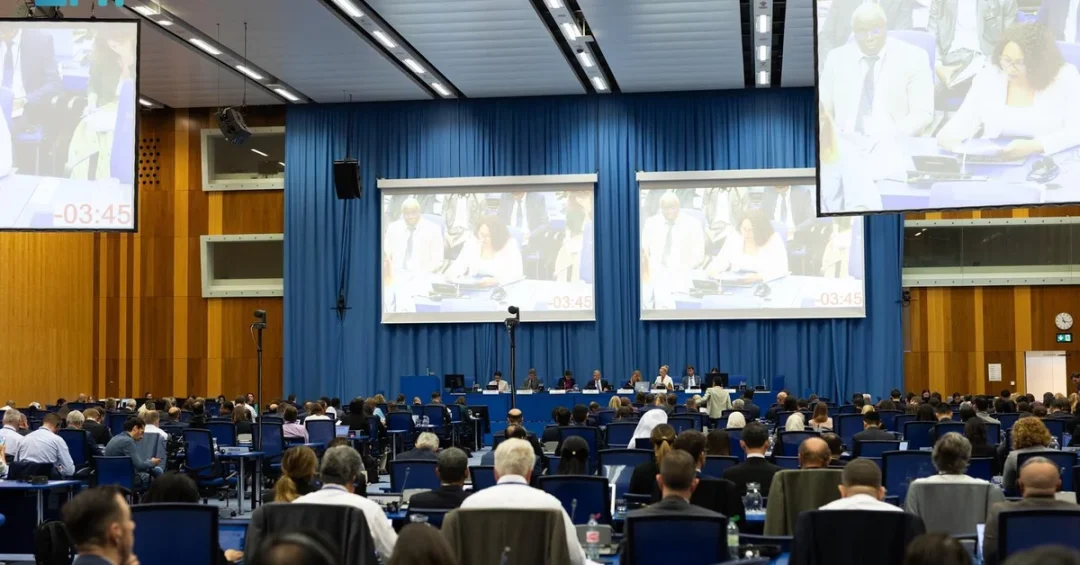
Saudi Arabia is participating in the 67th session of the United Nations Committee on the Peaceful Uses of Outer Space (COPUOS), held in Vienna from June 19 to 28, 2024. The Kingdom’s delegation, representing the Saudi Space Agency, is underscoring the nation’s commitment to international cooperation in the peaceful and sustainable use of outer space, showcasing its rapid advancements in space exploration and technology.
Context and Background
The United Nations Committee on the Peaceful Uses of Outer Space (COPUOS) was established in 1959 to govern the exploration and use of space for the benefit of all humanity. It is the primary international forum for developing space law and promoting cooperation in space activities. Saudi Arabia has been an active member since 1973, contributing to global efforts to ensure that space remains a domain of peace and collaboration. The Kingdom’s participation in this year’s session reflects its growing role in the global space community and its alignment with Vision 2030, which aims to diversify the economy and foster innovation in high-tech sectors.
Key Details
As part of its engagement, the Saudi delegation will host a side event titled “Saudi Towards Space: Igniting the Space Sector.” This event is expected to attract over 80 leaders and experts in the field, providing a platform to discuss potential collaborative opportunities and highlight Saudi Arabia’s strategic initiatives in space. The delegation will also showcase the Kingdom’s advances in space exploration, satellite technology, and space-related applications. These efforts are part of Saudi Arabia’s broader strategy to become a regional hub for space innovation and to contribute to the peaceful uses of outer space.
The Saudi Space Agency, established in 2018, has been instrumental in driving the Kingdom’s space ambitions. It has launched several initiatives, including the Saudi Satellite Technology Center and the National Space Strategy, which aims to position Saudi Arabia as a leader in space science and technology by 2030. The Kingdom has also invested in space education and research, partnering with international institutions to build local capacity.
Implications and Impact
Saudi Arabia’s active participation in COPUOS signals its commitment to multilateralism and international cooperation in space. By sharing its experiences and learning from other member states, the Kingdom can accelerate its own space program while contributing to global space governance. The side event will facilitate dialogue on critical issues such as space debris mitigation, sustainable space exploration, and the use of space technology for sustainable development. This engagement also strengthens Saudi Arabia’s diplomatic ties and enhances its soft power on the global stage.
Furthermore, the Kingdom’s space ambitions have significant economic implications. The global space economy is projected to grow to over $1 trillion by 2040, and Saudi Arabia aims to capture a share of this market. By fostering innovation and attracting investment in space technologies, the Kingdom is creating high-skilled jobs and diversifying its economy away from oil dependency.
Vision 2030 Alignment
Saudi Arabia’s participation in COPUOS and its space initiatives are directly aligned with Vision 2030, the Kingdom’s strategic framework to transform its economy and society. Vision 2030 emphasizes the development of advanced industries, including space, as key drivers of economic diversification and technological leadership. The space sector is seen as a catalyst for innovation, inspiring youth and promoting scientific research. Through its space program, Saudi Arabia is not only enhancing its national capabilities but also contributing to the global effort to harness space for the benefit of all humanity. As the Kingdom continues to invest in space, it reinforces its role as a responsible and forward-looking member of the international community.
20 Questions
Q1. What is COPUOS?
A1. COPUOS, the United Nations Committee on the Peaceful Uses of Outer Space, is a UN body established in 1959 to promote international cooperation in space activities and develop space law.
Q2. When and where is the 67th session of COPUOS taking place?
A2. The 67th session is being held in Vienna, Austria, from June 19 to 28, 2024, bringing together member states to discuss space-related issues.
Q3. Why is Saudi Arabia participating in COPUOS?
A3. Saudi Arabia is participating to demonstrate its commitment to international cooperation in space, showcase its advancements, and contribute to global space governance.
Q4. What is the theme of Saudi Arabia’s side event at COPUOS?
A4. The side event is themed “Saudi Towards Space: Igniting the Space Sector,” highlighting the Kingdom’s efforts to develop its space industry.
Q5. How many experts are expected at the Saudi side event?
A5. Over 80 leaders and experts in the space field are expected to attend, providing a platform for collaboration and discussion.
Q6. What is the Saudi Space Agency?
A6. The Saudi Space Agency, established in 2018, is the government body responsible for developing and regulating Saudi Arabia’s space sector and implementing its national space strategy.
Q7. What are Saudi Arabia’s key space initiatives?
A7. Key initiatives include the National Space Strategy, the Saudi Satellite Technology Center, and various educational and research partnerships aimed at building local capacity in space science.
Q8. How does Saudi Arabia’s space program align with Vision 2030?
A8. Vision 2030 seeks economic diversification and technological advancement; the space program fosters innovation, creates high-skilled jobs, and positions Saudi Arabia as a leader in advanced industries.
Q9. What economic benefits does the space sector offer Saudi Arabia?
A9. The space sector can contribute to economic growth by attracting investment, creating jobs, and developing cutting-edge technologies that have applications across various industries.
Q10. How does COPUOS promote peaceful uses of outer space?
A10. COPUOS develops international space law, facilitates cooperation, and addresses issues like space debris and sustainable exploration to ensure space benefits all humanity.
Q11. What is Saudi Arabia’s role in COPUOS?
A11. Saudi Arabia has been a member since 1973 and actively participates in discussions, sharing its expertise and supporting global initiatives for peaceful space use.
Q12. What are the potential collaborative opportunities discussed at the side event?
A12. Opportunities include joint research, technology transfer, and partnerships in satellite development, space exploration, and space applications for sustainable development.
Q13. How does Saudi Arabia’s space program benefit its youth?
A13. The program inspires youth to pursue careers in science, technology, engineering, and mathematics (STEM), and provides educational and training opportunities in space-related fields.
Q14. What is the global space economy projected to be by 2040?
A14. The global space economy is projected to exceed $1 trillion by 2040, presenting significant opportunities for countries like Saudi Arabia to capture market share.
Q15. What is the National Space Strategy?
A15. The National Space Strategy outlines Saudi Arabia’s plan to become a leading spacefaring nation by 2030, focusing on innovation, research, and international cooperation.
Q16. How does Saudi Arabia contribute to space debris mitigation?
A16. Saudi Arabia supports international guidelines and best practices for space debris mitigation, emphasizing responsible behavior in space activities.
Q17. What space technologies is Saudi Arabia developing?
A17. Saudi Arabia is developing satellite technology, remote sensing, and space-based communication systems, among other applications, to support its economy and society.
Q18. How does Saudi Arabia’s space program enhance its soft power?
A18. By actively participating in international forums and showcasing its advancements, Saudi Arabia strengthens its diplomatic ties and reputation as a responsible global actor.
Q19. What partnerships has Saudi Arabia formed in space?
A19. Saudi Arabia has partnered with international space agencies, research institutions, and companies to collaborate on space exploration, technology development, and education.
Q20. What is the future outlook for Saudi Arabia’s space sector?
A20. With continued investment and strategic partnerships, Saudi Arabia aims to become a regional hub for space innovation, driving economic diversification and inspiring future generations.
Reader Feedback
We value your thoughts. Please share your feedback on this article.
Your feedback helps us improve our coverage.