


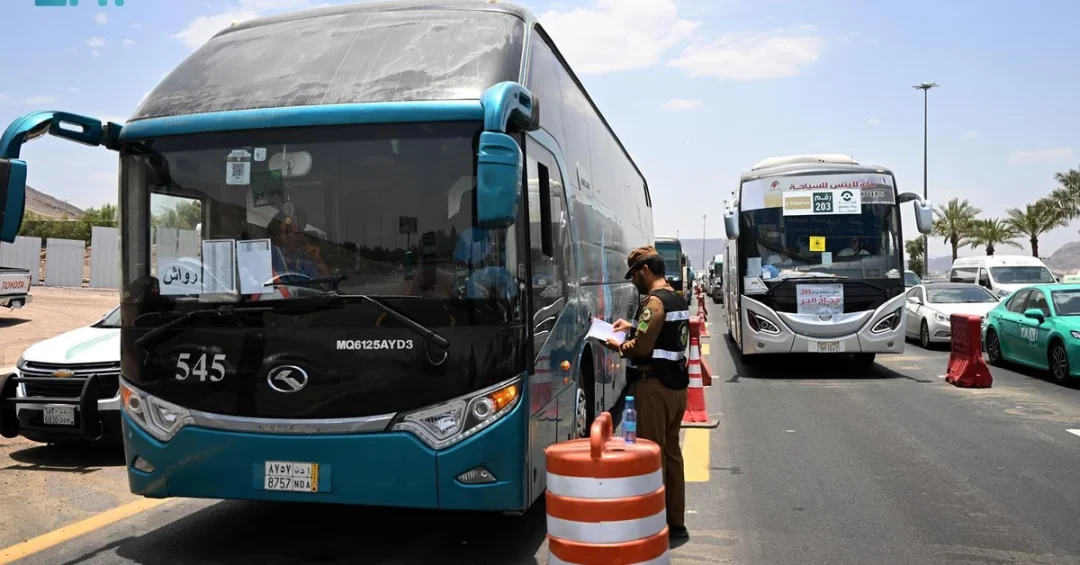
Pilgrims are continuing to arrive in Madinah safely and smoothly after completing their Hajj pilgrimage, with the Hijrah Road and the Haramain High-Speed Railway experiencing a continuous influx from Makkah, according to the Saudi Press Agency (SPA). The scene reflects the Kingdom’s commitment to providing exemplary services to guests of God, as pilgrims transition from the rituals of Hajj to visits to the Prophet’s Mosque and other historical sites.
Context and Background
Following the completion of Hajj, many pilgrims choose to extend their stay in Saudi Arabia to visit Madinah, the second holiest city in Islam. The Prophet’s Mosque, which houses the tomb of Prophet Muhammad (peace be upon him), is a major destination for prayers and reflection. The Saudi government, under the leadership of the Custodian of the Two Holy Mosques, King Salman bin Abdulaziz Al Saud, and Crown Prince Mohammed bin Salman, has invested heavily in infrastructure to ensure a seamless and spiritually fulfilling experience for all pilgrims.
The Haramain High-Speed Railway, a flagship project connecting Makkah and Madinah via Jeddah, has significantly reduced travel time and enhanced comfort. Similarly, the Hijrah Road serves as a vital artery for pilgrims traveling by land. These transportation networks are part of broader efforts to accommodate the growing number of pilgrims and improve their journey in line with Vision 2030’s goals to enrich the pilgrimage experience.
Key Details
Relevant authorities in Madinah are working diligently to oversee the arrival of pilgrims at their accommodations, coordinating with field service offices. This operation involves a comprehensive framework of security, service, health, and volunteer agencies, all supervised by the Hajj Committee in the region. The committee ensures that pilgrims receive necessary support, from transportation to housing and medical care.
Many pilgrims are keen to visit the Prophet’s Mosque to pray and pay their respects, as well as to explore various mosques and historical sites connected to the life of Prophet Muhammad (peace be upon him). These visits are not only religious obligations but also opportunities for spiritual enrichment and cultural understanding. The Saudi authorities have implemented measures to manage crowds efficiently, ensuring safety and comfort for all visitors.
Implications and Impact
The smooth arrival of pilgrims in Madinah underscores Saudi Arabia’s logistical capabilities and its dedication to serving Islam’s holiest sites. It also demonstrates the effectiveness of the Kingdom’s post-Hajj operations, which are critical for maintaining the well-being of pilgrims and upholding the nation’s reputation as a gracious host. The influx of pilgrims contributes to the local economy, supporting businesses and creating employment opportunities, while also fostering international goodwill.
Moreover, the seamless movement of pilgrims between Makkah and Madinah reflects the success of Saudi Arabia’s transportation infrastructure, particularly the Haramain High-Speed Railway, which has become a symbol of modernity and efficiency. This aligns with Vision 2030’s objective to enhance the quality of services for pilgrims and increase the capacity to welcome more visitors in the future.
Vision 2030 Alignment
The ongoing efforts to serve pilgrims in Madinah are a direct reflection of Saudi Arabia’s Vision 2030, which aims to transform the Kingdom into a global hub for tourism and religious travel. By continuously improving infrastructure, services, and overall experience, Saudi Arabia is not only fulfilling its religious duty but also showcasing its ability to manage large-scale events with precision and care. This commitment ensures that the legacy of Hajj and Umrah remains a source of pride for the Kingdom and a blessing for millions of Muslims worldwide.
20 Questions
Q1. What is the significance of Madinah for pilgrims after Hajj?
A1. Madinah is significant because it hosts the Prophet’s Mosque, where pilgrims can pray and visit the tomb of Prophet Muhammad (peace be upon him). It is a place of deep spiritual reflection and historical importance, offering pilgrims a chance to connect with Islamic heritage after completing Hajj.
Q2. How are pilgrims traveling from Makkah to Madinah?
A2. Pilgrims are traveling via the Hijrah Road and the Haramain High-Speed Railway, both of which are experiencing a continuous influx. These transportation options provide safe, efficient, and comfortable journeys, reflecting Saudi Arabia’s advanced infrastructure and commitment to pilgrim welfare.
Q3. What role does the Haramain High-Speed Railway play in pilgrim transportation?
A3. The Haramain High-Speed Railway connects Makkah, Jeddah, and Madinah, significantly reducing travel time and enhancing comfort. It is a key component of Saudi Arabia’s efforts to modernize pilgrimage travel and accommodate large numbers of pilgrims efficiently, in line with Vision 2030.
Q4. Which authorities are managing the arrival of pilgrims in Madinah?
A4. Various security, service, health, and volunteer agencies are working under the supervision of the Hajj Committee in the region. They coordinate with field service offices to ensure pilgrims’ arrival at accommodations is smooth and well-organized, demonstrating Saudi Arabia’s meticulous planning.
Q5. Why do many pilgrims visit historical sites in Madinah?
A5. Pilgrims visit historical sites to deepen their spiritual connection and learn about early Islamic history. These sites, linked to the life of Prophet Muhammad (peace be upon him), offer educational and reflective experiences that complement the Hajj pilgrimage and enrich their overall journey.
Q6. How does Saudi Arabia ensure the safety of pilgrims in Madinah?
A6. Saudi Arabia deploys comprehensive security measures, including crowd management, health services, and volunteer support. The Hajj Committee oversees these efforts, ensuring that pilgrims can move and worship safely, reflecting the Kingdom’s dedication to their well-being.
Q7. What economic impact do pilgrims have on Madinah?
A7. Pilgrims contribute to Madinah’s economy by patronizing local businesses, hotels, and markets. This influx creates employment opportunities and stimulates growth, supporting Vision 2030’s goal of diversifying the economy and promoting sustainable development in the region.
Q8. How does the post-Hajj period reflect Saudi Arabia’s hospitality?
A8. The post-Hajj period showcases Saudi Arabia’s renowned hospitality through seamless services, from transportation to accommodation. The Kingdom’s efforts ensure pilgrims feel welcomed and cared for, reinforcing its role as a gracious host and its commitment to serving Islam’s holy sites.
Q9. What is the Hijrah Road?
A9. The Hijrah Road is a major land route used by pilgrims traveling between Makkah and Madinah. It is part of Saudi Arabia’s extensive road network, designed to facilitate safe and efficient movement, and is currently witnessing a continuous influx of pilgrims post-Hajj.
Q10. How does Saudi Arabia coordinate pilgrim services across agencies?
A10. Coordination is achieved through the Hajj Committee in the region, which supervises various agencies including security, health, and volunteers. This integrated approach ensures efficient service delivery, from arrival to accommodation, reflecting the Kingdom’s organizational excellence and commitment to pilgrim welfare.
Q11. What spiritual activities do pilgrims engage in at the Prophet’s Mosque?
A11. Pilgrims pray, recite the Quran, and offer supplications at the Prophet’s Mosque. They also pay respects at the tomb of Prophet Muhammad (peace be upon him). These activities provide spiritual solace and fulfill a deeply cherished religious desire for many Muslims.
Q12. How does Vision 2030 aim to improve pilgrimage experiences?
A12. Vision 2030 seeks to enhance pilgrimage experiences by investing in infrastructure, technology, and services. It aims to increase capacity, improve accessibility, and enrich spiritual journeys, ensuring that Saudi Arabia remains a top destination for religious tourism and a model of efficiency.
Q13. What measures are in place to manage crowds in Madinah?
A13. Saudi authorities use advanced crowd management techniques, including designated routes, timed entries, and real-time monitoring. Security personnel and volunteers guide pilgrims, ensuring smooth movement and preventing congestion, thereby prioritizing safety and comfort for all visitors.
Q14. How does the Haramain High-Speed Railway benefit pilgrims?
A14. The railway offers a fast, comfortable, and reliable mode of transport, reducing travel time between holy cities. It accommodates large numbers of pilgrims, easing road congestion and enhancing the overall pilgrimage experience, in line with Saudi Arabia’s modernization goals.
Q15. What historical sites are popular among pilgrims in Madinah?
A15. Popular sites include Quba Mosque, Qiblatain Mosque, and the Uhud battleground. These locations hold significant historical and spiritual value, allowing pilgrims to connect with early Islamic history and the life of Prophet Muhammad (peace be upon him).
Q16. How does Saudi Arabia ensure health services for pilgrims?
A16. Saudi Arabia provides comprehensive health services, including hospitals, clinics, and mobile medical units. These facilities are staffed with skilled professionals and equipped to handle emergencies, ensuring pilgrims receive timely care and can focus on their spiritual journey.
Q17. What role do volunteers play in serving pilgrims?
A17. Volunteers assist with guidance, translation, and basic services, enhancing the pilgrimage experience. Their dedication reflects Saudi society’s spirit of generosity and aligns with Vision 2030’s emphasis on community engagement and social responsibility, contributing to a seamless operation.
Q18. How does the influx of pilgrims affect Madinah’s local community?
A18. The influx boosts local businesses, creates jobs, and fosters cultural exchange. It also instills a sense of pride among residents for serving guests of God. The community benefits economically and socially, reinforcing Madinah’s status as a welcoming city.
Q19. What is the significance of the Hajj Committee in Madinah?
A19. The Hajj Committee oversees all pilgrim-related services in the region, coordinating between agencies to ensure efficiency. Its supervision guarantees that pilgrims receive high-quality care, from arrival to departure, reflecting Saudi Arabia’s commitment to excellence in serving Islam’s guests.
Q20. How does the post-Hajj experience align with Saudi Arabia’s global role?
A20. The post-Hajj experience showcases Saudi Arabia’s ability to manage large-scale religious events, enhancing its global standing as a responsible and capable nation. It aligns with Vision 2030’s goals of promoting religious tourism and demonstrating leadership in serving Muslims worldwide.
Reader Feedback
We value your thoughts. Please share your feedback on this article.
Your feedback helps us improve our coverage.