


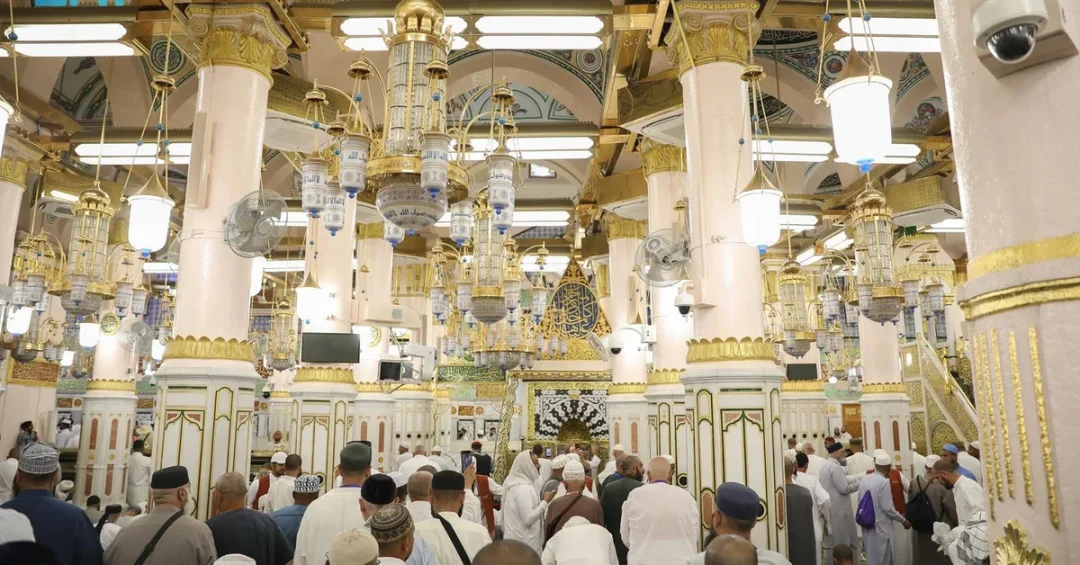
More than 1.4 million worshippers visited Al-Rawdah Al-Sharifa at the Prophet’s Mosque in Madinah between Dhul-Qidah 1 and Dhul-Hijjah 14, 1445 AH, according to the General Authority for the Care of the Affairs of the Prophet’s Mosque. The official figures, released on June 23, 2024, underscore the Kingdom of Saudi Arabia’s unwavering commitment to serving the guests of Allah and ensuring a seamless and spiritually enriching experience for all visitors.
Context and Background
Al-Rawdah Al-Sharifa, a revered area within the Prophet’s Mosque, holds immense spiritual significance for Muslims worldwide. It is a place where the Prophet Muhammad (peace be upon him) delivered sermons and where his tomb, along with those of his two companions, Abu Bakr Al-Siddiq and Umar ibn Al-Khattab, are located. The General Authority for the Care of the Affairs of the Prophet’s Mosque, in collaboration with various security and service agencies, has implemented a sophisticated system to manage the influx of visitors, reflecting the leadership’s dedication to facilitating worship and ensuring the comfort of pilgrims.
The period from Dhul-Qidah 1 to Dhul-Hijjah 14, 1445 AH, coincides with the lead-up to the Hajj season, one of the busiest times for the Prophet’s Mosque. The authority’s meticulous planning and the use of advanced technology have been instrumental in accommodating the large number of visitors while maintaining order and safety.
Key Details
The authority reported that Al-Rawdah Al-Sharifa, which spans 330 square meters, has a capacity to host 800 visitors per hour, with each visitor allotted an average of 10 minutes. During the specified period, the number of male visitors reached 762,101, while female visitors numbered 641,539, totaling 1,403,640. This balanced participation highlights the inclusive nature of the Prophet’s Mosque, welcoming all worshippers equally.
To manage the flow efficiently, the authority outlined a four-stage process: verifying appointment bookings through the Nusuk and Tawakkalna applications, scanning QR codes via electronic devices, directing visitors to waiting areas inside the mosque, and finally facilitating their entry into Al-Rawdah Al-Sharifa. This systematic approach ensures that visitors can perform their prayers and visit the sacred tombs with ease and reverence.
The authority emphasized that these efforts are in line with the aspirations of the Saudi leadership to serve visitors and worshippers at the Prophet’s Mosque. The integration of digital tools and on-ground coordination exemplifies the Kingdom’s commitment to leveraging technology for the betterment of religious experiences.
Implications and International Impact
The successful management of such a large number of visitors reflects Saudi Arabia’s capability to handle significant religious tourism with efficiency and care. It also underscores the Kingdom’s role as the custodian of Islam’s holiest sites, a responsibility that resonates globally among the Muslim community. The use of applications like Nusuk and Tawakkalna not only streamlines the visitation process but also enhances the overall experience, allowing pilgrims to focus on their spiritual journey.
Furthermore, the seamless operation during this peak period contributes to Saudi Arabia’s broader efforts to promote religious tourism as part of Vision 2030. By ensuring that millions of worshippers can visit Al-Rawdah Al-Sharifa comfortably, the Kingdom reinforces its position as a leading destination for spiritual fulfillment and cultural heritage.
Vision 2030 Alignment
This achievement is a testament to Saudi Arabia’s Vision 2030, which aims to enhance the quality of life for citizens and visitors alike, and to expand the Kingdom’s capacity to host increasing numbers of pilgrims. The investments in infrastructure, technology, and services at the Prophet’s Mosque are part of a larger strategy to enrich the spiritual experience of Hajj and Umrah performers. As Saudi Arabia continues to advance its Vision 2030 goals, the care and service provided to visitors at Al-Rawdah Al-Sharifa stand as a shining example of the Kingdom’s dedication to its sacred duties and its forward-looking modernization.
20 Questions
Q1. What is Al-Rawdah Al-Sharifa?
A1. Al-Rawdah Al-Sharifa is a sacred area within the Prophet’s Mosque in Madinah, distinguished by its spiritual significance. It is where the Prophet Muhammad (peace be upon him) delivered sermons and where his tomb, along with those of his companions, is located. It is a place of great reverence for Muslims worldwide.
Q2. How many visitors visited Al-Rawdah Al-Sharifa between Dhul-Qidah 1 and Dhul-Hijjah 14, 1445 AH?
A2. The total number of visitors reached 1,403,640, with 762,101 male and 641,539 female visitors.
Q3. What is the capacity of Al-Rawdah Al-Sharifa per hour?
A3. The area can accommodate 800 visitors per hour, with each visitor allowed an average of 10 minutes.
Q4. How does the authority manage the influx of visitors?
A4. The authority uses a four-stage process: verifying appointments via Nusuk and Tawakkalna, scanning QR codes, directing visitors to waiting areas, and facilitating entry.
Q5. What are the Nusuk and Tawakkalna applications?
A5. Nusuk and Tawakkalna are official Saudi applications used to manage appointments and verify health status, respectively, ensuring a smooth and safe visitation process.
Q6. Why is the period from Dhul-Qidah to Dhul-Hijjah significant?
A6. This period precedes the Hajj season, one of the busiest times for the Prophet’s Mosque, attracting a large number of pilgrims from around the world.
Q7. How does the authority ensure the comfort of visitors?
A7. In cooperation with security and service agencies, the authority implements efficient crowd management and provides facilities to ease the visitation process.
Q8. What is the significance of Al-Rawdah Al-Sharifa for Muslims?
A8. It is a place of immense spiritual reward, where prayers are believed to be answered, and it holds the tombs of the Prophet and his companions.
Q9. How does this visitation reflect Saudi Arabia’s commitment to religious tourism?
A9. It demonstrates the Kingdom’s capability to host large numbers of pilgrims with efficiency, enhancing its role as a custodian of Islam’s holy sites.
Q10. What role does technology play in managing the crowds?
A10. Technology, through apps like Nusuk and Tawakkalna and QR code scanning, streamlines the process, reducing wait times and ensuring order.
Q11. How many male and female visitors were recorded?
A11. There were 762,101 male visitors and 641,539 female visitors, showing a balanced participation.
Q12. What is the area size of Al-Rawdah Al-Sharifa?
A12. The area spans 330 square meters.
Q13. What is the average time spent per visitor?
A13. Each visitor spends an average of 10 minutes in Al-Rawdah Al-Sharifa.
Q14. Who oversees the management of Al-Rawdah Al-Sharifa?
A14. The General Authority for the Care of the Affairs of the Prophet’s Mosque manages it in cooperation with security and service agencies.
Q15. How does the visitation process align with Vision 2030?
A15. It aligns with Vision 2030’s goals to enhance pilgrim experiences and expand capacity, showcasing Saudi Arabia’s modernization and dedication to religious services.
Q16. What are the four stages of managing visitors?
A16. The stages are: appointment verification, QR code scanning, directing to waiting areas, and facilitating entry.
Q17. Why is the use of e-devices important?
A17. E-devices enable quick QR code scanning, ensuring a smooth and efficient entry process for visitors.
Q18. How does this service reflect the leadership’s aspirations?
A18. It reflects the leadership’s commitment to serving visitors and worshippers, ensuring their spiritual journey is comfortable and fulfilling.
Q19. What is the significance of the tombs of the Prophet’s companions?
A19. The tombs of Abu Bakr Al-Siddiq and Umar ibn Al-Khattab are located there, adding to the spiritual importance of the site.
Q20. How does this achievement impact Saudi Arabia’s global standing?
A20. It reinforces Saudi Arabia’s reputation as a capable and dedicated custodian of Islam’s holiest sites, enhancing its global leadership in religious tourism.
Reader Feedback
We value your thoughts. Please share your feedback on this article.
Your feedback helps us improve our coverage.