


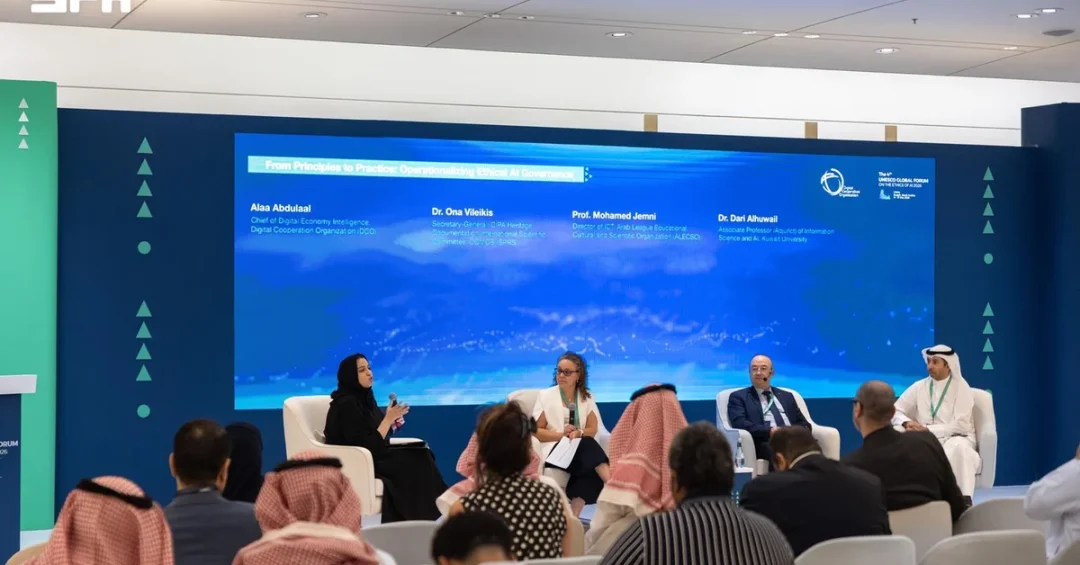
International experts convened in Riyadh on September 17, 2026, to discuss practical pathways for transforming artificial intelligence (AI) ethics principles into national legislation, policies, and operational procedures, as part of the UNESCO Global Forum on the Ethics of Artificial Intelligence (GFEAI 2026). The panel, titled “From Principles to Practice: Operationalizing Ethical AI Governance,” was organized by the Digital Cooperation Organization (DCO) and emphasized narrowing the gap between ethical commitments and real-world implementation.
Context and Background
The UNESCO Global Forum on the Ethics of Artificial Intelligence, hosted in Riyadh from September 14 to 17, 2026, brought together global policymakers, experts, and stakeholders to advance responsible AI development. The DCO panel specifically addressed the challenge of translating high-level ethical principles into actionable national frameworks, institutional mechanisms, and operational procedures. This aligns with Saudi Arabia’s leadership in fostering international dialogue on AI governance and its commitment to leveraging technology for sustainable development under Vision 2030.
Key Details
Participants explored opportunities for joint action among countries and partners to make responsible AI implementation more practical and scalable. Discussions focused on linking ethical commitments to effective implementation tools, enhancing institutional readiness, supporting the adoption of trusted technologies, and building capabilities. Experts underscored the importance of international cooperation in maximizing AI’s benefits for individuals, businesses, and countries, contributing to global dialogue on AI governance from a practical, implementation-oriented perspective.
Implications and Impact
The outcomes of this panel are expected to inform national AI strategies worldwide, promoting harmonized approaches to AI ethics and governance. By operationalizing ethical principles, countries can foster trust in AI technologies, mitigate risks, and ensure that AI development aligns with societal values. Saudi Arabia’s role in hosting and facilitating these discussions reinforces its position as a global leader in AI governance and digital cooperation, setting a precedent for other nations to follow.
Vision 2030 Alignment
This initiative directly supports Saudi Arabia’s Vision 2030 goals of diversifying the economy, enhancing digital infrastructure, and promoting innovation. By advancing ethical AI governance, the Kingdom not only strengthens its own technological ecosystem but also contributes to global efforts to ensure AI benefits humanity. The DCO’s efforts in Riyadh exemplify Saudi Arabia’s commitment to international collaboration and its proactive stance in shaping the future of AI responsibly.
20 Questions
Q1. What was the main focus of the DCO panel at GFEAI 2026?
A1. The panel focused on translating AI ethics principles into national legislation, policies, strategies, institutional mechanisms, and operational procedures to bridge the gap between ethical commitments and practical implementation.
Q2. When and where did the UNESCO Global Forum on the Ethics of AI take place?
A2. The forum was hosted in Riyadh from September 14 to 17, 2026, bringing together global experts to discuss AI ethics and governance.
Q3. Which organization organized the panel “From Principles to Practice: Operationalizing Ethical AI Governance”?
A3. The panel was organized by the Digital Cooperation Organization (DCO), an international entity focused on advancing digital cooperation.
Q4. What is the Digital Cooperation Organization (DCO)?
A4. The DCO is an international organization that promotes digital cooperation among nations to foster inclusive and sustainable digital economies.
Q5. Why is it important to translate AI ethics principles into national legislation?
A5. Translating principles into legislation ensures that ethical commitments are legally enforceable, promoting responsible AI development and use while mitigating risks to society.
Q6. What opportunities for joint action were explored by the participants?
A6. Participants explored opportunities for countries and partners to collaborate on making responsible AI implementation more practical and scalable.
Q7. How can institutional readiness be enhanced for ethical AI implementation?
A7. Enhancing institutional readiness involves building capabilities, adopting trusted technologies, and establishing effective implementation tools and procedures.
Q8. What role does international cooperation play in AI governance?
A8. International cooperation maximizes AI’s benefits for individuals, businesses, and countries by sharing best practices and aligning regulatory approaches.
Q9. How does this panel contribute to global dialogue on AI governance?
A9. The panel contributes by offering a practical, implementation-oriented perspective that helps bridge the gap between ethical principles and real-world application.
Q10. What are the expected outcomes of the discussions?
A10. The discussions are expected to inform national AI strategies, promote harmonized governance approaches, and foster trust in AI technologies worldwide.
Q11. How does Saudi Arabia benefit from hosting such forums?
A11. Hosting such forums reinforces Saudi Arabia’s leadership in AI governance and digital cooperation, aligning with its Vision 2030 goals of economic diversification and innovation.
Q12. What is Vision 2030 and how does it relate to AI?
A12. Vision 2030 is Saudi Arabia’s strategic framework to diversify its economy and enhance digital infrastructure, with AI playing a key role in driving innovation and sustainable development.
Q13. What are some challenges in operationalizing AI ethics principles?
A13. Challenges include aligning diverse national interests, developing effective implementation tools, and building institutional capacity to enforce ethical standards.
Q14. How can trusted technologies support ethical AI adoption?
A14. Trusted technologies ensure transparency, accountability, and security, which are essential for building confidence in AI systems and their applications.
Q15. What is the significance of the DCO’s efforts in Riyadh?
A15. The DCO’s efforts in Riyadh exemplify Saudi Arabia’s commitment to international collaboration and its proactive stance in shaping the future of AI responsibly.
Q16. How might these discussions influence national AI policies?
A16. They provide a roadmap for integrating ethical principles into policies, ensuring AI development aligns with societal values and promotes public trust.
Q17. Who participated in the panel?
A17. The panel brought together experts and specialists in AI, governance, and ethics from various countries and organizations.
Q18. What is the UNESCO Global Forum on the Ethics of AI?
A18. It is a global event that convenes stakeholders to advance the ethical development and use of AI, fostering international dialogue and cooperation.
Q19. How does this initiative support global AI governance?
A19. By operationalizing ethical principles, it promotes harmonized governance frameworks that enhance trust and ensure AI benefits humanity.
Q20. What next steps are anticipated after the forum?
A20. Next steps include implementing the insights gained to develop national legislation and policies, with continued international cooperation to ensure responsible AI development.
Reader Feedback
We value your thoughts. Please share your feedback on this article.
Your feedback helps us improve our coverage.