


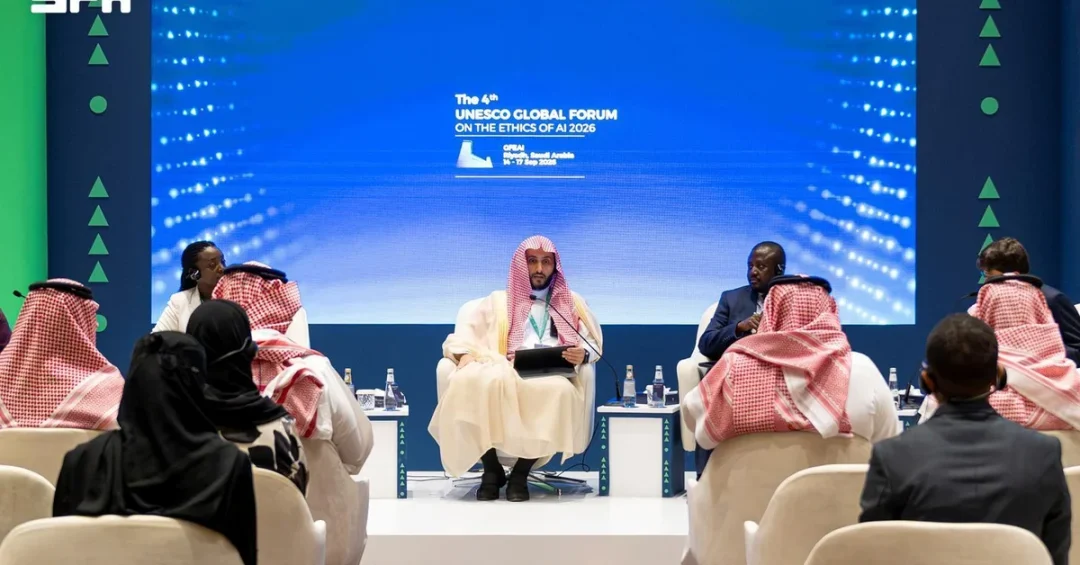
Riyadh, September 17, 2026 — The Saudi Board of Grievances today participated in a panel discussion titled “Enhancing Inclusion and Access to Justice in the Age of AI” at the UNESCO Global Forum on the Ethics of Artificial Intelligence in Riyadh. Represented by Judge Abdulaziz bin Mohammed Al-Samaani, the board presented its artificial intelligence (AI) strategy for the judiciary, along with policies governing its use and safety, highlighting AI’s potential to enhance access to justice and develop judicial procedures and services while ensuring its responsible and reliable use. The session examined the opportunities and challenges associated with using AI in the judicial sector, including its role in enhancing operational efficiency and improving the beneficiary experience.
Context and Background
The UNESCO Global Forum on the Ethics of Artificial Intelligence, hosted in Riyadh, brings together global policymakers, experts, and stakeholders to discuss the ethical dimensions of AI. Saudi Arabia’s active participation underscores its commitment to shaping international norms around emerging technologies. The Board of Grievances, as the Kingdom’s administrative judiciary, has been at the forefront of integrating AI responsibly into judicial processes. This participation builds on its efforts to govern emerging technologies. At the launch of the forum, Dr. Ali bin Ahmed Alohaydib, Chairman of the Board of Grievances and Chairman of the Administrative Judiciary Council, approved the “AI Systems Governance Framework for the Board of Grievances.” This framework sets standards for the responsible use of AI systems and supports the development of administrative judiciary tools and services.
Key Details
During the panel, Judge Abdulaziz bin Mohammed Al-Samaani outlined the board’s AI strategy, emphasizing its role in enhancing access to justice and developing judicial procedures. He noted that AI can improve operational efficiency and the beneficiary experience while ensuring the integrity and reliability of judicial procedures. Participants discussed regulatory frameworks to balance technological advancement with judicial safeguards. The board’s AI Systems Governance Framework provides a comprehensive set of standards for responsible AI use, ensuring that AI systems are reliable and aligned with judicial values. This framework is part of the board’s broader efforts to govern emerging technologies and support the development of administrative judiciary tools and services.
Implications and Impact
The Board of Grievances’ participation in the UNESCO forum highlights Saudi Arabia’s leadership in the ethical use of AI in the judicial sector. By sharing its strategy and governance framework, the Kingdom contributes to global discussions on AI ethics and access to justice. This engagement positions Saudi Arabia as a model for other nations seeking to integrate AI into their judicial systems responsibly. The discussions at the forum are expected to influence international standards and foster collaboration on AI governance. Furthermore, the board’s efforts align with the Kingdom’s Vision 2030 objectives to modernize public services and enhance quality of life through digital transformation.
Vision 2030 Alignment
Saudi Arabia’s Vision 2030 emphasizes the importance of digital transformation and innovation across all sectors, including the judiciary. The Board of Grievances’ AI initiatives directly support this vision by enhancing the efficiency, accessibility, and transparency of judicial services. By adopting AI responsibly, the Kingdom aims to set a global benchmark for ethical AI use in governance and justice. This aligns with Vision 2030’s goal to build a thriving economy and a vibrant society, where technology serves the public good. As Saudi Arabia continues to lead in AI ethics, its efforts will contribute to a more inclusive and just future, both domestically and internationally.
20 Questions
Q1. What was the title of the panel discussion?
A1. The panel discussion was titled “Enhancing Inclusion and Access to Justice in the Age of AI.” It was held at the UNESCO Global Forum on the Ethics of Artificial Intelligence in Riyadh.
Q2. Who represented the Board of Grievances at the forum?
A2. Judge Abdulaziz bin Mohammed Al-Samaani represented the Board of Grievances. He presented the board’s AI strategy for the judiciary, along with policies governing its use and safety.
Q3. What did the board present at the panel?
A3. The board presented its artificial intelligence strategy for the judiciary, policies governing its use and safety, and highlighted AI’s potential to enhance access to justice and develop judicial procedures and services.
Q4. What is the name of the AI governance framework approved by the board?
A4. The framework is called the “AI Systems Governance Framework for the Board of Grievances.” It sets standards for the responsible use of AI systems and supports the development of administrative judiciary tools and services.
Q5. Who approved the AI Systems Governance Framework?
A5. Dr. Ali bin Ahmed Alohaydib, Chairman of the Board of Grievances and Chairman of the Administrative Judiciary Council, approved the framework at the launch of the forum.
Q6. What are the main goals of the board’s AI strategy?
A6. The strategy aims to enhance access to justice, develop judicial procedures and services, improve operational efficiency, and enhance the beneficiary experience while ensuring responsible and reliable use of AI.
Q7. What opportunities and challenges were discussed regarding AI in the judiciary?
A7. The discussion covered AI’s role in enhancing operational efficiency and improving the beneficiary experience, as well as regulatory frameworks to ensure the integrity and reliability of judicial procedures while balancing technological advancement with judicial safeguards.
Q8. How does the board’s participation reflect Saudi Arabia’s stance on AI ethics?
A8. It demonstrates Saudi Arabia’s commitment to shaping international norms around emerging technologies and its leadership in the ethical use of AI in the judicial sector, contributing to global discussions on AI ethics and access to justice.
Q9. What is the significance of the UNESCO Global Forum on the Ethics of AI?
A9. The forum brings together global policymakers, experts, and stakeholders to discuss the ethical dimensions of AI. Saudi Arabia’s active participation underscores its commitment to shaping international norms around emerging technologies.
Q10. How does the board’s AI framework ensure judicial safeguards?
A10. The framework sets standards for the responsible use of AI systems, ensuring that AI systems are reliable and aligned with judicial values, thereby maintaining the integrity and reliability of judicial procedures.
Q11. What role does the Board of Grievances play in Saudi Arabia’s judiciary?
A11. The Board of Grievances is the administrative judiciary of Saudi Arabia. It handles disputes involving government entities and has been at the forefront of integrating AI responsibly into judicial processes.
Q12. How does AI enhance access to justice according to the board?
A12. AI can enhance access to justice by streamlining judicial procedures, improving operational efficiency, and developing services that better serve beneficiaries, making the judicial system more accessible and responsive.
Q13. What are the key components of the AI Systems Governance Framework?
A13. The framework sets standards for responsible AI use, supports the development of administrative judiciary tools and services, and ensures AI systems are reliable and aligned with judicial values, with a focus on responsible and reliable use.
Q14. How does the board’s AI strategy align with Vision 2030?
A14. It aligns with Vision 2030’s emphasis on digital transformation and innovation by enhancing the efficiency, accessibility, and transparency of judicial services, contributing to a thriving economy and vibrant society.
Q15. What international impact could Saudi Arabia’s AI judicial framework have?
A15. It positions Saudi Arabia as a model for other nations seeking to integrate AI into their judicial systems responsibly, potentially influencing international standards and fostering collaboration on AI governance.
Q16. What is the Board of Grievances’ approach to balancing technology and judicial safeguards?
A16. The board discusses regulatory frameworks to ensure the integrity and reliability of judicial procedures while balancing technological advancement with judicial safeguards, ensuring AI is used responsibly and reliably.
Q17. How does the board’s participation contribute to global AI ethics discussions?
A17. By sharing its strategy and governance framework, the board contributes to global discussions on AI ethics and access to justice, helping to shape international norms and best practices for ethical AI use in the judiciary.
Q18. What are the expected outcomes of the UNESCO forum for Saudi Arabia?
A18. The forum is expected to influence international standards and foster collaboration on AI governance. Saudi Arabia’s participation reinforces its leadership in AI ethics and its commitment to Vision 2030 objectives.
Q19. Who is Dr. Ali bin Ahmed Alohaydib?
A19. Dr. Ali bin Ahmed Alohaydib is the Chairman of the Board of Grievances and Chairman of the Administrative Judiciary Council. He approved the AI Systems Governance Framework for the Board of Grievances.
Q20. How does the board’s AI initiative support Saudi Arabia’s Vision 2030?
A20. It supports Vision 2030 by modernizing judicial services through digital transformation, enhancing efficiency and accessibility, and setting a global benchmark for ethical AI use in governance and justice.
Reader Feedback
We value your thoughts. Please share your feedback on this article.
Your feedback helps us improve our coverage.