


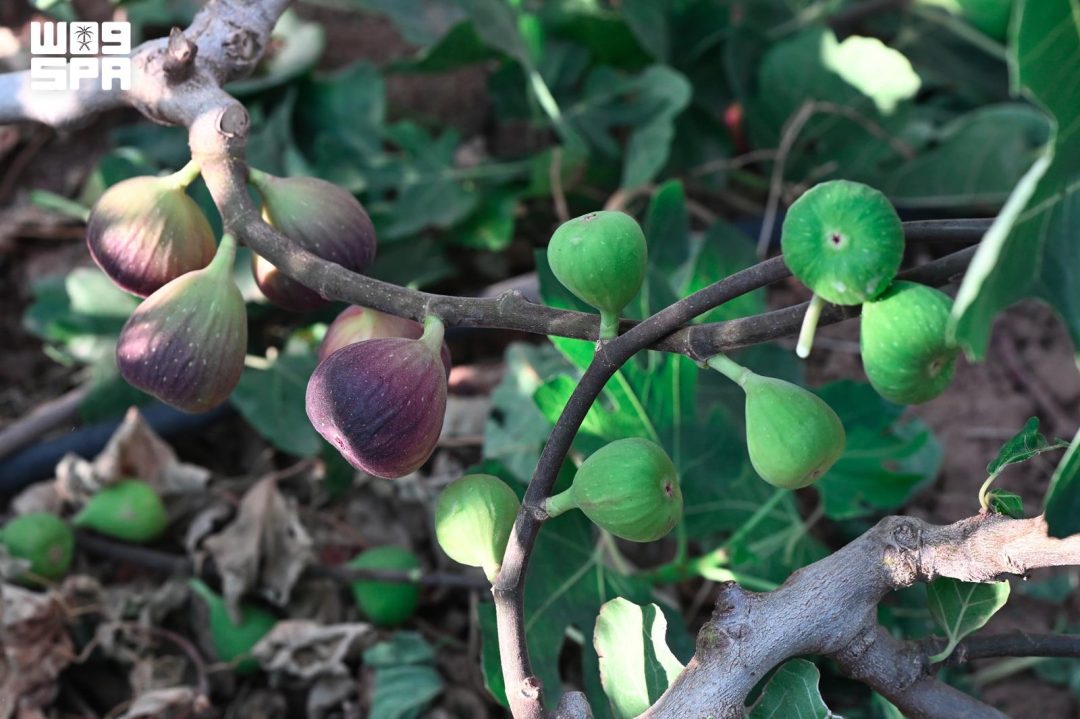
Tabuk region utilizes its diverse agricultural environment and suitable climate for summer fruits to produce figs, a seasonal crop with economic and nutritional value.
According to SPA, the region contains approximately 55,000 fig trees producing multiple varieties that supply local markets. The region’s broader agricultural activity includes more than 14,500 farms covering a total area exceeding 270,000 hectares.
Engineer Amjad bin Abdullah Thallab, Director General of the Ministry of Environment, Water and Agriculture branch in Tabuk, stated that the fig crop is a promising agricultural product. He noted that the quality of local products reflects the region’s environmental assets and confirmed the branch’s support for farmers to improve production quality.
The fig crop serves both fresh consumption and food manufacturing, providing farmers with opportunities to diversify income sources. These products compete in markets based on size, taste, and nutritional value amid growing demand for local agricultural goods.
How many fig trees are located in the Tabuk region? The Tabuk region contains approximately 55,000 fig trees. These trees produce multiple varieties of figs that help increase the supply available in local markets during the season.
What is the scale of agricultural activity in Tabuk? Agricultural activity in Tabuk involves more than 14,500 farms. These farms cover a total area that exceeds 270,000 hectares and produce various crops to support markets and food security.
What are the uses and benefits of the fig crop in Tabuk? Figs are used for fresh consumption and food manufacturing due to their high nutritional value. This versatility allows farmers to diversify their income sources and strengthen agricultural supply chains.