


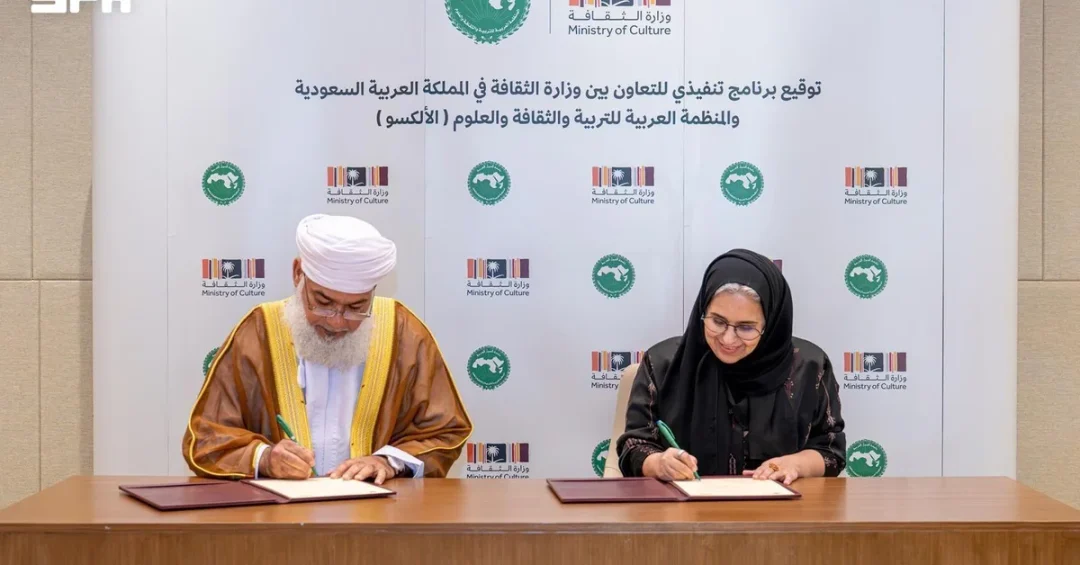
The Saudi Ministry of Culture signed an executive program with the Arab League Educational, Cultural and Scientific Organization (ALECSO) in Riyadh on September 18, 2026, establishing a cooperative framework to safeguard intangible cultural heritage and advance shared Arab cultural goals. The agreement builds on a 2022 memorandum of understanding between the two institutions and marks a significant step in institutionalizing regional efforts to protect living heritage practices for future generations.
Context and Background
The signing ceremony in Riyadh represents the culmination of years of deepening collaboration between the Kingdom and ALECSO, a specialized organization operating under the League of Arab States that focuses on education, culture, and science across the Arab world. The 2022 memorandum of understanding laid the groundwork for structured cooperation, and the new executive program transforms that foundation into actionable initiatives with defined objectives and measurable outcomes.
Intangible cultural heritage encompasses the living expressions inherited from ancestors and passed to descendants, including oral traditions, performing arts, social practices, rituals, festive events, knowledge and practices concerning nature, and traditional craftsmanship. For Saudi Arabia, these elements form an essential part of national identity and are increasingly recognized as drivers of cultural tourism and community cohesion.
Key Details
The executive program focuses on organizing a specialized symposium designed to exchange expertise on safeguarding policies, methodologies, and practices. This gathering will bring together heritage specialists, policymakers, and cultural practitioners from across the Arab region to share best practices and develop coordinated approaches to preservation.
Beyond the symposium, the agreement includes provisions for formulating recommendations for bilateral and multilateral cooperation. These recommendations aim to create a unified regional framework for heritage protection, enabling Arab nations to present living heritage practices on the international stage with greater impact and coordination. The program also emphasizes showcasing Arab heritage practices globally, reflecting a shared commitment to cultural diplomacy and mutual understanding.
The Ministry of Culture, under the leadership of His Highness Prince Badr bin Abdullah bin Farhan Al Saud, has made heritage preservation a central pillar of its mandate. This latest agreement with ALECSO demonstrates the Kingdom’s broader commitment to cultural cooperation within the Arab world and beyond.
International Impact and Regional Cooperation
The agreement carries significant implications for regional cultural diplomacy. By coordinating heritage safeguarding efforts across Arab nations, the program positions the region to speak with a unified voice in international forums such as UNESCO, where intangible cultural heritage conventions shape global preservation standards. This collective approach strengthens the Arab world’s ability to nominate and protect cultural elements that transcend national boundaries.
For the international audience, the program signals Saudi Arabia’s emergence as a convening power in cultural affairs. The Kingdom’s growing portfolio of heritage initiatives, including inscription of traditional practices on UNESCO lists and the development of cultural institutions, demonstrates a comprehensive approach to preserving and promoting cultural identity. This aligns with broader trends in global cultural policy that recognize heritage as both a public good and an economic asset.
The focus on showcasing living heritage practices internationally also opens avenues for cultural exchange and tourism. When international audiences engage with Arab heritage through performances, exhibitions, and educational programs, they develop deeper understanding of the region’s contributions to human civilization.
Vision 2030 Alignment
This agreement directly supports Saudi Vision 2030’s cultural objectives, which seek to preserve national identity, promote cultural exchange, and develop a vibrant cultural sector that enriches quality of life. The Ministry of Culture has identified heritage protection as a key enabler of the Vision’s ambitious goals for cultural participation and economic diversification.
By partnering with ALECSO to safeguard intangible cultural heritage, the Kingdom reinforces its role as a leader in regional cultural cooperation and a responsible steward of the Arab world’s shared legacy. As Saudi Arabia continues its transformation, initiatives like this demonstrate how respect for heritage and pursuit of modernization can advance together, creating a future where cultural authenticity and global engagement reinforce one another.
20 Questions
Q1. What agreement did the Saudi Ministry of Culture sign with ALECSO?
A1. The ministry signed an executive program to establish a cooperative framework for safeguarding intangible cultural heritage and advancing shared Arab cultural goals, building on a 2022 memorandum of understanding.
Q2. When was the executive program signed?
A2. The agreement was signed on September 18, 2026, in Riyadh, as reported by the Saudi Press Agency, marking a significant step in regional heritage cooperation.
Q3. What is ALECSO?
A3. ALECSO is the Arab League Educational, Cultural and Scientific Organization, a specialized body of the League of Arab States focused on promoting education, culture, and science across Arab nations.
Q4. What does intangible cultural heritage include?
A4. Intangible cultural heritage includes oral traditions, performing arts, social practices, rituals, festive events, knowledge of nature, and traditional craftsmanship passed through generations.
Q5. What is the main focus of the specialized symposium mentioned?
A5. The symposium will exchange expertise on safeguarding policies, methodologies, and practices, bringing together specialists and practitioners to develop coordinated approaches for heritage protection across the region.
Q6. How does this agreement build on previous cooperation?
A6. The executive program builds on a 2022 memorandum of understanding between the Ministry of Culture and ALECSO, transforming that foundation into actionable initiatives with defined objectives.
Q7. What other activities does the program include?
A7. The program includes formulating recommendations for bilateral and multilateral cooperation and showcasing living Arab heritage practices on the international stage to unify regional preservation efforts.
Q8. Who leads the Saudi Ministry of Culture?
A8. The ministry is led by His Highness Prince Badr bin Abdullah bin Farhan Al Saud, who serves as Minister of Culture and has championed heritage preservation initiatives.
Q9. Why is intangible cultural heritage important?
A9. It forms an essential part of national identity, fosters community cohesion, and serves as a driver of cultural tourism, connecting present generations with ancestral traditions and knowledge.
Q10. What are the international implications of this agreement?
A10. It positions Arab nations to speak with a unified voice in international forums like UNESCO, strengthening the region’s ability to protect and promote shared cultural elements globally.
Q11. How does this agreement align with Saudi Vision 2030?
A11. It supports Vision 2030’s cultural objectives by preserving national identity, promoting cultural exchange, and developing a vibrant cultural sector that enriches quality of life.
Q12. What role does the Saudi Press Agency play in this news?
A12. The Saudi Press Agency reported the agreement, providing official confirmation and details of the signing ceremony in Riyadh on September 18, 2026.
Q13. What is the significance of showcasing Arab heritage internationally?
A13. It allows global audiences to engage with Arab cultural traditions, fostering mutual understanding, cultural diplomacy, and appreciation for the region’s contributions to human civilization.
Q14. How many parties are involved in the executive program?
A14. The program involves the Saudi Ministry of Culture and ALECSO as primary parties, with broader participation expected from heritage specialists and cultural practitioners across the Arab region.
Q15. What does the program aim to achieve for future generations?
A15. It seeks to ensure the long-term protection and sustainability of intangible cultural heritage, preserving traditional practices and knowledge for transmission to future generations.
Q16. What is the expected outcome of the specialized symposium?
A16. The symposium aims to produce recommendations for bilateral and multilateral cooperation, creating a unified regional framework for heritage protection and international presentation.
Q17. How does this initiative reflect Saudi Arabia’s regional leadership?
A17. By convening regional partners and coordinating heritage safeguarding efforts, Saudi Arabia demonstrates its emergence as a convening power and responsible steward of Arab cultural legacy.
Q18. What economic benefits might result from heritage preservation?
A18. Heritage preservation supports cultural tourism, creates employment in cultural sectors, and contributes to economic diversification goals under Vision 2030 by attracting visitors and investment.
Q19. When did the previous memorandum of understanding occur?
A19. The memorandum of understanding between the Ministry of Culture and ALECSO was signed in 2022, establishing the foundation for the new executive program.
Q20. What does this agreement signal about Saudi cultural policy?
A20. It signals a comprehensive approach to cultural preservation and international engagement, balancing heritage protection with modernization and global cultural diplomacy aligned with Vision 2030.
Reader Feedback
We value your thoughts. Please share your feedback on this article.
Your feedback helps us improve our coverage.