


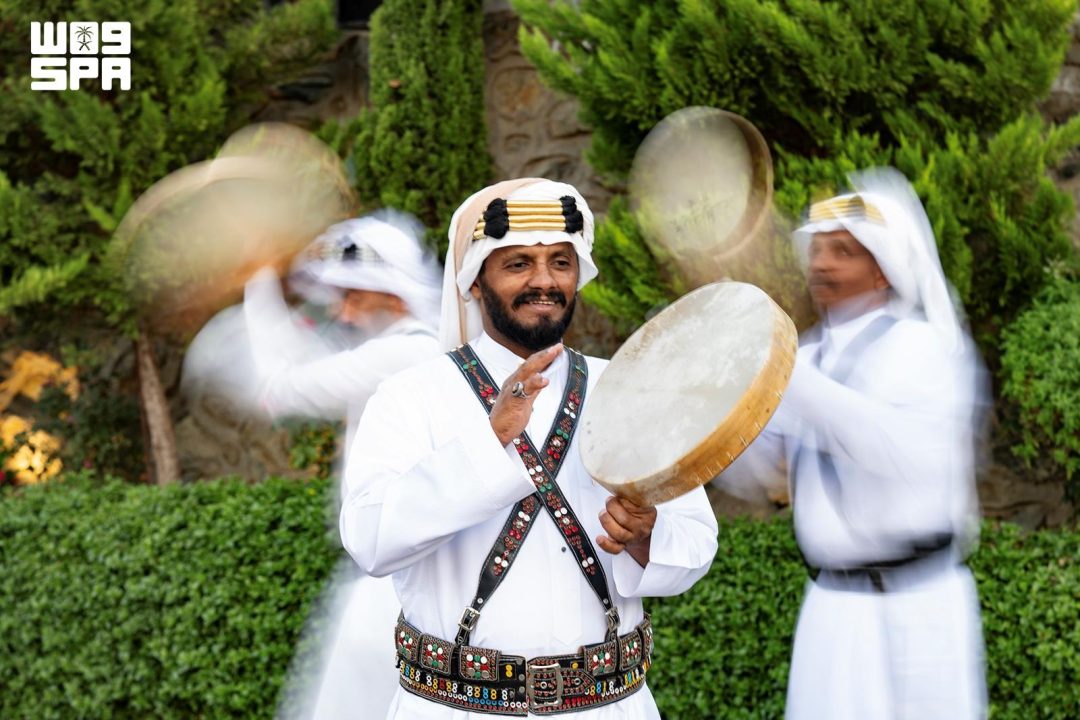
Taif is home to Al-Majrour, one of the city’s oldest traditional folk arts, which remains a core part of the local cultural identity. The art is performed at weddings, social occasions, festivals, and cultural and tourism events.
According to SPA, the performance relies on the coordination of poetry, singing, rhythm, group movements, and traditional clothing, specifically the Al-Huwaysi dress. Participants stand in two facing rows, performing poems and melodies collectively accompanied by the daff and drum.
The art features specific performance methods and terms, including Al-Shabshara, Al-Muqata’a, Al-Damdama, Al-Kasra, Al-Murabba, and Al-Makhumas. Saad Al-Sufyani, a researcher of the art, stated that Al-Majrour has been linked to Taif celebrations and gatherings for a long time and has been passed down through generations.
Al-Sufyani noted that the presence of this art in national occasions and cultural programs introduces Taif’s heritage to visitors. He added that the participation of youth in folk groups helps preserve the melodies, movements, and traditional dress for future generations.
What are the performance characteristics of Al-Majrour art in Taif? Al-Majrour is based on the coordination of poetry, singing, rhythm, and group movements. Performers wear traditional clothing, specifically the Al-Huwaysi dress, and stand in two facing rows while using the daff and drum to accompany the collective melodies and poems.
What specific terms and methods define the structure of Al-Majrour? The artistic structure and authenticity of Al-Majrour are shown through specific performance methods and terms. These include Al-Shabshara, Al-Muqata’a, Al-Damdama, Al-Kasra, Al-Murabba, and Al-Makhumas.
How is Al-Majrour art being preserved for future generations? The art is preserved through the participation of youth in folk groups, which ensures the transfer of melodies, movements, and traditional dress. Additionally, its presence in festivals, national occasions, and cultural programs helps introduce this heritage to visitors.