


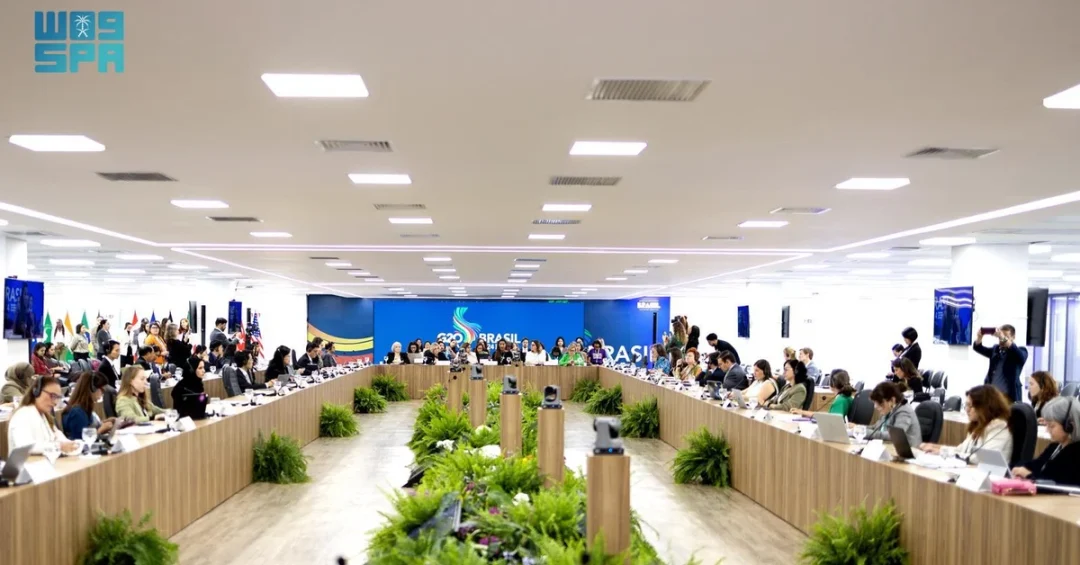
Saudi Arabia participated in the Group of Twenty (G20) Women’s Empowerment Working Group meetings held in Brasilia from July 8 to 10, 2024, under Brazil’s G20 presidency. The Kingdom’s delegation was led by Maimunah bint Khalil Al-Khalil, Secretary-General of the Family Affairs Council, underscoring Saudi Arabia’s commitment to advancing women’s economic participation and sharing its domestic progress on the global stage.
Context and Background
The G20 Women’s Empowerment Working Group is a key forum for member states to coordinate policies that enhance women’s economic inclusion, leadership, and social protection. This third meeting under Brazil’s presidency focused on finalizing a ministerial declaration that will outline collective priorities and commitments for the upcoming G20 Leaders’ Summit. Saudi Arabia’s active involvement reflects its broader strategy to engage in multilateral platforms that align with its Vision 2030 reform agenda, which seeks to elevate women’s role in the economy and society.
The Family Affairs Council, a government body established to strengthen family cohesion and empower women, has been instrumental in implementing national initiatives that have significantly increased female labor force participation and entrepreneurship. By participating in the G20 working group, Saudi Arabia contributes its experience and learns from international best practices to further refine its policies.
Key Details
During the three-day meetings, delegates discussed the ministerial declaration, highlighting priorities such as closing gender gaps in employment, promoting women’s leadership in STEM fields, and enhancing social protection systems. On the third day, Secretary-General Al-Khalil participated in a global symposium titled “The Economy of Care,” where she presented “The Economy of Care in the Saudi Context.” This presentation showcased Saudi Arabia’s efforts to recognize and support unpaid care work, integrate care policies into national development plans, and create opportunities for women to enter the workforce.
The Saudi delegation also engaged in bilateral discussions with other G20 members, sharing insights on successful programs like the Women’s Empowerment Initiative and the National Family Strategy. These exchanges aim to build partnerships and align strategies for sustainable development.
Implications and Impact
Saudi Arabia’s participation in the G20 Women’s Empowerment Working Group has significant implications for its international standing and domestic policy. It reinforces the Kingdom’s role as a proactive player in global discussions on gender equality, contributing to the G20’s goal of inclusive economic growth. By presenting its care economy model, Saudi Arabia positions itself as a leader in innovative social policies that support families and enable women’s economic participation.
Regionally, Saudi Arabia’s engagement sets a positive example for other Middle Eastern countries, demonstrating how cultural values and modern economic reforms can coexist. Internationally, it strengthens ties with G20 nations and international organizations, opening avenues for collaboration on women’s empowerment and social development. The outcomes of the working group will feed into the G20 Leaders’ Summit, where Saudi Arabia will continue to advocate for policies that drive sustainable and equitable growth.
Vision 2030 Alignment
Saudi Arabia’s active participation in the G20 Women’s Empowerment Working Group is a direct reflection of Vision 2030, the Kingdom’s long-term blueprint for economic diversification and social reform. Vision 2030 aims to increase women’s labor force participation to 30% by 2030, a target already surpassed, and to enhance women’s roles in leadership and decision-making. The Family Affairs Council’s efforts, including those highlighted at the G20, contribute to creating an enabling environment for women to thrive. As Saudi Arabia continues to share its success stories and learn from global partners, it reinforces its commitment to building a vibrant society and a thriving economy, in line with the Vision’s objectives and the United Nations Sustainable Development Goals.
20 Questions
Q1. What G20 meeting did Saudi Arabia participate in recently?
A1. Saudi Arabia participated in the G20 Women’s Empowerment Working Group meetings held in Brasilia, Brazil, from July 8 to 10, 2024, under Brazil’s G20 presidency, focusing on advancing women’s economic inclusion and leadership.
Q2. Who led the Saudi delegation to the G20 Women’s Empowerment Working Group?
A2. The delegation was led by Maimunah bint Khalil Al-Khalil, Secretary-General of the Family Affairs Council, who represented the Kingdom and presented Saudi Arabia’s initiatives on women’s empowerment and the care economy.
Q3. What was the main focus of the three-day meetings?
A3. The meetings focused on discussions among member states regarding the ministerial declaration, highlighting priorities and agreements from previous sessions, and on sharing best practices for enhancing women’s economic participation globally.
Q4. What is the “Economy of Care” and why is it important?
A4. The Economy of Care refers to the sector that encompasses paid and unpaid care work, including childcare, elder care, and domestic work. It is crucial for enabling women’s workforce participation and promoting gender equality in economic systems.
Q5. What did the Saudi Secretary-General present at the global symposium?
A5. She presented “The Economy of Care in the Saudi Context,” showcasing Saudi Arabia’s efforts to recognize unpaid care work, integrate care policies into national development plans, and create opportunities for women to enter the workforce.
Q6. How does Saudi Arabia’s participation align with Vision 2030?
A6. Saudi Arabia’s participation aligns with Vision 2030’s goal to increase women’s labor force participation to 30% by 2030 and to enhance their roles in leadership, reflecting the Kingdom’s commitment to social and economic reform.
Q7. What is the Family Affairs Council?
A7. The Family Affairs Council is a Saudi government body established to strengthen family cohesion and empower women. It implements national initiatives that support women’s participation in the economy and society.
Q8. How many G20 working group meetings have taken place under Brazil’s presidency?
A8. This was the third meeting of the Women’s Empowerment Working Group under Brazil’s G20 presidency. It built on prior discussions to finalize the ministerial declaration for the Leaders’ Summit.
Q9. What are the key priorities outlined in the ministerial declaration?
A9. The declaration prioritizes closing gender gaps in employment, promoting women’s leadership in STEM fields, enhancing social protection systems, and recognizing the value of care work in economic development.
Q10. How does Saudi Arabia support unpaid care work?
A10. Saudi Arabia supports unpaid care work through policies that recognize its economic value, integrate care into national strategies, and develop programs that alleviate the care burden on women, enabling their workforce participation.
Q11. What benefits does Saudi Arabia gain from participating in such international forums?
A11. Participation allows Saudi Arabia to share its progress, learn from global best practices, build partnerships, and reinforce its role as a proactive player in multilateral platforms that align with Vision 2030.
Q12. What is the significance of the G20 Women’s Empowerment Working Group?
A12. The working group is a key forum for G20 member states to coordinate policies that enhance women’s economic inclusion, leadership, and social protection, contributing to inclusive global economic growth.
Q13. How has Saudi Arabia increased women’s labor force participation?
A13. Through Vision 2030 reforms, Saudi Arabia has implemented initiatives such as improved access to education, expanded job opportunities, and legal reforms, leading to a significant rise in women’s labor force participation, surpassing the 30% target.
Q14. What are some Saudi initiatives for women’s empowerment?
A14. Key initiatives include the Women’s Empowerment Initiative, the National Family Strategy, and various programs under the Family Affairs Council that promote women’s leadership, entrepreneurship, and workforce participation.
Q15. How does Saudi Arabia’s care economy model compare internationally?
A15. Saudi Arabia’s care economy model is innovative as it integrates cultural values with modern policies, providing a unique approach that supports families while enabling women’s economic participation, serving as an example for other nations.
Q16. What role does the Family Affairs Council play in Vision 2030?
A16. The Family Affairs Council plays a crucial role in Vision 2030 by implementing programs that strengthen families and empower women, contributing to the goals of a vibrant society and a thriving economy.
Q17. What are the expected outcomes of the G20 Women’s Empowerment Working Group?
A17. The working group aims to produce a ministerial declaration that will guide G20 members in advancing gender equality and women’s economic empowerment, to be endorsed at the G20 Leaders’ Summit.
Q18. How does Saudi Arabia engage with other G20 members on women’s issues?
A18. Saudi Arabia engages through bilateral discussions, sharing insights on successful programs, and participating in symposiums to exchange best practices and build partnerships for sustainable development.
Q19. What is the significance of the “Economy of Care” symposium?
A19. The symposium provides a platform for G20 members to discuss strategies for recognizing and investing in the care economy, which is essential for enabling women’s workforce participation and achieving gender equality.
Q20. What message does Saudi Arabia’s participation send to the world?
A20. It demonstrates Saudi Arabia’s commitment to women’s empowerment, multilateral cooperation, and Vision 2030, positioning the Kingdom as a leader in innovative social policies and inclusive economic growth on the global stage.
Reader Feedback
We value your thoughts. Please share your feedback on this article.
Your feedback helps us improve our coverage.
More on this topic: General
Related articles
 Saudi Arabia Leads FAO Fisheries Committee, Advances Sustainability
 KSrelief Supervisor General Meets US Ambassador
 Madinah Governor Bids Farewell to US Consul General
 Deputy Governor of Madinah Receives US Consul General
 KSrelief Distributes 300 Shelter Kits in Sudan
 Imam Abdulaziz Royal Reserve Plants Over One Million Trees