


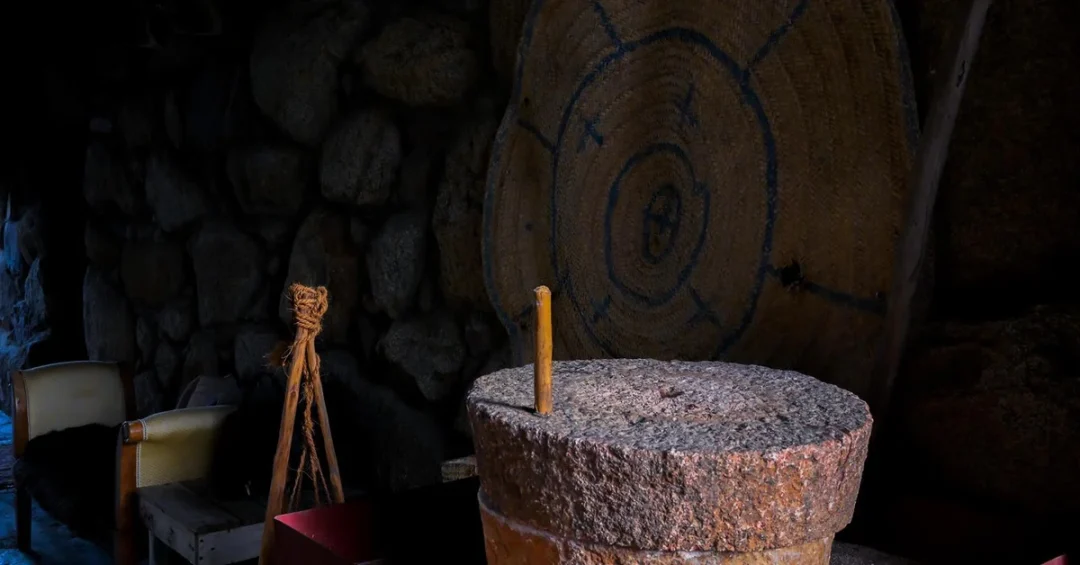
The millstone, known locally as Alraha, was a popular attraction at the second edition of the Dar Festival in Al-Mousa Heritage Village in Al-Baha, according to the Saudi Press Agency (SPA). The traditional household item, once essential for grinding grain crops, drew attention for its ingenious design and cultural significance, offering visitors a glimpse into the region’s ancestral daily life.
Context and Background
Al-Baha, nestled in the Sarawat Mountains of southwestern Saudi Arabia, is renowned for its rich heritage and preserved traditions. The Dar Festival, held in Al-Mousa Heritage Village, aims to revive and showcase the region’s customs and old household items to younger generations. The millstone, or Alraha, stands as a testament to the ingenuity of early Saudi households, reflecting a time when self-sufficiency and artisanal skills were central to daily life.
In an interview with the Saudi Press Agency (SPA), Khaled Azeb Al-Zahrani, supervisor of Al-Mousa Heritage Village, emphasized that the millstone is an essential component of old houses in the region. “It is used for grinding flour and grains,” he stated, highlighting its role in traditional food preparation. The millstone’s presence at the festival underscores Saudi Arabia’s commitment to preserving its cultural heritage, a key pillar of Vision 2030’s Quality of Life program.
Key Details
The millstone consists of two circular stones, with the upper stone slightly larger than the lower one. A small opening in the middle allows for introducing grain, while a central pole maintains balance during rotation. Additionally, a wooden pole at one end of the upper stone enables the user to hold and rotate it during grinding. According to Al-Zahrani, a textile made from sheep’s wool and goat hair is positioned beneath the mill to collect the ground flour, allowing precise control over the coarseness of the grains.
This precise control ensures the flour is suitable for various popular dishes like porridge, a staple in traditional Saudi cuisine. The millstone’s innovative engineering reflects the resourcefulness of Al-Baha’s inhabitants, who relied on locally available materials to create a durable and efficient tool. Once a common sight in every household, the millstone has now become a rarity, appearing mainly on special occasions and festivals that aim to revive customs and traditions.
Implications and Impact
The display of the millstone at the Dar Festival highlights the broader efforts by Saudi authorities to document and celebrate the Kingdom’s intangible cultural heritage. Such initiatives not only educate the younger generation about their roots but also attract tourists interested in authentic cultural experiences. By preserving traditional crafts and tools, Saudi Arabia reinforces its identity and shares its rich history with the world, aligning with the National Strategy for Culture and the Vision 2030 goal of enhancing cultural participation.
Moreover, the festival serves as a platform for local artisans and historians to share knowledge, fostering community pride and economic opportunities through heritage tourism. The millstone, though no longer a daily necessity, symbolizes resilience and adaptability—values that resonate with Saudi Arabia’s ongoing transformation.
Vision 2030 Alignment
The preservation of traditional items like the millstone directly supports Saudi Vision 2030’s Quality of Life program, which seeks to promote cultural heritage and enhance national identity. By showcasing such artifacts at festivals, the Kingdom ensures that future generations remain connected to their past while embracing modernization. As Saudi Arabia continues to advance, its commitment to safeguarding cultural treasures like Alraha demonstrates a balanced approach to progress, honoring tradition while building a dynamic and inclusive society.
20 Questions
Q1. What was the millstone (Alraha) at the Dar Festival?
A1. The millstone (Alraha) was a traditional household item displayed at the second Dar Festival in Al-Mousa Heritage Village, Al-Baha. It attracted visitors for its historical significance and ingenious design used for grinding grain crops.
Q2. Where and when did the Dar Festival take place?
A2. The Dar Festival took place in Al-Mousa Heritage Village in Al-Baha. Its second edition was held in 2024, showcasing traditional items and customs to promote cultural heritage.
Q3. Who is Khaled Azeb Al-Zahrani?
A3. Khaled Azeb Al-Zahrani is the supervisor of Al-Mousa Heritage Village. He provided insights to the Saudi Press Agency about the millstone’s importance and design.
Q4. What is the millstone made of?
A4. The millstone consists of two circular stones, with the upper stone slightly larger than the lower one. It also includes a central pole for balance and a wooden pole for rotation.
Q5. How does the millstone work?
A5. Grain is introduced through a small opening in the middle. A central pole maintains balance while a wooden pole rotates the upper stone. A textile beneath collects the ground flour.
Q6. What is the purpose of the textile beneath the millstone?
A6. The textile, made from sheep’s wool and goat hair, collects the ground flour. It allows precise control over the coarseness of the grains, ensuring suitability for various dishes.
Q7. What dishes were made from the millstone’s flour?
A7. The flour was used for popular dishes like porridge. The millstone enabled families to grind grains to desired textures for traditional recipes.
Q8. Why is the millstone considered an essential component of old houses?
A8. In the past, the millstone was essential for grinding flour and grains, a daily necessity for food preparation. It was a staple in every household in the Al-Baha region.
Q9. How has the millstone’s role changed today?
A9. The millstone has become a rarity, now seen mainly at special occasions and festivals. It serves to revive customs and showcase old household items to younger generations.
Q10. What is the significance of the Dar Festival?
A10. The Dar Festival aims to revive and celebrate traditional customs and heritage. It provides a platform for educating the younger generation and attracting tourists interested in Saudi culture.
Q11. How does the millstone reflect Saudi heritage?
A11. The millstone exemplifies the ingenuity and self-sufficiency of early Saudi households. It represents the region’s rich cultural heritage and traditional way of life.
Q12. What materials were used in the millstone’s construction?
A12. The millstone was constructed from two circular stones, a central pole, a wooden pole, and a textile made from sheep’s wool and goat hair. These locally sourced materials ensured durability.
Q13. Why was the millstone a popular attraction at the festival?
A13. Visitors were drawn to its historical significance and innovative design. It offered a tangible connection to the past and showcased traditional engineering.
Q14. How does the millstone align with Vision 2030?
A14. It supports the Quality of Life program by preserving cultural heritage and enhancing national identity. Such initiatives promote cultural participation and heritage tourism.
Q15. What is Al-Mousa Heritage Village?
A15. Al-Mousa Heritage Village is a cultural site in Al-Baha that hosts the Dar Festival. It showcases traditional items and customs to preserve and promote Saudi heritage.
Q16. How does the millstone contribute to tourism?
A16. The millstone attracts tourists interested in authentic cultural experiences. It enhances heritage tourism, aligning with Saudi Arabia’s goals to diversify the economy and promote cultural exchange.
Q17. What does the millstone symbolize in Saudi culture?
A17. It symbolizes resilience, adaptability, and the resourcefulness of early Saudi households. It represents a connection to ancestral traditions and sustainable living practices.
Q18. How can the younger generation benefit from learning about the millstone?
A18. It educates them about their heritage and traditional skills. It fosters pride in national identity and encourages appreciation for cultural preservation efforts.
Q19. Are there other traditional items showcased at the Dar Festival?
A19. Yes, the festival features various old household items and customs. It aims to provide a comprehensive view of traditional life in the Al-Baha region.
Q20. What future initiatives might preserve such heritage?
A20. Saudi Arabia may continue hosting festivals and documenting traditional crafts. Vision 2030 supports cultural preservation through programs that engage communities and promote heritage tourism.
Reader Feedback
We value your thoughts. Please share your feedback on this article.
Your feedback helps us improve our coverage.