


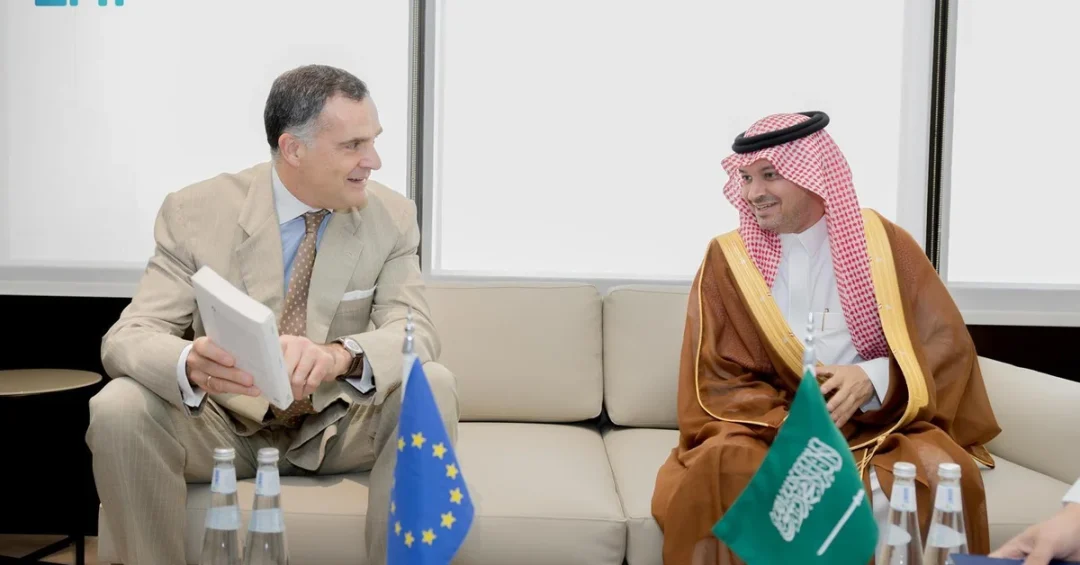
Chief Executive of the Literature, Publishing and Translation Commission (LPTC) Mohammed Hasan Alwan met on Thursday with European Union (EU) Ambassador to the Kingdom of Saudi Arabia Christophe Farnaud at the LPTC headquarters in Riyadh to discuss enhancing cultural relations and exploring avenues for further cooperation.
The meeting, reported by the Saudi Press Agency (SPA), focused on strengthening cultural ties between Saudi Arabia and the European Union, with both officials underscoring the importance of dialogue and collaboration in literature, publishing, and translation. The discussions also highlighted several LPTC programs and initiatives aimed at promoting cross-cultural education, facilitating experience sharing, and fostering partnerships with intellectuals, writers, and thinkers.
Context and Background
The Literature, Publishing and Translation Commission is a key cultural body under the Saudi Ministry of Culture, established to advance the Kingdom’s cultural sector in line with Vision 2030. The commission oversees initiatives that enrich the literary landscape, support publishing, and promote translation as a bridge between cultures.
This meeting comes as part of Saudi Arabia’s broader efforts to engage with international partners and showcase its cultural transformation. The European Union, represented by Ambassador Christophe Farnaud, has shown growing interest in cultural diplomacy with the Kingdom. Such exchanges align with the goals of Vision 2030 to diversify the economy, promote cultural understanding, and position Saudi Arabia as a global cultural hub.
Key Details
During the meeting, Alwan and Farnaud discussed potential joint cultural and literary exhibitions, as well as opportunities for translation projects that could bring Saudi and European literary works to wider audiences. They also explored ways to facilitate the exchange of expertise and encourage collaboration among writers and publishers from both sides.
The LPTC has been actively launching programs to support Saudi authors, translators, and publishers. These include fellowships, grants, and participation in international book fairs. The meeting with the EU Ambassador is expected to open new avenues for Saudi cultural institutions to partner with European counterparts, enhancing the Kingdom’s cultural diplomacy.
Implications and Impact
The meeting signals a mutual interest in deepening cultural cooperation between Saudi Arabia and the European Union. By focusing on literature, publishing, and translation, both parties aim to foster greater understanding and appreciation of their respective cultures. This not only strengthens bilateral relations but also contributes to global cultural diversity and dialogue.
For Saudi Arabia, such collaborations are integral to its cultural strategy, which seeks to increase international engagement and promote the Kingdom’s rich literary heritage. For the EU, engaging with Saudi Arabia in cultural domains offers a platform to build bridges and promote shared values. The emphasis on joint exhibitions and translations could lead to tangible outcomes, such as translated works, co-published books, and cultural events that reach diverse audiences.
Vision 2030 Alignment
This cultural engagement directly supports Saudi Vision 2030, which aims to diversify the economy and enhance international cultural exchange. By fostering partnerships in literature and translation, Saudi Arabia is not only preserving its cultural identity but also sharing it with the world. The LPTC’s efforts to collaborate with the EU exemplify the Kingdom’s commitment to becoming a global cultural leader, in line with Vision 2030’s objectives of promoting cultural heritage, expanding cultural activities, and increasing international participation.
20 Questions
Q1. Who met with EU Ambassador Christophe Farnaud?
A1. Mohammed Hasan Alwan, Chief Executive of the Literature, Publishing and Translation Commission (LPTC), met with EU Ambassador Christophe Farnaud.
Q2. Where did the meeting take place?
A2. The meeting took place at the LPTC headquarters in Riyadh, Saudi Arabia.
Q3. When did the meeting occur?
A3. The meeting occurred on Thursday, July 18, 2024, as reported by the Saudi Press Agency.
Q4. What was the main topic of discussion?
A4. The main topic was enhancing cultural relations and exploring avenues for further cooperation between Saudi Arabia and the European Union.
Q5. What is the LPTC?
A5. The LPTC is the Literature, Publishing and Translation Commission, a Saudi government body under the Ministry of Culture that supports literature, publishing, and translation.
Q6. What programs does the LPTC promote?
A6. The LPTC promotes programs that enhance education across civilizations, facilitate experience sharing, and foster collaboration with intellectuals, writers, and thinkers.
Q7. What areas of cooperation were discussed?
A7. Cooperation in literature, publishing, and translation, as well as participation in joint cultural and literary exhibitions, were discussed.
Q8. Who represented the European Union?
A8. The European Union was represented by its Ambassador to the Kingdom of Saudi Arabia, Christophe Farnaud.
Q9. What is the significance of this meeting?
A9. It signifies a mutual interest in deepening cultural ties and fostering collaboration in literature, publishing, and translation between Saudi Arabia and the EU.
Q10. How does this meeting align with Vision 2030?
A10. It aligns with Vision 2030 by promoting cultural exchange, diversifying the economy, and enhancing Saudi Arabia’s global cultural presence.
Q11. What are the expected outcomes of this meeting?
A11. Expected outcomes include joint cultural exhibitions, translation projects, and increased collaboration among writers and publishers from both sides.
Q12. Who is Mohammed Hasan Alwan?
A12. Mohammed Hasan Alwan is the Chief Executive of the Literature, Publishing and Translation Commission, a Saudi cultural leader and author.
Q13. Who is Christophe Farnaud?
A13. Christophe Farnaud is the European Union Ambassador to the Kingdom of Saudi Arabia, representing EU interests in the Kingdom.
Q14. What role does the LPTC play in Saudi culture?
A14. The LPTC supports and promotes literature, publishing, and translation, enriching Saudi cultural life and fostering international cultural exchange.
Q15. How does the LPTC facilitate experience sharing?
A15. The LPTC organizes programs and initiatives that bring together intellectuals, writers, and thinkers to share expertise and collaborate on cultural projects.
Q16. What are joint cultural exhibitions?
A16. Joint cultural exhibitions are collaborative events showcasing the cultural heritage and artistic expressions of both Saudi Arabia and the EU.
Q17. Why is translation important in Saudi-EU relations?
A17. Translation bridges linguistic and cultural gaps, enabling mutual understanding and appreciation of literary works between Saudi Arabia and the EU.
Q18. What other initiatives has the LPTC undertaken?
A18. The LPTC has launched fellowships, grants, and participated in international book fairs to support Saudi authors and publishers.
Q19. How can Saudi writers benefit from this cooperation?
A19. Saudi writers can gain international exposure through translations, joint exhibitions, and collaborative projects with European counterparts.
Q20. What is the broader impact of such cultural diplomacy?
A20. It strengthens bilateral relations, promotes cultural diversity, and contributes to global dialogue and understanding between nations.
Reader Feedback
We value your thoughts. Please share your feedback on this article.
Your feedback helps us improve our coverage.
Related articles
 Eastern Region Cultural Flourishing Aligns with Vision 2030
 Saudi Arabia Launches “Compass” Program to Preserve Red Sea History
 Beit Hail Festival Showcases Traditional Haili Doors and Gypsum Carvings
 Jeddah Historic District Marks a Decade Since Its UNESCO World Heritage Site Designation
 Almadinah Book Fair 2024 to Kick Off July 30
 Sadu Weaving Shines at Beit Hail Festival